
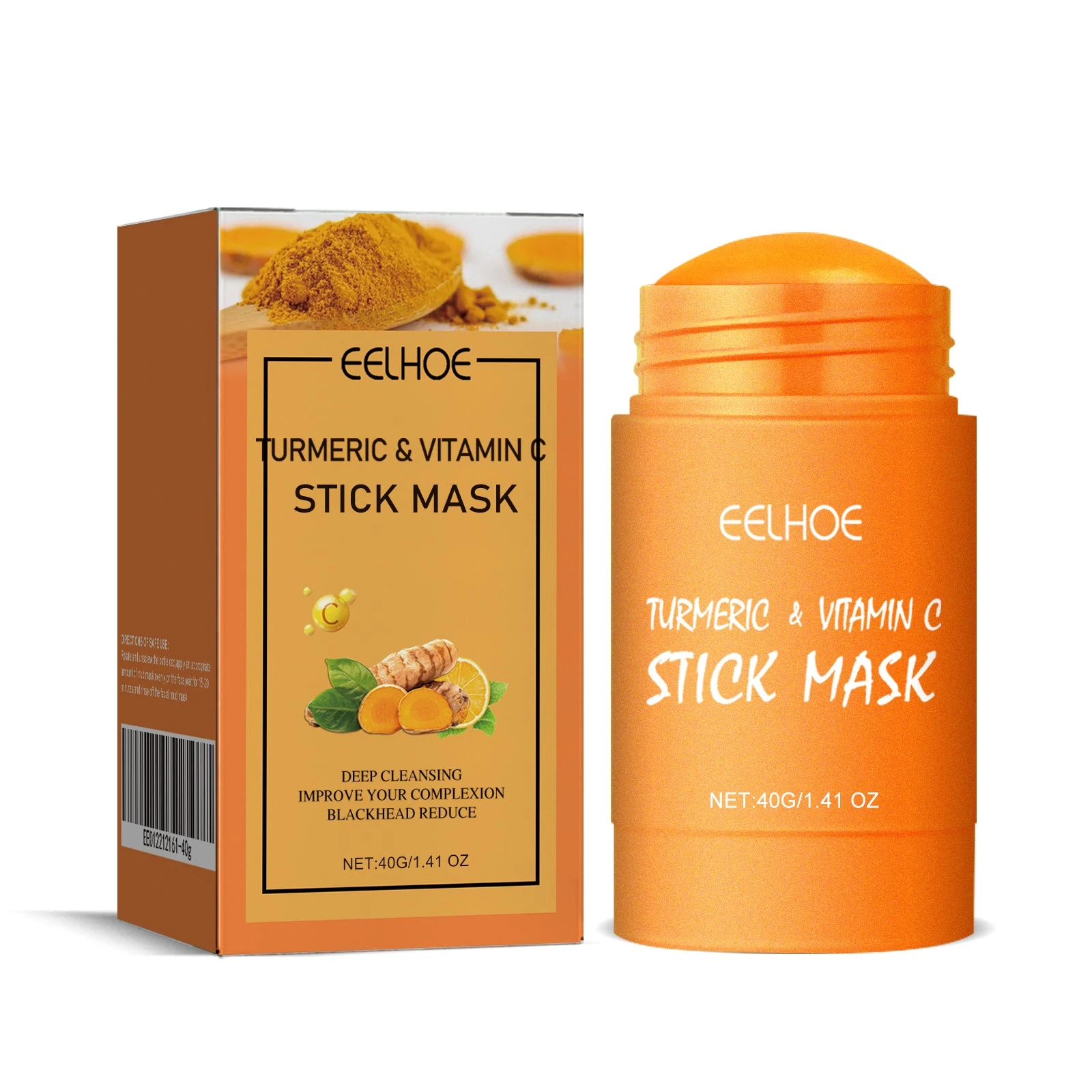
A turmeric face mask is a short-contact, rinse-off step that can help lift surface oil and residue when the formula contains absorbent ingredients such as clay. The word “turmeric” alone does not tell you how a mask will feel or what it can do. The complete formula, texture, contact time, and your skin’s tolerance matter more than the color on the label.
That distinction is useful because turmeric masks now come in very different formats: dry powders, creamy masks, clay masks, and twist-up sticks. Some are designed to absorb oil; others focus on a softer after-feel. A good choice is the one that fits your skin and routine without requiring harsh scrubbing or an unrealistic list of promises.
Product information checked October 1, 2026. For a rinse-off clay-mask step focused on surface oil, review Turmeric Clay Mask Stick, 40g.
What a turmeric face mask can realistically do
Most visible, immediate changes after a rinse-off mask come from the mask base. A clay-based formula may make skin feel less oily because ingredients such as kaolin can absorb material from the skin’s surface. A creamier base may feel more conditioning. Neither result should be confused with treating acne, shrinking pores permanently, or changing the structure of skin.
Turmeric itself has a long history of culinary and cosmetic use. The National Center for Complementary and Integrative Health notes that turmeric is a member of the ginger family and that curcumin is one of its major components. It also cautions that evidence for many promoted health uses remains limited. A systematic review of human studies on turmeric and skin health found promising areas of research, but the authors also called for more studies. That research does not prove that any specific retail mask produces a medical result.
For a shopper, the practical takeaway is simple: judge a mask as a complete cosmetic formula. Look for a clear ingredient list, straightforward directions, an appropriate contact time, and claims that describe appearance or skin feel rather than disease treatment.
How the main turmeric mask formats differ
Swipe the table sideways to compare all columns.
| Format | What it is like to use | Best reason to choose it | What to check |
|---|---|---|---|
| Clay mask | Spreads as a paste and dries to some degree before rinsing. | You want a rinse-off step focused on surface oil and buildup. | Drying level, contact time, and whether your skin feels tight afterward. |
| Cream mask | Usually stays softer and may rinse with less of a dry, set finish. | You prefer a more cushioned texture. | Fragrance, rich emollients, and whether it is rinse-off or leave-on. |
| Mask stick | Twists up and applies directly, with less need to touch the product. | You want quick, controlled application. | Keep the surface clean and do not share the stick. |
| DIY powder blend | Requires measuring and mixing, so strength and texture vary. | You are comfortable controlling every ingredient. | Avoid irritating kitchen acids and abrasive additions; staining is also more likely. |
How to choose one for your skin
Start with your current skin condition
If your face already feels tight, flaky, sunburned, or irritated, a clay mask is unlikely to be the most comfortable next step. Wait until the skin has recovered. If you use prescription acne treatments, retinoids, strong acids, or another product that increases sensitivity, ask the prescribing clinician how a mask fits into that routine.
Oily skin is not permission to remove every trace of surface oil. A mask that leaves the face squeaky, hot, or painfully tight is too aggressive for that session. Combination skin may do better with targeted application on the forehead, nose, or chin instead of a full-face layer.
Read beyond the featured ingredient
Find the full ingredient list on the package. Clay ingredients, fragrance, botanical extracts, and the base all influence tolerance. The NCCIH notes that topical curcumin can cause hives or itching in some people, so “natural” does not mean reaction-free. A small patch test cannot guarantee that a product will never irritate you, but it can reveal an obvious problem before full-face use.
Choose a format you will use correctly
A jar offers flexibility, but fingers or tools need to be clean. A powder lets you control the mixing liquid, but inconsistent measurements can produce an overly thick paste. A stick is tidy and easy to portion. The EELHOE Turmeric Clay Mask Stick sold by GinGrowth is a 40 g rinse-off clay-mask format made with turmeric extract, kaolin, and diatomite according to current product materials. Its directions specify a 15-to-20-minute contact time followed by rinsing. Those product facts, rather than broad turmeric claims, are the right basis for deciding whether it suits your routine.
How to use a turmeric mask without overdoing it
- Identify the exact product and read its package. A mask stick and a facial balm can look similar.
- Apply to the intended facial area, avoiding eyes, lips and irritated skin.
- For the current orange 40g clay mask, follow the pictured 15–20 minute interval; rinse sooner if uncomfortable.
- Rinse thoroughly and continue suitable moisturizing care.
- Do not combine prolonged mask contact with aggressive scrubbing to chase a stronger sensation.
The separate 15g facial balm’s guide says to apply to clean, dry skin and massage until absorbed. It is not the same rinse-off routine. The balm highlights glycerin, beeswax and turmeric; its leave-on directions are separate from the mask’s rinse-off method.
Choose a Rinse-Off Mask or a Separate Leave-On Balm
The orange 40g mask and 15g facial balm serve different routines: one rinses off, while the other is massaged in. GinGrowth sells the two products below.
Swipe the table sideways to compare all columns.
| Detail | Turmeric Clay Mask Stick, 40g | Turmeric Facial Balm Stick, 15g |
|---|---|---|
| Format | Orange twist-up rinse-off facial mask | Leave-on facial balm in a twist-up stick |
| Ingredient highlights | Water, kaolin, diatomite, turmeric extract, witch hazel leaf extract and chrysanthemum extract in the main artwork. | Turmeric root extract, glycerin and beeswax (cera alba) are the current ingredient highlights. |
| Application | Apply an even layer away from eyes and lips, follow the pictured 15–20 minute interval and rinse; rinse sooner if uncomfortable. | Apply a light layer to clean, dry facial skin and massage until absorbed, following the current package. Avoid eyes and lips. |
| Reason to compare | Choose when you want the controlled application of a rinse-off clay-mask stick. | Choose for a separate solid moisturizing-care format rather than a rinse-off mask. |
View Turmeric Clay Mask Stick, 40g or compare Turmeric Facial Balm Stick, 15g. Review the current product page for price and package details.
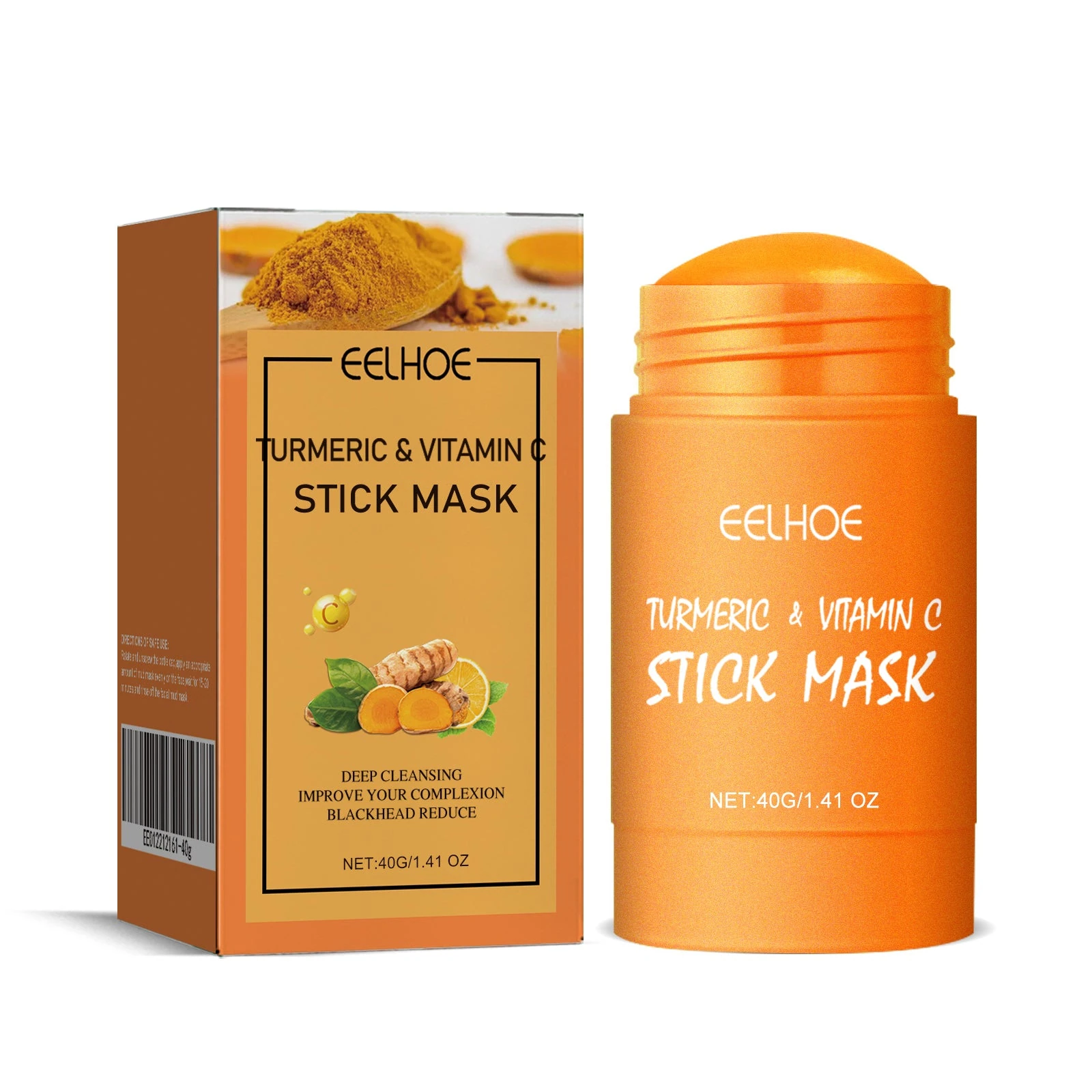
The front name includes Vitamin C, but the displayed highlight panel does not specify its form or concentration. Kaolin and diatomite identify mineral ingredients, not proof of blackhead removal or an acne treatment. This orange facial mask has its own 15–20 minute guide; the separate face-and-neck mask uses different directions. Confirm the exact package before copying a timer from a similar-looking product.
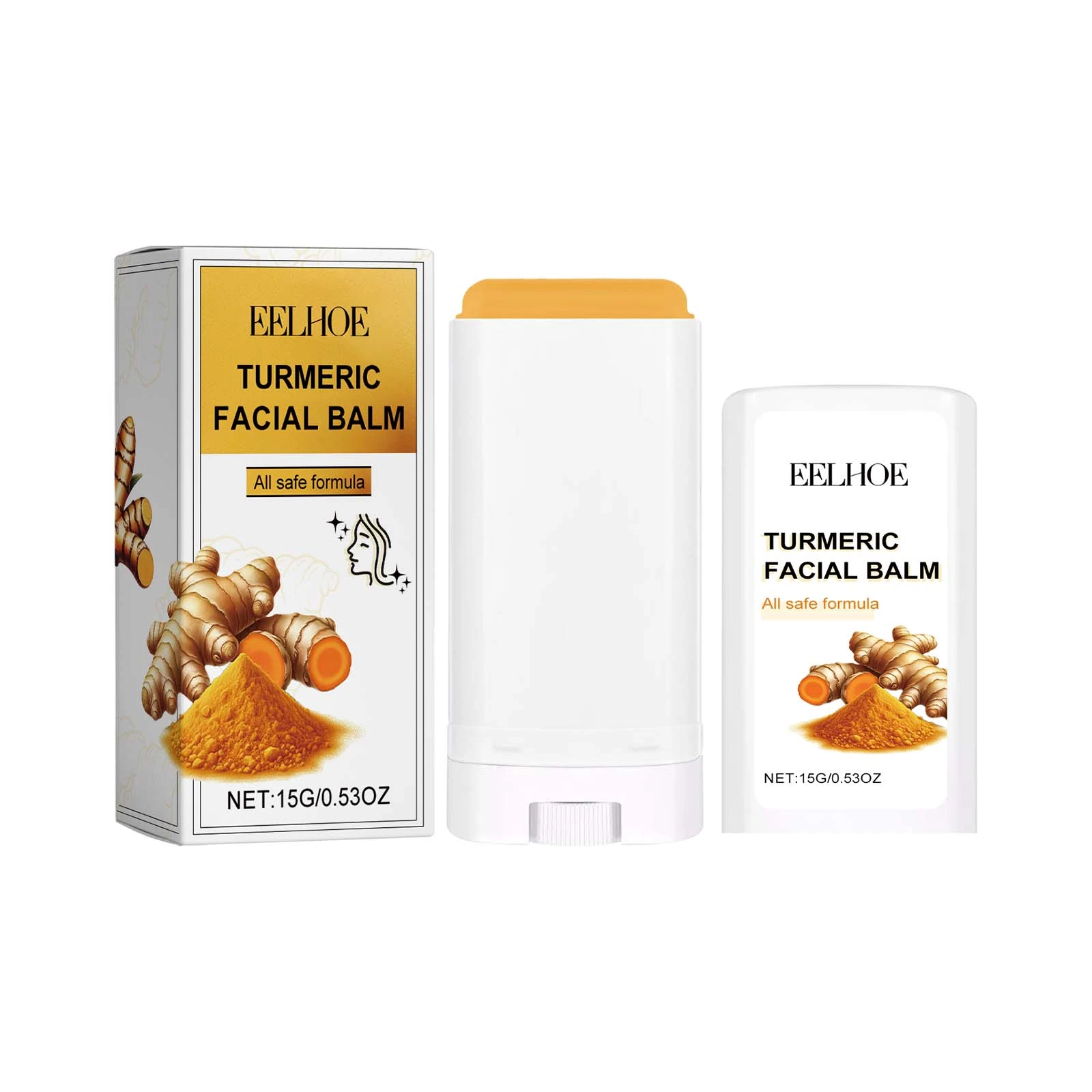
The balm highlights turmeric, glycerin and beeswax, and its illustrated routine is leave-on. Follow this facial moisturizer’s own application method rather than a mask timer. It is a 15g facial product, distinct from a 40g body balm or mask. No sun-protection rating is established, so the balm does not replace daytime sunscreen. A thin layer and a finish you tolerate are practical criteria for this optional care step.
How often should you use a turmeric face mask?
There is no universal schedule. Start with the frequency on the label. If the product does not give a clear frequency, ask the supplier for the exact instructions rather than borrowing another mask’s schedule. Reduce use if your skin becomes tight, rough, itchy, or unusually shiny after the mask. Those can be signs that the routine is too stripping or irritating.
Frequency also depends on what else you use. A mask session is not the ideal time to add a facial scrub, exfoliating pad, peel, or new active serum. Staggering products makes it easier to identify the cause of a reaction. The American Academy of Dermatology’s guidance on at-home exfoliation similarly emphasizes matching the method to skin type, being gentle, and avoiding overuse that leads to redness and irritation.
Common mistakes that make masks less comfortable
- Using lemon juice or baking soda in a DIY mask. Kitchen ingredients can create an unpredictable and irritating mixture. A product formulated and labeled for facial use is easier to assess.
- Applying over broken or sunburned skin. Wait for the skin barrier to recover.
- Combining masking with aggressive scrubbing. A mask should not require friction to work or to come off.
- Assuming tingling proves effectiveness. Burning, itching, or growing discomfort is a reason to rinse, not a quality signal.
- Using a shared applicator. Keep spatulas and stick surfaces clean, and do not share products that touch the skin directly.
- Expecting a permanent pore change. Removing surface oil can temporarily change how texture looks, but a cosmetic mask does not permanently open, close, or erase pores.
Where a face mask belongs in a routine
For the detailed sequence, see clay mask before or after cleanser, including shower timing, rinsing and the separate moisturizer step.
Once the rinse-off mask step is complete, compare face balm versus face cream for your leave-on moisture step. The guide explains the current 15g balm stick and 30g bottled cream, with their different application methods.
Use a rinse-off mask after cleansing and before leave-on toner, serum, or moisturizer. On mask day, a short routine is often the easiest to tolerate: cleanse, mask, rinse, moisturize, and use sunscreen during the day. You do not need several turmeric products in the same session to make the routine coherent.
If you want to compare cleansers, masks, serums, and moisturizers by job rather than by hype, browse the broader turmeric skin care collection. That approach protects each product’s role: cleansers rinse away residue, masks are occasional short-contact steps, and moisturizers remain on the skin.
If the earlier step is removing makeup or water-resistant sunscreen, using cleansing oil on oily skin explains when a rinse-off first cleanser fits.
Frequently asked questions
Can I use a turmeric face mask every day?
Daily use is unnecessary for most clay-based masks and may be too drying. Follow the label. If no frequency is provided, start conservatively and judge comfort over several days rather than only the immediate post-mask feel.
Will turmeric stain my skin?
Turmeric contains strongly colored compounds, and staining risk varies with concentration and formula. Commercial rinse-off products are generally easier to use consistently than loosely measured DIY powder, but you should still follow the rinse directions and protect light towels.
Can a turmeric mask treat acne?
Do not use a cosmetic mask as an acne treatment unless a qualified clinician has recommended a specific medicated product. Research on turmeric does not establish that this particular mask treats acne. Persistent, painful, or scarring acne deserves dermatologic care.
Should the mask dry completely?
Follow the product’s time instructions. A mask does not need to crack or become painfully tight to be ready for removal. Rinse sooner if discomfort develops.
Can I use a turmeric mask with retinol or exfoliating acids?
Using them in the same session may increase irritation, especially if the mask is clay-based or the skin is already sensitive. Separate the steps and ask a dermatologist about combinations involving prescription treatment.
Is a mask stick more hygienic than a jar?
It reduces finger contact with the product, but the stick still touches skin. Apply it to clean skin, wipe the surface only as the manufacturer directs, replace the cap, and do not share it.
Sources
- National Center for Complementary and Integrative Health: Turmeric
- PubMed: Effects of Turmeric (Curcuma longa) on Skin Health: A Systematic Review of the Clinical Evidence
- American Academy of Dermatology: How to safely exfoliate at home
Choose the 40g mask when you want a timed, rinse-off step.
Sources and Product Information
- NCCIH: Turmeric—Usefulness and safety — Accessed October 1, 2026.
- 2016 systematic review of turmeric and skin health — Indexed abstract verified through NCBI’s public API October 1, 2026; original study scope applies.
- AAD: How to safely exfoliate at home — Official guidance accessed October 1, 2026; applies to the stated topic, not a trial of GinGrowth products.
GinGrowth product details were checked October 1, 2026. This guide compares published information and current product specifications; it does not report a GinGrowth clinical trial or personal use test.