

To use a facial cleansing brush, start by identifying the type of tool and reading its directions. For the manual brush attached to the 100ml foaming cleanser discussed here, wet your face, dispense foam, move the brush lightly away from the eyes, then rinse your face and the brush head. Let the head air-dry and follow with suitable moisture care.
A brush is optional. The American Academy of Dermatology recommends fingertips for routine face washing and warns that tools can irritate. If your skin is sensitive, irritated or uncomfortable with brushing, fingertip cleansing is the better starting point. This guide covers the attached manual format in detail; electric devices require their own instructions for settings, timing, charging and water exposure.
Identify your brush before following a tutorial
An attached foaming-cleanser brush combines a cleanser bottle and a manual contact head. A separate manual brush is a reusable tool used with a compatible cleanser. An electric brush adds powered movement and device-specific controls. These categories can look similar in a short video but do not share one universal method.
The GinGrowth product shown here is a 100ml turmeric foaming cleanser with an attached brush head. It is not a powered device, and its current instructions do not establish an electric timer, speed setting or detachable-head procedure. Do not force the head apart because a different brush can be dismantled, and do not submerge an electric device based on directions for this manual bottle.
On a small screen, swipe or scroll the table sideways to compare all columns.
| Detail | Attached brush cleanser | Fingertip foam |
|---|---|---|
| Format | 100ml bottle with manual brush head | 60ml mousse pump |
| Application | Wet face; dispense foam; move brush lightly | Wet face; dispense foam to hands; spread gently |
| Ingredient highlights | Turmeric, glycerin and named cleansing agents | Turmeric, glycerin and named cleansing agents |
| Removal | Rinse face and brush residue | Rinse face; keep dispenser clean |
| Aftercare | Air-dry the brush after rinsing | Close and store according to packaging |
| Why compare | You prefer this dispensing-and-tool format | You prefer to avoid extra tool friction |
| Not established | Electric settings or brush-head disassembly method | Identical formula or comparative gentleness |
The alternative is a separate 60ml turmeric cleansing mousse applied with fingertips. Both product pages highlight turmeric, glycerin and named cleansing agents, but that is not enough to establish identical formulas or prove that one is universally gentler. The useful choice is whether you want an attached manual tool or prefer to avoid that extra contact.
What does a cleansing brush add to the wash?
A manual brush changes how you distribute cleanser and adds tool contact against the skin. It does not automatically make a cleanser remove every cosmetic, treat acne or permanently shrink pores. More foam, harder pressure and a stronger “squeaky” feeling are not reliable measures of a better facial wash.
The AAD's face-washing guidance recommends a gentle, non-abrasive cleanser, lukewarm water and fingertips. It notes that using a washcloth, mesh sponge or anything other than fingertips can irritate. That is why this guide presents the brush as an optional format to consider, not an upgrade every face needs.
If you like the convenience of dispensing foam and applying it with the attached head, keep the contact light and pay attention to comfort. If you already wash comfortably with your hands, there is no need to add a brush merely to make the routine seem more thorough.

How to use the attached foaming-cleanser brush
Wet your face with comfortably lukewarm water. Dispense the product's foam using its packaging instructions, then move the brush gently over appropriate facial areas. Keep away from the eyes and do not repeatedly work over irritated, broken or sunburned skin. Avoid pressing harder to force foam into pores or to remove a visible dark mark.
- Identify a manual attached brush, separate manual tool or electric device.
- For the attached cleanser, wet your face and dispense its foam.
- Move the brush lightly, keeping away from eyes and irritated areas.
- Rinse your face thoroughly and pat dry.
- Rinse residue from the brush head and allow it to air-dry.
- Apply moisturizer as needed; choose fingertips if brushing irritates.
No fixed brush-contact duration has been verified for this product. Do not import a sixty-second electric-brush timer or a long mask interval from an unrelated tutorial. Complete a gentle cleanse, rinse thoroughly and assess how your skin feels. If it stings or becomes uncomfortable, stop rather than continuing to reach an invented target time.
Rinse carefully around the hairline and jaw so visible cleanser residue is removed. Pat dry with a clean towel, then use appropriate leave-on care. Cleansing is the first stage, so avoid brushing over freshly applied serum or moisturizer that you intend to leave on.
Use pressure as a comfort check
The intended action is light manual movement. The brush should not be used to grind away texture, scrape a blemish or repeatedly polish the same spot. If you notice that comfortable movement requires hard pressure, reconsider the method and whether a tool is useful for your face at all.
You do not need to combine a brush with a grain scrub to make the cleanser effective. The AAD's exfoliation guidance explains that other products, including retinoids, can affect skin sensitivity. Adding friction to a routine that already includes exfoliating pads or strong treatments creates another possible source of irritation.
A useful first comparison is simple: how does your face feel after gentle fingertip cleansing versus after introducing the tool? Keep the rest of the routine stable. This is a personal comfort observation, not proof of deeper cleansing or a clinical test. If the tool adds discomfort without solving a real problem, leave it out.
How to clean and dry the brush head
The current product method says to rinse residue from the brush head after use and allow it to air-dry. Check that visible foam is removed, and place it where the head can dry rather than immediately trapping it wet in a closed pouch. Follow any additional instructions on your actual package.
We have not verified a manufacturer-approved disinfectant, soaking concentration, boiling method or head-removal procedure for this item. Use the cleaning method recommended on the package. Harsh cleaners or heat may damage materials or leave residue, and forceful dismantling may damage a head that was not intended to be removed that way.
Do not share a personal facial cleansing tool. Inspect it before use and stop using it if the contact surface becomes damaged or cannot be cleaned adequately. There is no verified replacement interval for this attached head in the reviewed information, so a universal “replace every three months” rule would be an unsupported addition.
How often should you use a facial cleansing brush?
Face-washing frequency and brush frequency are different decisions. The AAD generally advises washing twice daily and after sweating, but that does not recommend brushing at every wash. The product information reviewed here does not establish a universal daily brush schedule or suitability for every skin type.
If you choose to try the attached format, avoid introducing several other new exfoliating or active products at the same time. Watch for persistent redness, stinging, tightness or discomfort. Do not increase brushing to correct those symptoms, and do not label irritation a necessary adjustment period. Stop and simplify; seek professional advice if the reaction persists.
If you have a condition that makes your skin fragile or are following a prescribed treatment routine, ask your clinician before adding mechanical brushing. The relevant question is whether the extra friction is appropriate, not whether the cleanser happens to contain a familiar botanical.
When fingertip foam is the simpler choice
Choosing where to cleanse? See our guide to washing your face in the shower for water temperature, hair-product runoff and a fingertip routine.
The 60ml turmeric cleansing mousse is a pump foam used with clean hands on damp facial skin. Spread it gently in light circular movements, rinse and pat dry. It offers a way to explore a foaming cleanser without buying an attached brush format or adding a reusable head to your cleaning routine.
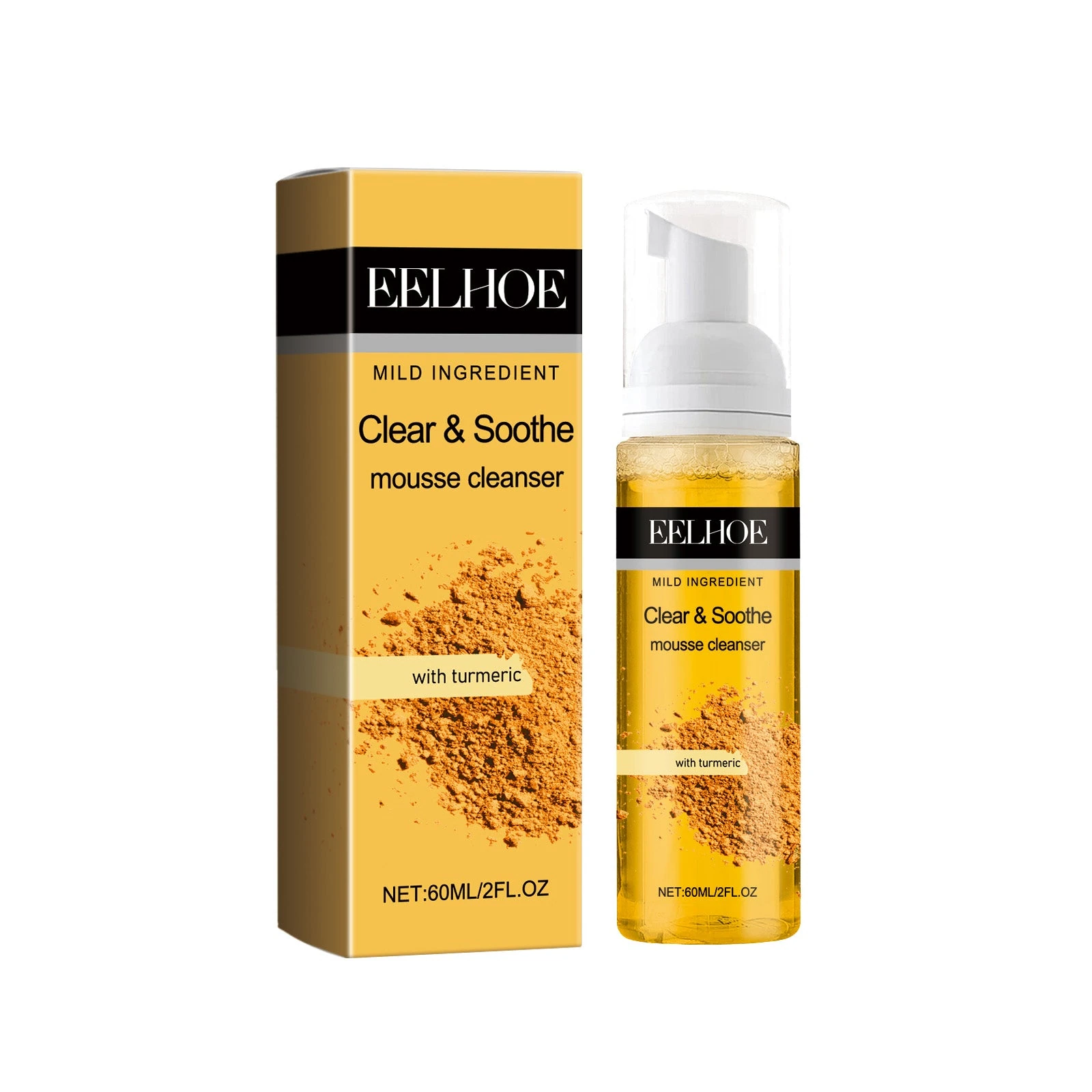
Choose based on the full label, the intended use and your preferences. This is not a claim that the 60ml formula has been clinically proven safer than the 100ml formula. It is a practical distinction: fingertips avoid the extra tool friction and brush-head care. A person who does not want to rinse and air-dry a head after every use may find that simpler format easier to maintain.
Place the cleanser before your leave-on products
After washing, continue with the moisture care your skin needs. If you use serum, it belongs after the cleanser has been rinsed away and before your usual cream. Our turmeric skincare routine order explains the sequence without requiring every product in the range.
If you are comparing tools, our facial cleansing sponge guide covers a different reusable format. You do not need a sponge and brush in the same wash. Decide which method, if any, solves a real preference while keeping the routine gentle and easy to clean up afterward.
Frequently asked questions
Should I use a facial cleansing brush on dry skin?
For the attached foaming-cleanser product described here, start with a wet face and follow its directions. Do not dry-brush your face with it. Other devices have their own methods, so identify the model and consult its instructions.
Can a cleansing brush remove blackheads permanently?
This product does not provide evidence for permanent blackhead removal. Avoid trying to scrub or press them out. For persistent acne or clogged-pore concerns, seek an appropriate treatment plan rather than increasing tool pressure.
Can I use this guide for an electric cleansing brush?
Only the broad principles of gentle cleansing and avoiding irritation carry over. Settings, timing, head replacement, charging and water resistance are device-specific. This article does not supply an operating manual for an electric tool.
Do I need a brush to use turmeric foaming cleanser?
No. The separate 60ml mousse is applied with fingertips. The AAD recommends fingertips as the baseline face-washing method, and a brush is not a required skincare step. Choose the format that fits your routine and comfort.
Sources and product information
Product formats and directions were checked October 16, 2026. The linked AAD resources support gentle cleansing and exfoliation principles; they do not endorse this brush or either formula. No comparative cleansing trial, measured pore change or original device test is claimed.