
Washing your face in the shower can be a practical choice if you use lukewarm water, a suitable facial cleanser and gentle fingertips, then rinse thoroughly. The shower itself is not the deciding factor: water temperature, rubbing, product runoff and repeated washing matter more. If you cannot control those conditions comfortably, wash at the sink instead.
The useful question is not whether the bathroom location is universally good or bad. It is whether your method leaves skin clean and comfortable without adding unnecessary heat or friction. This guide compares the two locations, organizes a shower sequence and explains where GinGrowth's 60ml hand-applied foaming cleanser fits. It does not claim that a particular shower routine prevents acne.
Is it bad to wash your face in the shower?
The American Academy of Dermatology’s face-washing guidance recommends lukewarm water, a gentle non-abrasive cleanser, fingertips rather than scrubbing tools, and patting dry with a soft towel. Those are method requirements you can apply at either a sink or a shower.
A shower becomes less suitable when you keep the water very hot, repeatedly expose your face to a forceful stream or scrub because the skin feels coated. Lower the temperature before facial cleansing. You can collect water in clean hands to wet and rinse the face instead of holding it directly under a spray that feels uncomfortable.
For dry skin, the AAD's dry-skin care guidance recommends warm, brief bathing and gentle drying followed by moisturizer. Its five-to-ten-minute shower recommendation is for managing dry skin overall, not a direction to massage facial cleanser for that long.
On a small screen, swipe or scroll the table sideways to compare all columns.
| Decision | Shower | Sink |
|---|---|---|
| Water temperature | Lower it before facial cleansing | Set lukewarm water separately |
| Hair-product runoff | Finish hair rinsing before the facial step when useful | Wash after showering if runoff is hard to manage |
| Application method | Use gentle fingertips and a suitable facial cleanser | The same gentle method applies |
| Repeated washing | Do not cleanse again just because you shower | Count earlier removal steps in the routine |
Wash your face before or after your hair?
If shampoo or conditioner tends to run over your face, finishing the hair rinse before your facial cleanse is a practical way to avoid washing the same area again. Keep your head positioned so the runoff is directed away where possible, rinse the hair fully, then use the facial cleanser according to its label. This is a workflow choice, not a proven universal rule about acne.
Someone who removes makeup at the sink before showering may use a different sequence. Complete the makeup remover's directions, including any required rinse, and consider whether another cleanse is actually needed. Do not add a second facial wash simply because you have moved from the sink to the shower.
If you prefer washing after the shower, use the sink when you can control water temperature and see the hairline clearly. There is no reward for completing every step in one location. Choose a sequence that avoids leaving cleanser on the skin and makes the next skincare step straightforward.
Use fingertips before deciding you need a tool
The AAD recommends fingertips and cautions that washcloths, mesh sponges and scrubbing can irritate facial skin. More foam or more brush movement does not prove more effective cleansing. Spread the cleanser lightly over the intended areas, keep it away from the eyes as directed and rinse rather than repeatedly polishing the same patch.
The featured mousse bottle has no attached cleansing brush. That matters if you want fewer accessories to maintain in a wet shower. A brush-head bottle is a separate format with its own cleaning and storage needs; its applicator should not be treated as a reason to scrub harder.
If you already use an appropriate brush and want to understand pressure, contact and aftercare, read our facial cleansing brush guide. This shower article focuses on location, temperature and sequence. You do not need to buy a tool to follow its main method.
A simple shower-cleansing sequence
- Finish rinsing hair products if they tend to run over your face.
- Set comfortably lukewarm water and wet the face gently.
- Dispense facial cleanser into clean hands, avoiding the eyes as directed.
- Spread with light fingertip movements and rinse completely.
- Pat dry, apply suitable leave-on care and keep the bottle clean between uses.
Make the cleanser easy to reach without setting it where water continuously enters the cap or pump area. Dispense into clean hands and keep the bottle opening clean. The product's ability to produce foam does not establish that the container is waterproof or designed to stay submerged.
After rinsing, pat with a clean, soft towel rather than dragging it across your face. Apply suitable moisturizer according to its directions. If you are heading outdoors, follow the sunscreen's protection and reapplication instructions; cleansing and moisturizing do not provide an unstated SPF.
A routine can be short without being rushed. Spend attention on the hairline, jaw and areas where residue tends to collect, but do not keep washing until skin feels squeaky. Tightness after cleansing is a reason to examine your method and formula, not evidence that you finally removed enough oil.
On a small screen, swipe or scroll the table sideways to compare all columns.
| What you notice | First check | Avoid |
|---|---|---|
| Tightness after showering | Water heat, duration and cleanser tolerance | Treating tightness as proof of cleanliness |
| Film near the hairline | Hair-product runoff and rinsing | Adding a scrub automatically |
| Makeup remains | Remover compatibility and intended area | Assuming more foam solves every layer |
| Comfortable clean skin | Keep the suitable routine simple | Repeating the wash at the sink |
Where the 60ml turmeric foaming cleanser fits
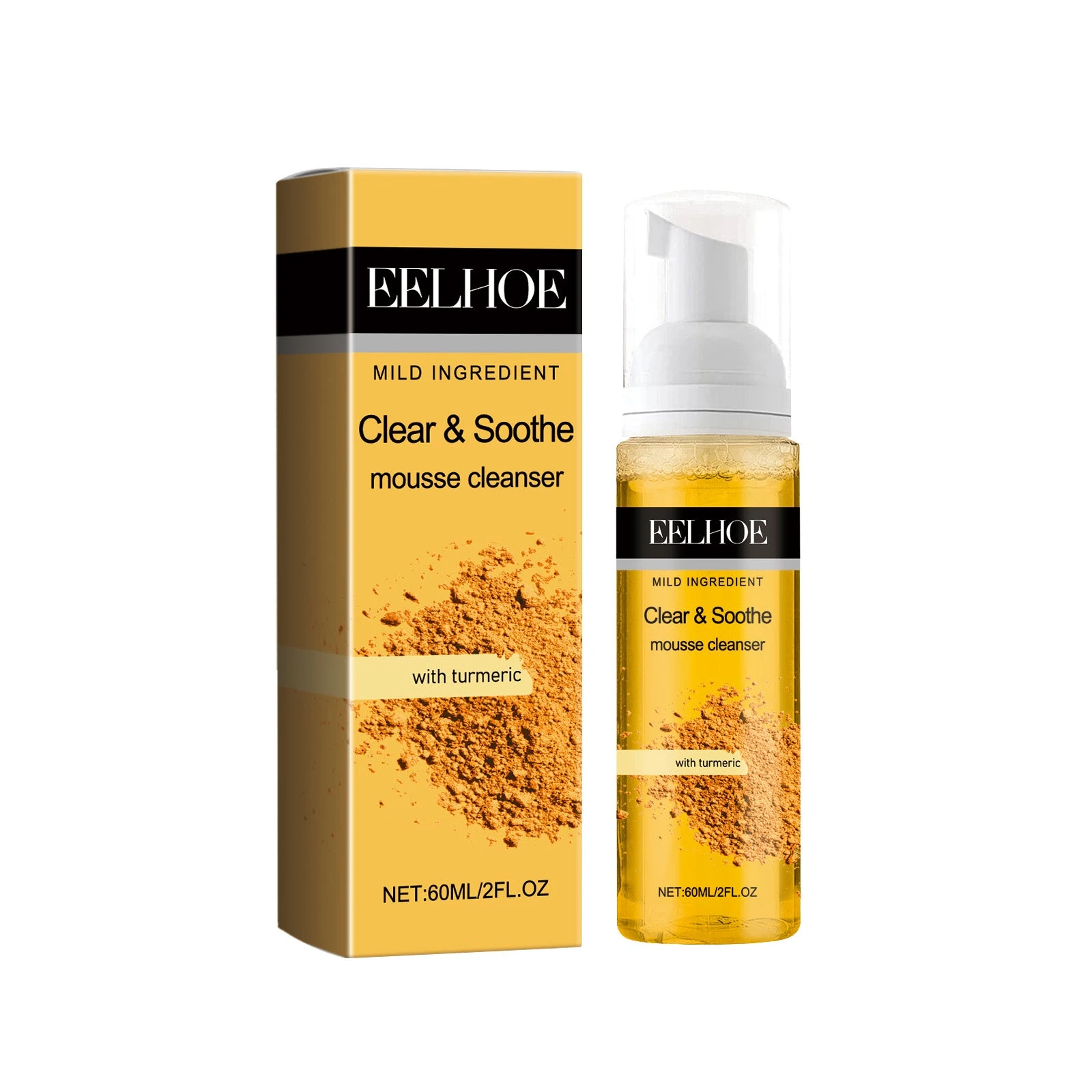
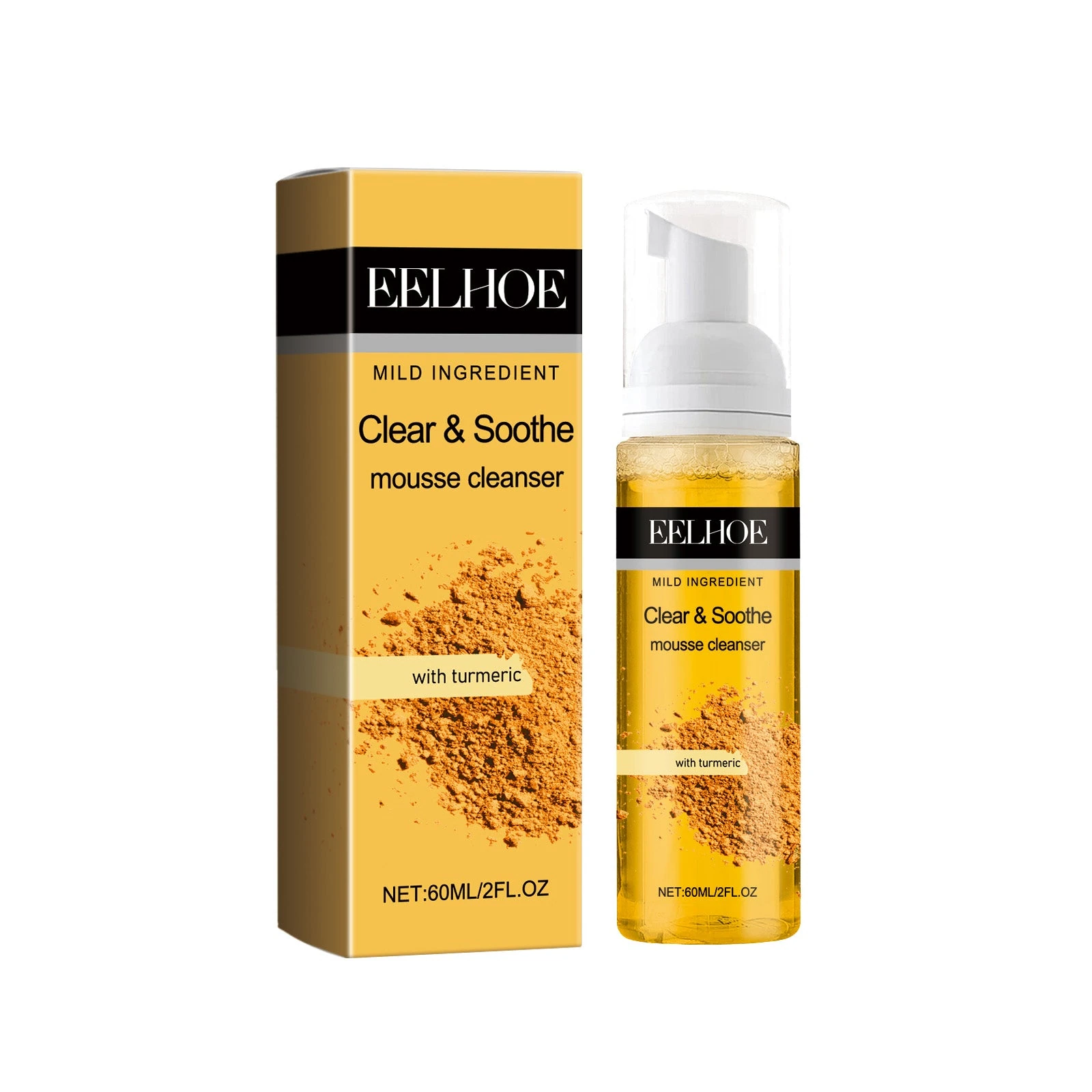
EELHOE Turmeric Foaming Cleanser dispenses ready-made foam from a 60ml mousse pump. The current product panel highlights turmeric root extract, glycerin and water, with sodium cocoyl glycinate and sodium lauroamphoacetate among the cleansing ingredients. It is the hand-applied foam option, distinct from the brush-head bottles and the separate 50g tube cleanser.
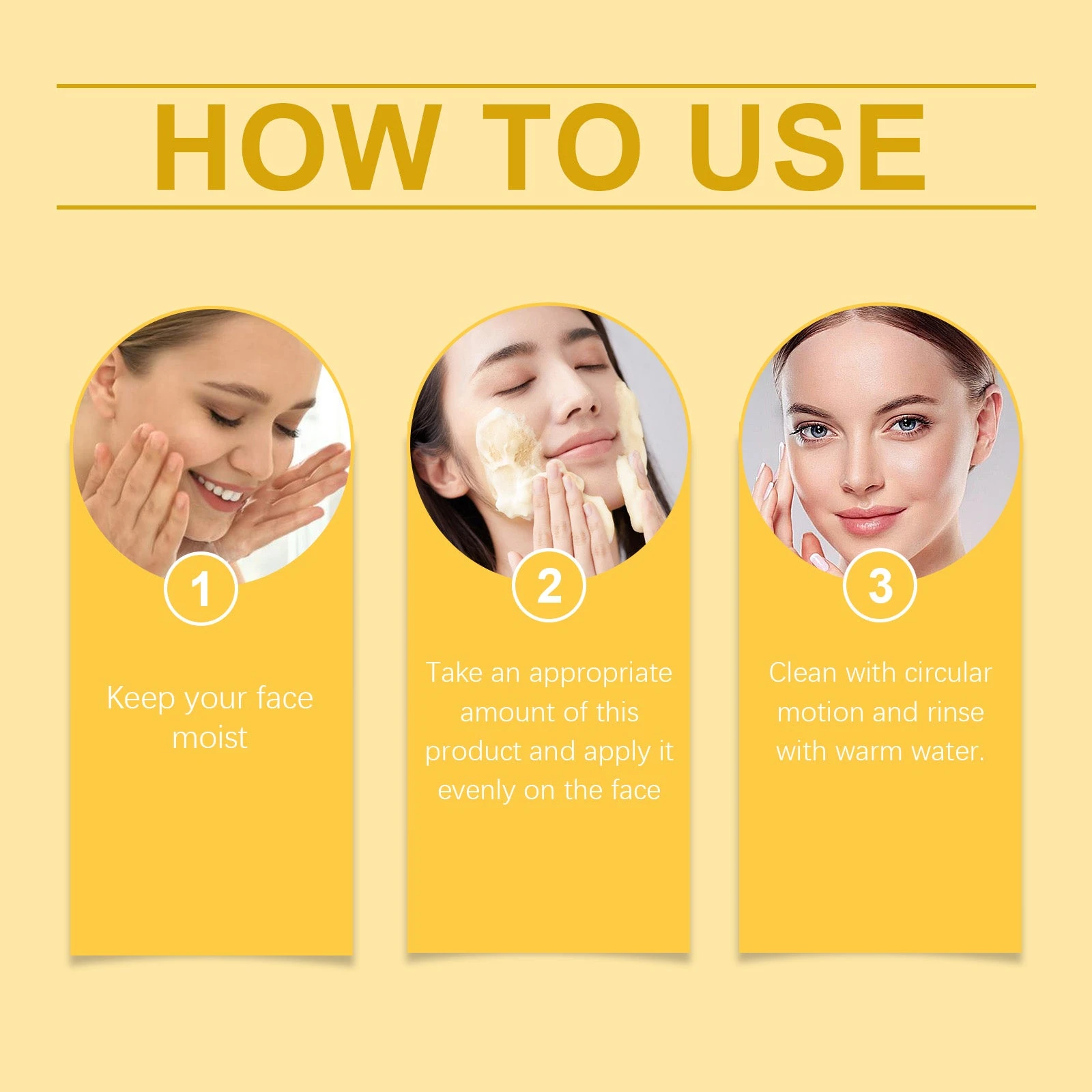
Its method is to moisten the face, dispense foam into your hand, spread it while avoiding the eyes, massage gently with fingertips and rinse thoroughly with warm water. Pat dry afterward. The pump removes the need to build lather manually, but it does not decide how much cleansing your face needs or whether the formula suits your skin.
Choose the format if you prefer ready-made foam and no attached brush to clean. The ingredient highlights do not establish fragrance-free, hypoallergenic or all-skin-type suitability. If you have known ingredient sensitivities, review the complete received label. Do not describe a cleanser as a treatment for a rash simply because it contains a botanical extract.
Troubleshoot the result before adding another wash
If your face feels dry after showering, begin with the temperature and duration, then review the cleanser and other steps. If you notice a film near the hairline, examine hair-product runoff and rinsing. Changing one variable at a time makes your observation more useful than replacing the cleanser, towel and entire skincare routine together.
If the problem is removing water-resistant sunscreen or long-wear makeup, the location may not be the main issue. Our sunscreen-removal guide addresses selecting an appropriate removal method. No cleansing foam should be assumed to remove every resistant layer just because it produces a visible lather.
For burning, persistent redness or discomfort that continues despite gentle care, seek dermatology advice. Avoid adding a scrub to investigate whether the uncomfortable area is “just dead skin.” Cleaning a face and treating a skin condition are different tasks.
Frequently asked questions
Should you wash your face in the shower or at the sink?
Use the place where you can control lukewarm water, apply the cleanser gently and rinse well. The sink may be easier if your shower stays very hot or hair-product runoff is difficult to manage. There is no universal winner based on location alone.
Should I wash my face before or after a shower?
If hair products tend to run over your face, washing after their final rinse can avoid repeating the facial cleanse. If you already cleansed comfortably before showering, do not automatically wash again. Consider the actual residue and product directions.
Does shower steam open pores for a deeper clean?
Do not use a “steam opens pores” claim as a reason to add heat or prolong cleansing. The AAD's practical guidance is lukewarm water and gentle washing. A hotter shower is not a necessary facial-cleansing upgrade.
Can I use the mousse cleanser with my hands?
Yes. The current directions specify damp skin and gentle fingertip application followed by rinsing. It is not the separate brush-head product, and no additional brush is required to use it as described.