
A face wash removes everyday dirt and surface oil; a face scrub adds an exfoliating action, usually through particles moved gently over the skin. Use a suitable cleanser for the washing task and consider scrub only as an optional step when your skin tolerates it. With separate products, cleanse and rinse first, then use the scrub as directed and moisturize after rinsing. A scrub is not automatically a replacement for face wash.
The most useful question is not which product is stronger. It is whether your skin needs cleansing, suitable surface exfoliation or a simpler routine. If your face feels sore or stings after washing, adding grains is unlikely to be the right next step.
GinGrowth sells the EELHOE 100g facial scrub and 50g moisturizing cleanser discussed below. Their current directions, ingredient information and packaging are compared here. The products have different roles, and this is not an independent test establishing which is better for a particular skin condition.
Face scrub vs face wash: the main difference
Face wash is a cleanser. It is spread over the face according to its directions and rinsed away with loosened residue. A scrub introduces an exfoliating element: the featured jar names walnut shell powder, which provides physical exfoliation when moved across the skin. Both products are removed with water, but sharing a rinse step does not make their jobs identical.
The American Academy of Dermatology's exfoliation guide distinguishes mechanical exfoliation with a scrub or tool from chemical exfoliation. It also cautions that exfoliation is not appropriate for everyone. You can have a complete cleansing and moisturizing routine without a grain scrub.
On a small screen, swipe or scroll the table sideways to compare all columns.
| Detail | Face wash | Face scrub |
|---|---|---|
| Primary job | Remove dirt and surface oil | Optional physical surface exfoliation |
| Featured format | 50g cream-style foaming cleanser | 100g walnut-shell scrub |
| Use | Lather with water, massage gently, rinse | Wet skin, brief gentle massage, listed contact interval, rinse |
| Featured timing | No fixed contact timer listed | Illustrated 10-minute contact interval; not continuous scrubbing |
| Best decision question | Does cleansing leave skin comfortable? | Is exfoliation appropriate for this skin today? |
| Moisture step | Separate moisturizer afterwards | Separate moisturizer afterwards |
| Sensitive or irritated skin | Choose a suitable gentle cleanser | Mechanical exfoliation may be too irritating |
Texture names can be confusing. A creamy tube may be a foaming wash, while a creamy jar may contain exfoliating grains. Read what you are instructed to do with the formula. The amount of foam is not a direct measure of how appropriate the product is for your skin.
Can face scrub be used as face wash?
Only rely on a scrub for cleansing if its directions actually describe that role and it meets the removal task. Do not assume that a scrub clears every type of makeup or sunscreen because it feels abrasive. A suitable cleanser or makeup remover can perform those tasks without requiring extra grain pressure.
The featured facial scrub is positioned as a surface-exfoliating step for rough-feeling or dull-looking skin. The separate moisturizing cleanser washes away everyday dirt and surface oil. This distinction matters when planning a purchase: if you need a regular wash, start with the cleanser rather than buying scrub as a stronger substitute.
If a product explicitly combines cleansing and exfoliation, follow that formula's directions instead of automatically adding a second cleanser. More steps do not always make a routine better. Check what remains to be removed and how your skin feels before repeating any wash stage.
Do you use face wash or scrub first?
For two separate products, cleansing and rinsing first is a practical sequence. It removes the residue you intend to wash away before optional exfoliation. Then use the scrub on the directed starting surface, rinse it thoroughly and add suitable moisturizer. Avoid turning the sequence into repeated washing and scrubbing until skin squeaks.
The AAD's face-washing guidance favors gentle fingertip application and lukewarm water rather than scrubbing. When adding an exfoliant, keep that gentleness in the cleansing stage. A brush, rough cloth and grain scrub in the same routine can make it difficult to judge the effect of each step.
- Remove makeup as needed, then cleanse gently with a suitable face wash.
- Decide whether the skin is comfortable enough for optional exfoliation.
- For the featured scrub, start on wet skin and massage lightly, away from eyes.
- Stop rubbing; follow its separate contact interval and rinse sooner if uncomfortable.
- Rinse thoroughly, pat dry and apply suitable moisturizer.
If you already use a textured cleansing accessory, consider its friction before adding another physical method. Our facial cleansing sponge guide explains light handling and preparation. Owning an accessory and a scrub does not mean you should use both together.
What does the 100g facial scrub actually contain?
The EELHOE jar is marketed as a turmeric facial scrub and is labeled Dark Spot Fading Scrub. Its supplied ingredient panel names Juglans regia, or walnut shell, powder as the exfoliant. The panel also lists water, mineral oil, glyceryl stearate and Actinidia chinensis, or kiwi, fruit extract.
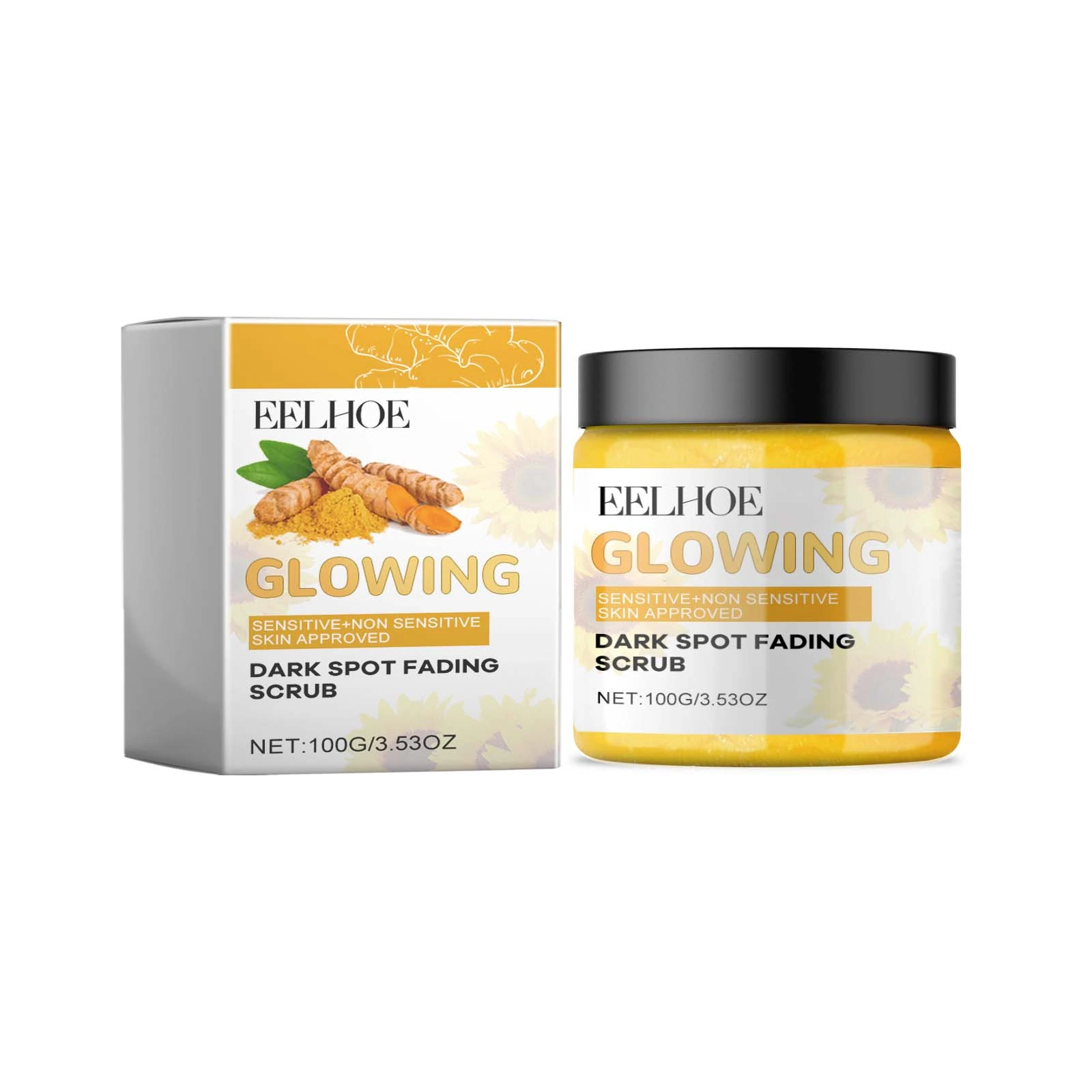
There is a product-information inconsistency worth making clear before purchase: the packaging uses turmeric imagery, while the extract name in the supplied panel is kiwi. The current product page discloses that difference. Do not use the artwork as proof of a turmeric concentration, and do not assume the two botanical names are interchangeable.
The practical role described here is surface exfoliation for a smoother-feeling finish. The package name does not establish when an individual dark spot will change. Repeatedly rubbing a visible mark is especially unhelpful: the AAD warns that aggressive exfoliation can increase pigmentation for some people, particularly those with darker skin tones or a tendency to develop dark spots after irritation.
Choose the jar only when a grain-based facial step is appropriate for your skin and you are comfortable with the available ingredient information. The product-details page provides the current panel and the distinction between a brief massage and its contact interval.
Does the scrub's ten-minute instruction mean ten minutes of rubbing?
No. The current illustrated routine separates gentle massage from a 10-minute contact interval before rinsing. Do not scrub continuously throughout that period. Apply a small amount to wet facial skin, massage gently away from the eyes, stop rubbing and follow the stated rinse-off method. Rinse sooner if the skin feels uncomfortable.
This instruction belongs to the featured product. It should not become a universal timing rule for other face scrubs. The AAD's general guidance describes gentle circular application for about 30 seconds, while individual product directions may specify a separate contact stage. Distinguishing movement from waiting prevents those instructions from being combined into a prolonged massage.
A longer contact time is not established as a better result, and this is not an overnight mask. After rinsing, pat dry and apply suitable moisturizer. If the product irritates your skin, changing the timer is not a substitute for reassessing whether it is suitable.
What does the 50g moisturizing cleanser do differently?
The EELHOE moisturizing cleanser is a cream-style face wash in a squeeze tube. Turmeric and licorice are its botanical highlights. Add water to a small amount in your palm, work it into fine foam, spread gently over facial skin while avoiding the eyes and rinse thoroughly with clean water.
Choose this product for the face-washing stage if the formula and hand-lathered format suit you. It does not require the separate scrub's contact interval, and the available cleanser directions do not establish a fixed minute count. Read each product independently rather than applying the jar's method to the tube.
“Moisturizing cleanser” still means cleanser. Rinse it off, then use a separate moisturizer where needed. For people choosing between cleansing textures, our gel versus cream cleanser comparison explains why texture alone does not prove whether a formula foams or suits a specific skin type.
Who should be cautious about face scrubs?
If exfoliation has left your skin uncomfortable, read about signs of over exfoliation and when to seek help. A current reaction needs appropriate care before choosing a new cosmetic product.
Before adding another exfoliant, compare chemical and physical exfoliation.
Dry, sensitive or acne-prone skin may find mechanical exfoliation too irritating, according to the AAD. The same guidance advises avoiding exfoliation on open cuts, wounds and sunburn. A routine that already includes retinoids, retinol or benzoyl peroxide also deserves caution because additional exfoliation can worsen dryness or irritation.
Oily skin does not automatically need a forceful scrub. Surface shine and tolerance are different observations. If you have inflamed spots, persistent redness or painful areas, choose appropriate care rather than increasing pressure or using the grains to work directly on a lesion.
If your goal is a more even-looking complexion, remember that irritation can work against that goal. The scrub's product name is not a reason to ignore the skin's response. A suitable gentle cleanser and moisturizer may be the more useful choice while you address a persistent concern.
How often should you add exfoliation?
Match the schedule to the method, your skin and the exact product label. The featured instructions describe an application, not a universal weekly frequency. Do not translate a generic recommendation for another formula into a daily habit with this scrub.
Judge the routine by comfort between uses, not just the smooth sensation immediately after rinsing. If washing or moisturizing starts to sting, or the skin remains tender, pause exfoliation and reassess. You do not need to keep increasing frequency because some roughness remains.
If cleansing already meets your needs, stop there and moisturize as appropriate. If you decide to add a scrub, introduce that one change without simultaneously adding a new brush, peel or other exfoliating product. It becomes easier to understand what your skin is responding to.
Choose cleansing first, then decide about the optional step
If you need a wash for daily residue, review the cleanser's ingredients and lather-and-rinse directions. If you are considering surface exfoliation, review the scrub's named walnut-shell ingredient, its botanical-label limitation and the separate massage/contact instructions before choosing. These are different decisions, and you do not need both products for every wash.
Sources and product information
Product information and images were checked October 18, 2026. AAD guidance supports the general cleansing and exfoliation recommendations and does not endorse either EELHOE product. No original irritation test, measured brightening result or guaranteed dark-spot fading timeline is claimed.