
Possible signs of over exfoliation include burning, persistent redness or irritation, unexpected peeling, tightness and new sensitivity to products that previously felt comfortable. These signs can overlap with other skin problems, so they do not diagnose the cause by themselves. Pause exfoliating products and tools when irritation follows their use, keep care gentle and seek medical help for severe, spreading or persistent symptoms.
More exfoliation is not the answer to every rough patch. If your skin starts feeling raw after adding an acid toner, scrub or brush, the first useful action is to review what changed. This guide explains what to observe, how to count overlapping steps and when routine skincare should give way to professional assessment. GinGrowth sells the moisturizer discussed later; it is not presented as a treatment for injured skin.
How to know if you over exfoliated
The American Academy of Dermatology’s exfoliation guidance warns that excessive exfoliation can leave skin red and irritated. It also explains that retinoids, retinol products and benzoyl peroxide can increase sensitivity or peeling, so exfoliating alongside them may worsen dryness or breakouts.
In Healthline’s dermatologist-interview guide, Aanand Geria, MD, and Craig Kraffert, MD, discuss burning, peeling, inflammation and increased sensitivity to other products. The article also describes a tight, waxy-looking surface that can be mistaken for a desirable glow. These are warning observations, not a home diagnostic checklist with a reliable score.
Timing helps organize the question. Record whether the change followed a new product, a longer contact time, more frequent applications or extra scrubbing. But timing alone does not prove causation: a new rash could involve allergy, another irritant, sun exposure or an underlying condition. Avoid assuming that every bump is over-exfoliation or that every new reaction is harmless “purging.”
On a small screen, swipe or scroll the table sideways to compare all columns.
| Observation | Why it matters | What it cannot prove |
|---|---|---|
| Burning or new product sensitivity | A reason to stop irritating steps | Which ingredient or condition caused it |
| Redness, peeling or tightness | Can follow excessive exfoliation | That more exfoliation will help |
| New rough bumps | Review timing and the full routine | That every breakout is purging |
| Pain, blisters or rapid spread | Seek medical assessment | That an ordinary moisturizer is enough |
Know when to seek medical attention
The AAD's rash guidance recommends medical attention for a painful or rapidly spreading rash, blisters or open sores, fever with a rash, or a rash involving the eyes, lips, mouth or genital skin. Pus, crusting, warmth or increasing swelling can also indicate a problem that needs assessment.
Seek emergency care immediately for trouble breathing or swallowing, or swelling of the eyes or lips. Those symptoms should not be managed by shopping for a different moisturizer. For persistent but less dramatic irritation, contact a dermatologist rather than repeatedly testing new products on the uncomfortable area.
If a prescribed treatment is involved, contact the prescriber about changes. This general guide does not tell you to permanently abandon a medication or design a replacement treatment schedule. It does recommend pausing optional exfoliation and avoiding additional rubbing while you clarify what your skin needs.
Count every source of exfoliation and friction
Mechanical exfoliation includes scrubs, brushes, pads and sponges. Chemical exfoliation includes ingredients such as AHAs and BHAs. A routine can combine several exposures without the bottles all using the word exfoliant. For example, an acid toner plus a scrub plus repeated brush passes adds different forms of contact in one session.
Write down the product, intended area, amount, contact time and frequency. Count tools as well as liquids. Include recent shaving, strong cleansing and other treatments in the notes, because the broader routine helps a clinician understand what happened. Do not infer the strength of an acid from its name when the concentration and formula are unknown.
Our chemical vs physical exfoliation guide explains the two methods. If you are currently irritated, use that information to identify overlapping steps, not to choose another method immediately. Switching from a scrub to an acid is still exfoliation.
On a small screen, swipe or scroll the table sideways to compare all columns.
| Record | Example of useful information | Why it helps |
|---|---|---|
| Product and role | Scrub, acid toner, brush or prescribed treatment | Identifies overlapping steps |
| Frequency and contact | How often and how long you actually used it | Separates label instructions from the routine |
| Symptom and timing | Burning after application; peeling the next day | Gives a clinician a clearer history |
| Other changes | Shaving, sun exposure or a new cleanser | Avoids assuming one cause without assessment |
How to care for skin after suspected over exfoliation
- Pause optional scrubs, exfoliating acids and tools when irritation follows their use.
- Record recent changes, contact times, frequency and other treatments.
- Use gentle care that you already tolerate and avoid rubbing away peeling.
- Seek medical help for red flags or persistent symptoms; consult the prescriber about medication changes.
- Only consider optional exfoliation again after recovery and appropriate guidance.
The initial goal is a simpler, comfortable routine. Avoid trying to rub away peeling or make the surface perfectly smooth. Use gentle cleansing and a suitable moisturizer that does not aggravate your skin. The AAD's dry-skin advice favors gentle, fragrance-free care and recommends dermatology advice if products cause burning or stinging.
Continue sensible sun protection with shade, clothing and a suitable sunscreen used as directed. Do not invent a fixed number of recovery nights, and do not assume skin is ready for acids because a weekend has passed. How long discomfort lasts depends on the exposure and the actual condition; persistent symptoms need assessment.
You do not need to introduce several fashionable “barrier” products at once. Keep the record simple enough to tell whether your existing tolerated care is comfortable. Avoid home acid neutralization, abrasive masks or unprescribed treatment experiments on raw skin. If a chemical exposure is causing an active burn, seek urgent advice and follow the product's emergency instructions.
Choosing a moisturizer is a separate decision
A moisturizer can support an everyday moisture routine, but the label must fit your situation. Fragrance-free status, known allergens and the complete ingredients matter more than a botanical headline when skin is reactive. A product that feels pleasant on an ordinary day is not automatically suitable for an irritated area.
DermNet’s moisturizer overview explains that humectants such as glycerin retain water and that some preservatives, fragrances or other components may cause reactions in susceptible users. An ingredient highlight is not a complete formula assessment. There is no basis here for claiming a turmeric product repairs injury or treats dermatitis.
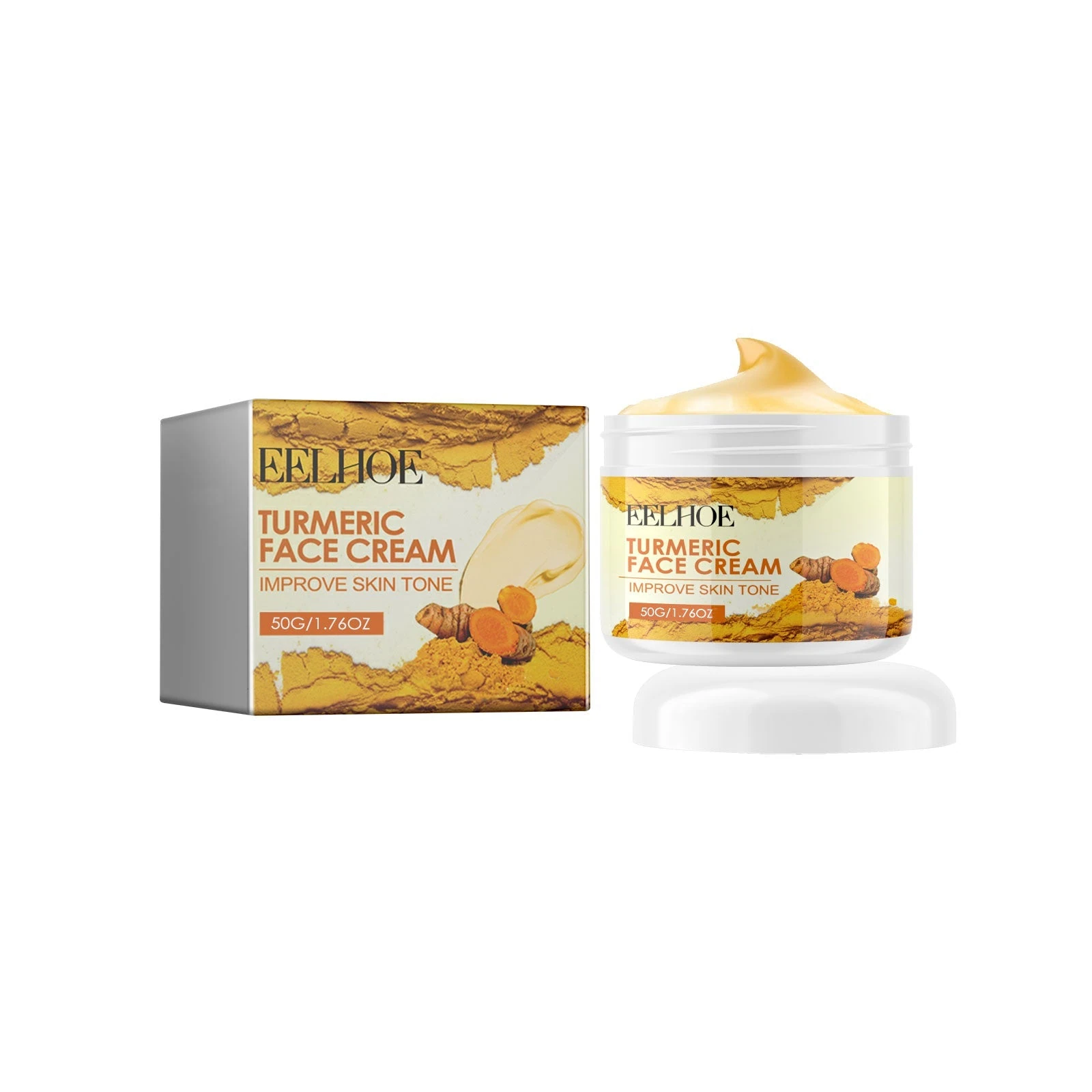
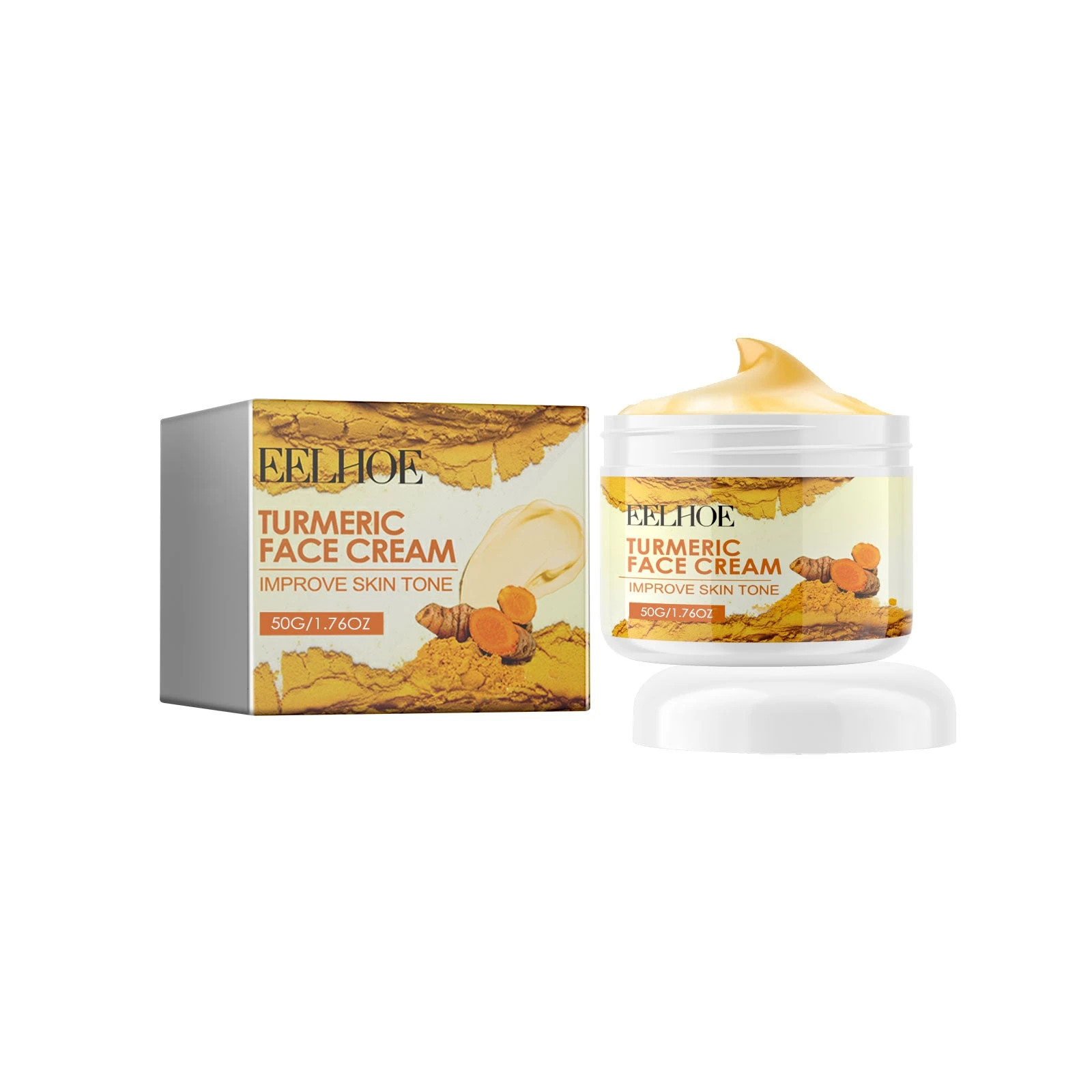
EELHOE Turmeric Face Moisturizer is the 50g leave-on facial jar with water, turmeric extract and glycerin among its stated highlights. The current directions are to apply after cleansing with clean fingertips, spread away from the eyes, massage gently until absorbed and replace the lid. Those are ordinary application directions, not a protocol for damaged or inflamed skin.
The reviewed page does not verify fragrance-free, hypoallergenic or compromised-skin testing. If your current need is a clinician-recommended bland formula, do not assume this jar meets it. Consider the product only as a later everyday moisture option when your skin is comfortable and the complete label is suitable for you. Keeping an already tolerated moisturizer may be the better choice.

Returning to exfoliation is optional
Skin does not need to be exfoliated simply because a calendar says it is time. The AAD notes that exfoliation is not for everyone and that frequency depends on skin type and method. After a reaction, resolve the symptoms and seek guidance if the cause or timing is unclear before considering another trial.
If you resume, choose one suitable method, follow its label and avoid immediately restoring every overlapping step. A recurrence is a reason to stop and reassess, not to push through until skin “gets used to it.” Do not exfoliate open cuts, wounds or sunburned skin.
Our face scrub vs face wash guide helps separate ordinary cleansing from optional exfoliation. You can maintain a cleansing routine without adding a scrub. That distinction makes a simpler routine easier to keep after the original discomfort has settled.
Frequently asked questions
What are the main signs of over exfoliation?
Burning, redness or irritation, peeling, tightness and increased product sensitivity can follow excessive exfoliation. They also occur with other conditions. The combination of symptoms and recent routine changes is useful to discuss with a clinician, but it does not establish a diagnosis on its own.
Is shiny skin proof that I over exfoliated?
No. A tight, uncomfortable, waxy-looking surface can be a warning sign, but shine alone has many explanations. Assess discomfort, timing and other changes instead of diagnosing from a photograph or one visual feature.
How long does over-exfoliated skin take to recover?
There is no reliable deadline for every person or exposure. Pause optional exfoliation, use gentle care and seek advice for persistent or severe symptoms. Do not restart based only on a fixed number of days.
Should I buy the featured moisturizer for a current reaction?
This article does not recommend it as treatment for a current reaction. Its page lacks verified fragrance-free and compromised-skin testing. Use appropriate tolerated care or professional guidance first; review the jar only for a suitable everyday routine later.