
Physical exfoliation uses movement and a tool or particles to remove surface dead skin cells. Chemical exfoliation uses ingredients such as alpha or beta hydroxy acids to help loosen that surface layer. Neither method is automatically better or gentler. The formula, strength, pressure, frequency and condition of your skin determine whether a particular approach is suitable.
Start by deciding whether you need exfoliation at all, then choose one appropriate method rather than stacking several at once. This guide compares the mechanisms, explains when to pause and shows where a walnut-shell facial scrub fits. GinGrowth sells that scrub. Its inclusion is a disclosed product example, not evidence that it outperforms chemical exfoliants or suits every skin type.
What chemical and physical exfoliation actually do
The American Academy of Dermatology's at-home exfoliation guidance describes mechanical exfoliation as using a brush, pad, sponge or scrub to physically remove dead skin cells. It describes chemical exfoliation as using substances such as alpha and beta hydroxy acids. Physical and mechanical are commonly used for the same broad method in this comparison.
The distinction is the way exfoliation occurs, not whether a product contains chemicals in the everyday scientific sense. A scrub has a formula too, and a plant-derived ingredient is still a substance with particular properties. Words such as natural, botanical or professional do not establish the intensity or suitability of the finished product.
A toner, pad or cleanser is not automatically a chemical exfoliant because of its format. Read the actual ingredient information and intended function. Likewise, a soft cloth used to wash gently is not the same intensity as a gritty scrub used with force. Product selection and application pressure both belong in the comparison.
On a small screen, swipe or scroll the table sideways to compare all columns.
| Decision | Physical or mechanical | Chemical |
|---|---|---|
| How it works | Friction from a tool or particles | Exfoliating ingredients such as AHAs or BHAs |
| User-controlled intensity | Pressure, duration and frequency | Amount, contact time and frequency |
| Facts to read | Particles, intended area and rinse method | Active ingredient, strength if stated, leave-on or rinse-off method |
| Potential concern | Friction may irritate unsuitable skin | A strong or unsuitable formula may irritate |
| Combining methods | Count brushes and scrubs already used | Count acid steps already used; do not stack automatically |
Match the choice to skin condition and existing care
The AAD advises considering skin type and the products already in your routine. Dry, sensitive or acne-prone skin may find mechanical exfoliation irritating, while stronger methods can also be unsuitable when skin is already compromised. Retinoid creams, retinol and benzoyl peroxide are examples the AAD flags when discussing increased sensitivity or peeling and the risk of adding exfoliation.
Be particularly cautious if you develop dark marks after irritation. The AAD notes that aggressive exfoliation can contribute to increased pigmentation for some people, especially those with darker skin tones. This does not mean every person with a particular skin tone needs the same product. It means a history of irritation-related marks is relevant to the decision and may justify professional advice.
Do not exfoliate open cuts, wounds or sunburned skin. If you are trying to solve persistent itching, redness, painful acne or unexplained scaling, get advice about the underlying concern rather than adding a stronger exfoliant. A comfortable basic cleansing and moisturizing routine can be the more useful next step when skin is already irritated.
Chemical exfoliation vs scrub: compare the actual instructions
For an acid product, check which ingredient is used, the intended body area, whether it is leave-on or rinse-off, and the stated schedule. A name containing acid does not by itself tell you the finished product's exfoliating strength. Do not infer a concentration or pH when the manufacturer has not supplied it. Home-use cosmetic directions are not interchangeable with professional peel instructions.
For a scrub, check the particles, the amount, whether skin should be wet and how briefly to massage. Pressure is part of the dose you control: pressing harder changes the experience even when the scoop size stays the same. A scrub's longer contact interval, when specified, is not permission to keep rubbing for that entire time.
Use the face scrub versus face wash comparison if your decision is whether to cleanse or exfoliate. That is different from choosing between two exfoliation mechanisms. A regular face wash can remove daily residue without serving as a substitute for an acid treatment or a grain-based scrub.
Use this screen before adding an exfoliating step
Start with the condition of your skin today, then list what is already in the routine. A new exfoliant should fill a clear role. Counting only bottles labelled “exfoliator” can miss friction from brushes and grain-based cleansers or treatment products that already make skin sensitive.
On a small screen, swipe or scroll the table sideways to compare all columns.
| What applies today | Next decision | Reason |
|---|---|---|
| Skin is sunburned, wounded or already irritated | Pause exfoliation | Neither mechanism solves a damaged-skin situation |
| Retinoid, retinol or benzoyl peroxide is in the routine | Review compatibility and seek advice if uncertain | Existing products can increase sensitivity |
| Scrub, brush or acid step is already used | Count that step before adding another | Separate products can add up to more exfoliation |
| Skin is comfortable and a rinse-off particle format is preferred | Compare particle type, gentle massage and rinse directions | The actual physical product matters more than its category |
| A leave-on acid format is preferred | Check the specific active, directions and suitability | This walnut-shell jar is not that format |
For example, someone using a retinoid and experiencing stinging after washing has a different decision from someone with comfortable skin choosing an occasional rinse-off scrub. The first needs help with the irritation and treatment routine; the second can compare the product’s particles and instructions. This is a practical application of the AAD’s selection guidance, not a diagnosis based on skin type.
Can you use chemical and physical exfoliation together?
Do not make that the default. Layering an acid, a grain scrub and a cleansing brush in one session makes the total intensity harder to judge. Each product may have acceptable individual instructions while the combined routine becomes uncomfortable. Start with one appropriate exfoliating step and assess how skin responds before considering anything additional.
Some finished products combine mechanisms intentionally, but that does not validate mixing separate products in your hand or using them back to back. Follow the combined product's own directions and do not recreate it from unrelated bottles. If a clinician recommends a combination for a specific concern, use that individualized plan rather than a generic schedule from a blog.
Frequency matters across days as well as within one wash. An exfoliating toner used regularly, a weekly scrub and a rough tool may all contribute to the same routine even when you do not use them at exactly the same moment. Write down what is already present before adding a new step. More routes to exfoliation do not automatically create a better result.
A practical sequence for making the choice
- Check whether skin is comfortable; pause on sunburn, wounds or irritation.
- Review existing retinoids, treatments, acids, scrubs and tools.
- Choose one suitable method using the actual formula and instructions.
- Apply gently; distinguish brief massage from any separate contact interval.
- Rinse when directed, moisturize and follow daytime sun-protection guidance.
If you use a rinse-off scrub, rinse with comfortably lukewarm water and avoid repeating the massage because you cannot see an immediate change. The AAD's general advice describes gentle small circular motions for about thirty seconds, followed by rinsing. That is broad technique guidance; products with a separate contact interval require careful reading rather than treating every minute as active scrubbing.
After exfoliation, apply a suitable moisturizer as the AAD recommends. Keep sun protection in your daytime routine, and follow any specific sun-exposure precautions on an acid product. If discomfort occurs, stop the exfoliating step. Persistent irritation is not evidence that the product is working more deeply or that you should continue until the skin adapts.
Where our 100g facial scrub fits—and what needs clarification
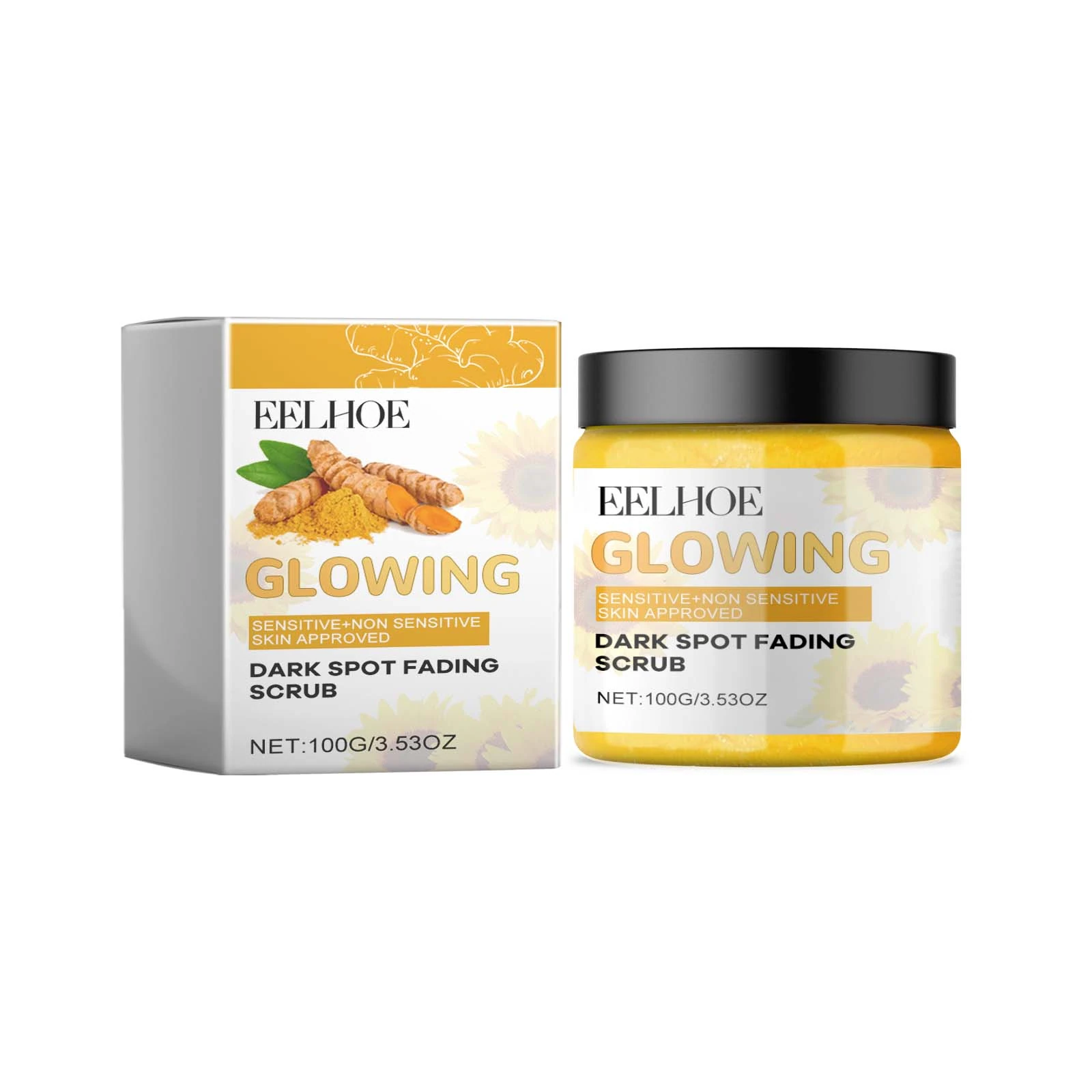
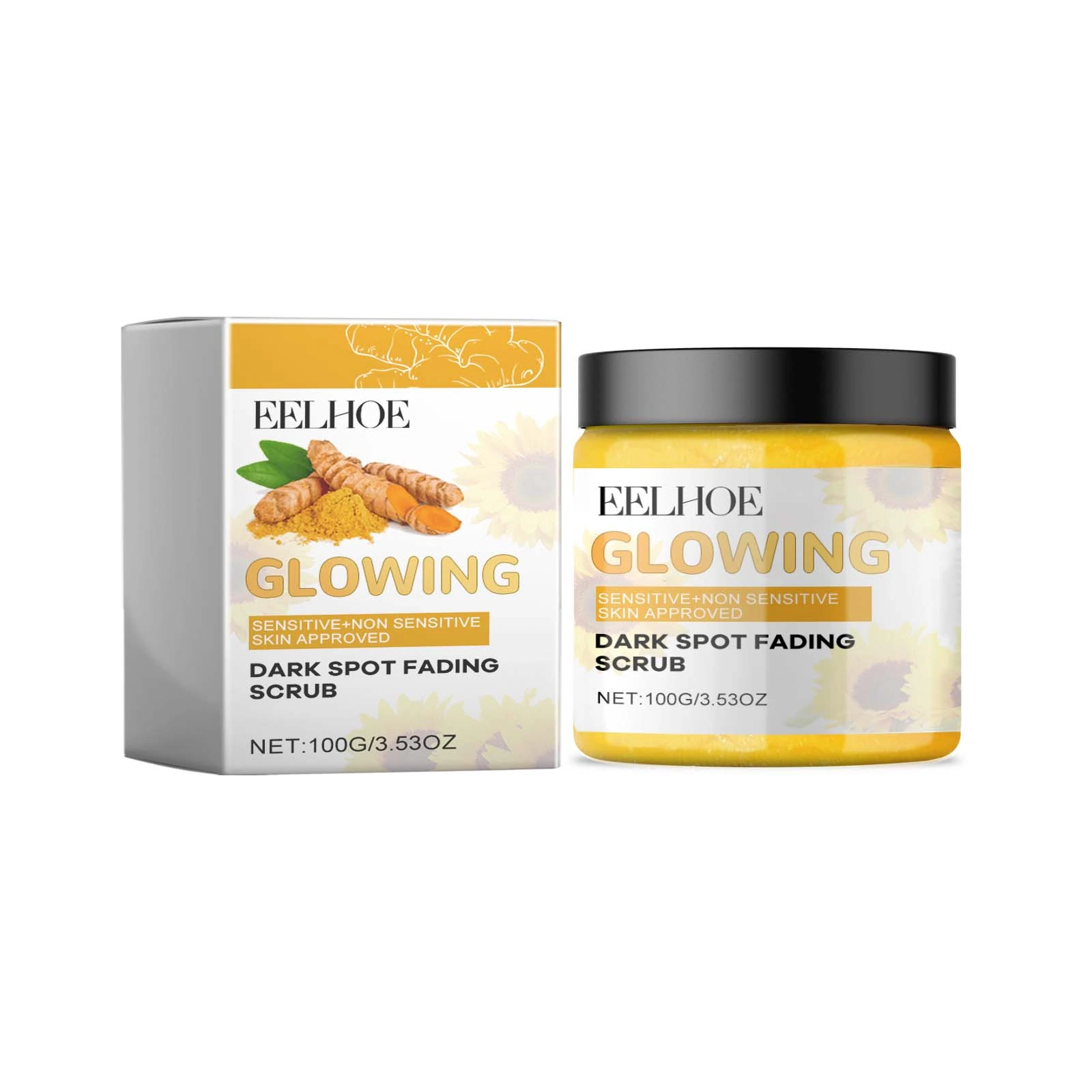
The current EELHOE facial scrub is a 100g jar labelled Dark Spot Fading Scrub. Its ingredient panel explicitly names Juglans regia, or walnut, shell powder. That makes the named exfoliating component a physical scrub ingredient. The panel also lists water, mineral oil, glyceryl stearate and Actinidia chinensis, or kiwi, fruit extract.
The botanical information has a limitation: the listing and artwork use turmeric imagery, while the supplied panel names kiwi fruit extract. Do not use that mismatch to invent an acid concentration or assume a turmeric-only formula. Check the current panel and ask for clarification if botanical identity is important to your purchase. The walnut-shell component is the clearly identified exfoliant for this comparison.
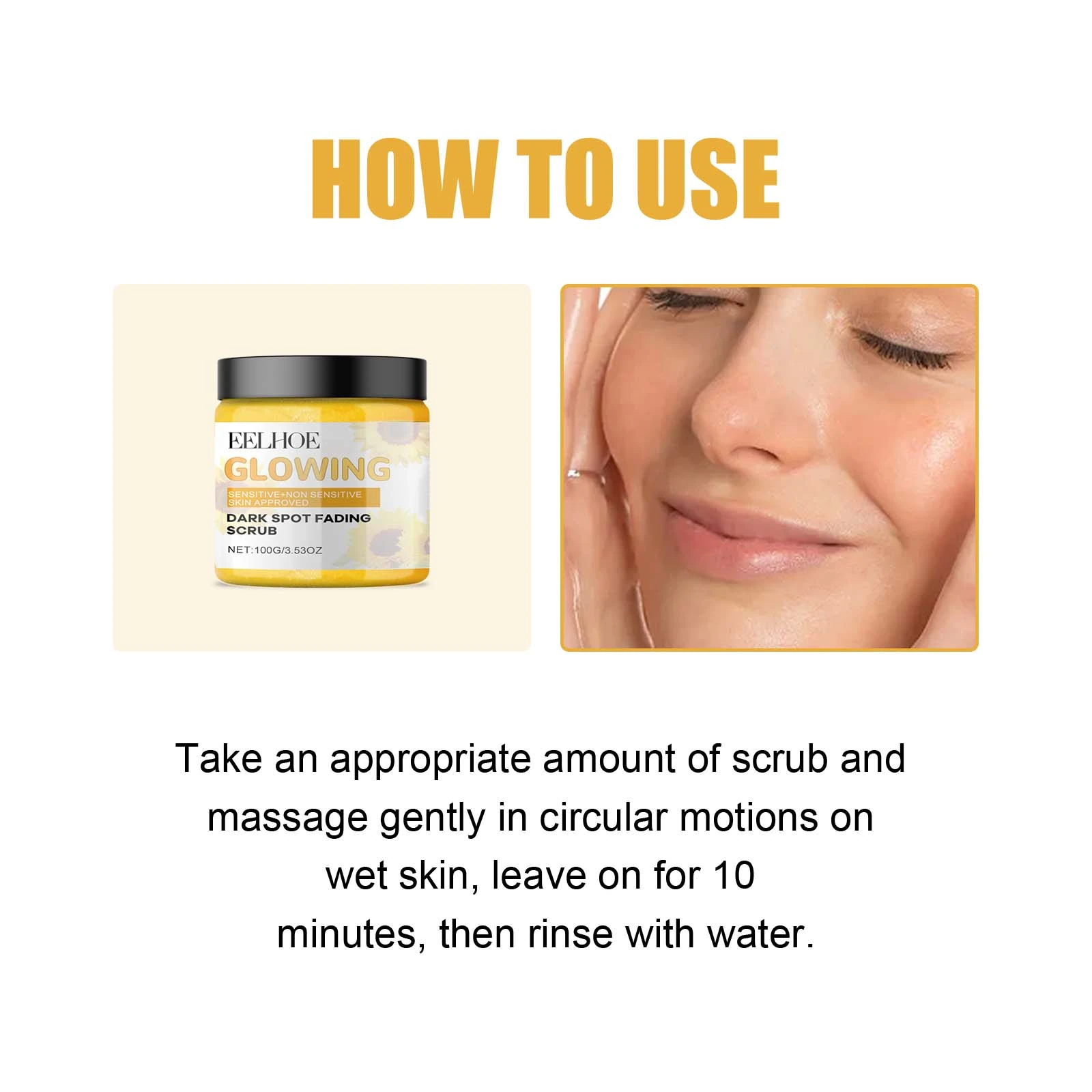
The product directions say to apply a small amount to wet facial skin, massage gently, leave for the illustrated ten-minute contact interval and rinse thoroughly, or sooner if uncomfortable. The ten minutes is contact time, not ten minutes of rubbing. This product-specific interval differs from the AAD's generic short scrub guidance; it is not a general recommendation for other exfoliants or evidence that a longer exposure is better.
Choose it only if a physical facial scrub and those instructions fit your skin and preferences. The package name does not establish how quickly an individual dark mark will change. No clinical comparison with an acid exfoliant is provided. If your skin is sensitive, inflamed or prone to irritation-related dark marks, seek advice before selecting an abrasive method.
Questions about physical vs chemical exfoliation
Is chemical exfoliation always gentler?
No. Strength, formulation, frequency and skin condition matter. A mild product used correctly can differ greatly from a strong treatment. Compare actual directions and suitability rather than using the chemical label as a guarantee of gentleness.
Which is better for sensitive skin: chemical exfoliation or a scrub?
Neither category is a universal safe choice. The AAD notes that mechanical exfoliation may irritate dry, sensitive or acne-prone skin. A chemical formula can also be unsuitable because of its strength or the rest of the routine. If skin is already stinging or inflamed, pause exfoliation and seek suitable advice before selecting either method.
Can I scrub for the entire contact time?
No. Active friction and time left on the skin are different instructions. For the featured jar, massage gently and briefly, then observe the separate contact interval before rinsing. Stop and rinse sooner if uncomfortable.
How often should I exfoliate?
There is no single frequency for every method and skin type. Follow the product and any individual clinical guidance. The AAD notes that more aggressive exfoliation generally needs to be less frequent. Do not build a fixed daily schedule from the broad chemical-versus-physical comparison.