
Chāmpo Pitta Growth Serum is identified in a March 2026 ingredient record that lists caffeine, a peptide, red clover, haritaki and moisturizing ingredients. That provides a concrete formula comparison without proving a current finished-product growth result. Choose it by the exact package and the evidence behind its growth positioning, rather than assuming the word Pitta supplies a diagnosis.
Identify Pitta Growth Serum
The third-party ingredient entry uploaded March 3, 2026 names Champo Pitta Growth Serum. The entry describes it as a hair-growth treatment but does not include a full study protocol.
A range name, product code or Ayurvedic category should not be confused with a medical diagnosis. Confirm the exact bottle and regional label before comparing it with a different scalp product.
For the traditional-care question, evaluating Ayurvedic approaches to thinning hair separates historical use, botanical conditioning and evidence for treatment.
Read the Base before the Hero Ingredients
Water, capryloyl glycine, glycerin, cocoyl proline and VP/VA copolymer appear early in the record. Caffeine follows, with butylene glycol and other formulation ingredients later in the list.
The copolymer is relevant to the product’s formulation and potential hair feel, while glycerin is a recognizable humectant. Neither list order nor a highlighted ingredient reveals the exact concentration or predicts an individual result.
Swipe the table sideways to compare all columns.
| Decision | Documented detail | Purchase implication |
|---|---|---|
| Formula | Caffeine, peptide, clover and haritaki | No guessed concentrations |
| Positioning | Pitta Growth Serum | Not a diagnosis |
| Evidence | Dated ingredient record | Not a complete product trial |
Understand the Peptide and Clover Components
Acetyl tetrapeptide-3 and red clover flower extract are recorded alongside dextran and glycols. These precise names are more useful than simply calling the serum a peptide treatment.
The record does not disclose a complex percentage or the amount of pure peptide. It also does not establish that an ingredient supplier’s findings apply unchanged to this finished serum or another product containing similar components.
Put Haritaki and Creatine in Context
Terminalia chebula fruit extract, also called haritaki, and creatine appear in the list. Olive extract, a hyaluronate crosspolymer and nucleotide-related ingredients are also present.
This is a multi-ingredient formula. A traditional botanical story can be part of why a buyer is interested, but it should not become an invented timeline for regrowth or an assertion that every underlying cause of thinning responds.
For the separate everyday-care choice, review the 30ml Lightweight Scalp Serum with Ginger.
Compare Separate Moisturizing Formats
GinGrowth offers these ordinary-moisture products on their own specifications, without copying another formula’s efficacy claims. GinGrowth sells the two products below.
Swipe the table sideways to compare all columns.
| Detail | 30ml Lightweight Scalp Serum with Ginger | 40ml Ginger Hair Tonic for Scalp & Roots |
|---|---|---|
| Format | Water-based dropper essence | Water-based dropper tonic |
| Ingredient highlights | Aqua, glycerin, ginger root oil, Polygonum multiflorum extract and hydroxyethylcellulose in the ingredient graphic. | Ginger extract, glycerin, sodium PCA and panthenol, alongside aqua, in the product artwork. |
| Application | After washing and drying, apply a small amount to the scalp, massage gently and leave in. The product guide describes daily use. | Part hair, apply a small amount, massage gently for 2–3 minutes and leave on. Follow the current bottle for frequency. |
| Reason to compare | Choose for a light moisturizing step and precise placement along a part. | Choose for a larger dropper format with humectant and conditioning ingredient highlights. |
View 30ml Lightweight Scalp Serum with Ginger or compare 40ml Ginger Hair Tonic for Scalp & Roots. Review the current product page for price and package details.
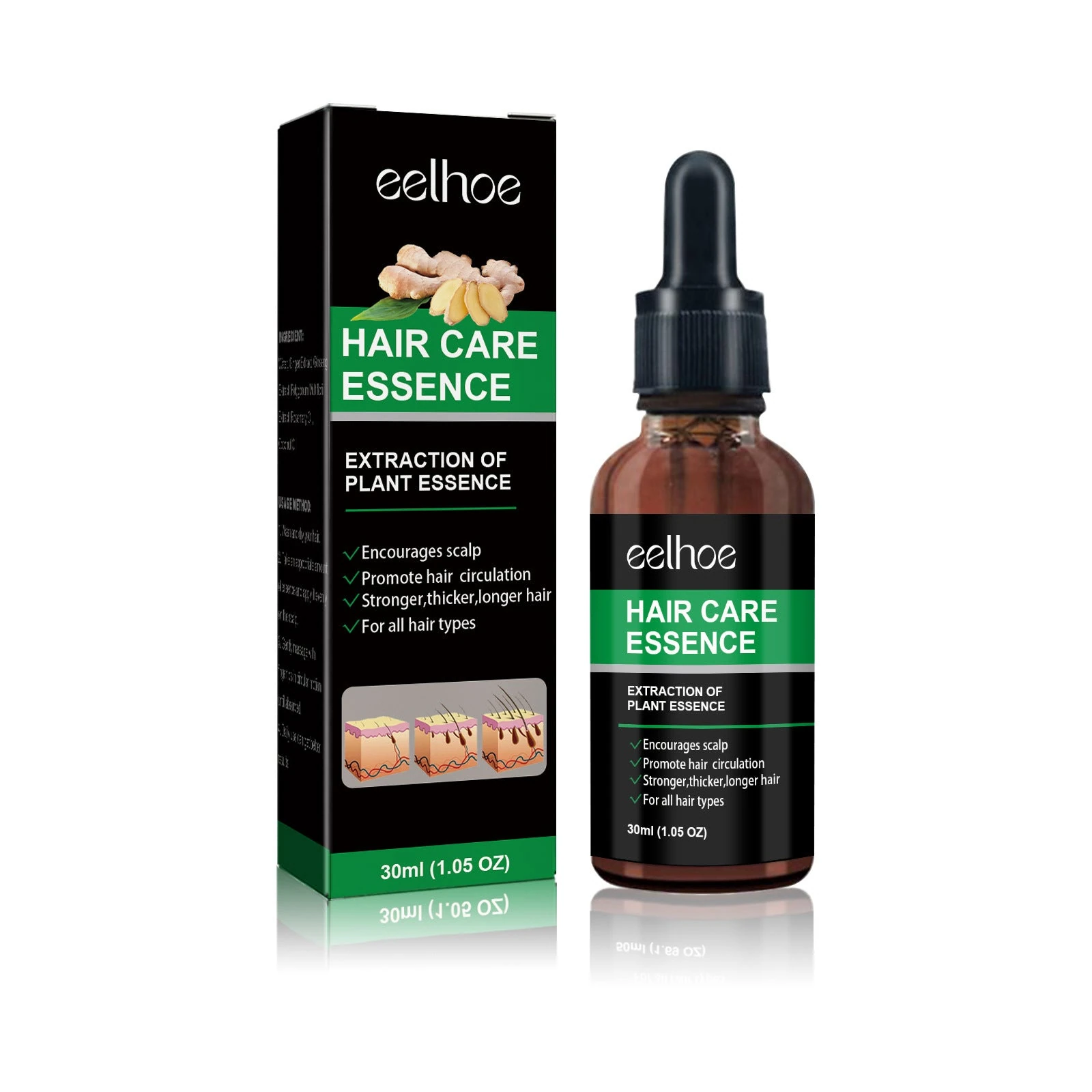
The essence contains ginger root oil within a water-based formula. That is different from buying a bottle of pure essential oil. Glycerin provides a concrete moisturizing ingredient to compare, while the dropper helps direct a small amount to the scalp. Use the finish on your own hair as the practical test: controlled placement matters more than saturating the roots or spreading scalp care through the lengths.
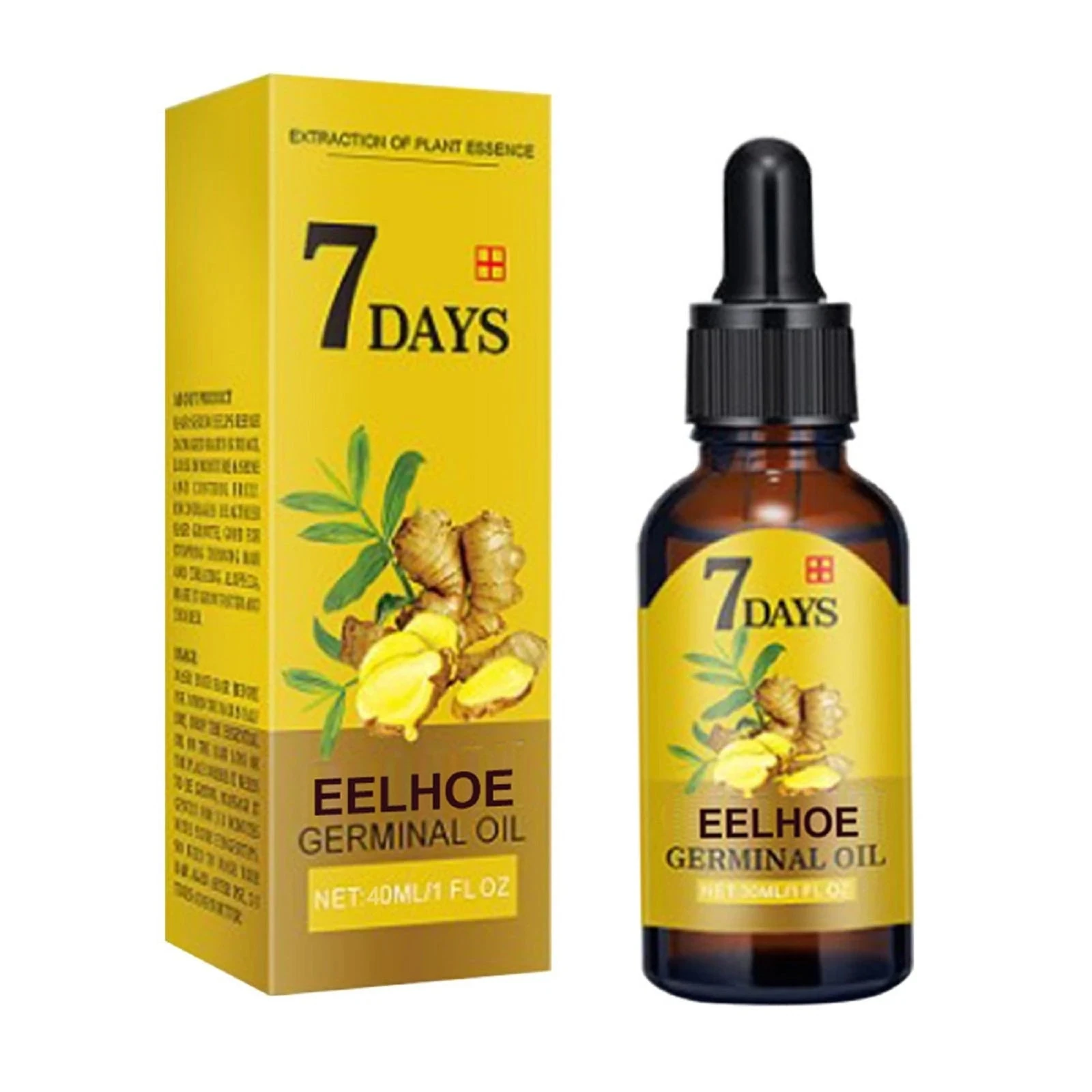
Glycerin and sodium PCA are moisture-binding ingredients, while panthenol is used for conditioning. The highlighted ingredient graphic is not a percentage breakdown. The word tonic describes this product choice; it does not establish a stronger concentration than the smaller essence. Compare the ingredients you prefer and whether direct dropper placement feels convenient in your routine.
Read Fragrance and Alcohol Names Precisely
Fragrance is described as a blend of essential oils, with several named fragrance components. Benzyl alcohol also appears. That name should not be confused automatically with denatured alcohol or with a promise that the product is unsuitable for everyone.
The practical question is the current full label and your own sensitivity history. Database badges simplify ingredient categories; they do not replace a product-specific tolerance assessment.
Ask What a Growth Result Actually Measures
A hair-growth treatment label may refer to fuller appearance, fewer shed hairs, retained lengths or a measured increase in density. Those outcomes need different measurements and cannot be combined into one undifferentiated success percentage.
Request the finished-product evidence if growth is the deciding requirement: population, duration, regimen, comparator and endpoint. The ingredient entry reviewed here does not supply those details, so it should not be cited as though it does.
For the density claim itself, how to evaluate a scalp-density serum separates visible fullness, breakage, shedding and measured density before comparing studies.
Use the Current Label for the Application Plan
No current exact amount or schedule is established by this historical ingredient record. This guide does not invent a daily drop count for Pitta Growth Serum.
Check whether the supplied package directs application to dry or damp scalp and how it fits with washing. If you use a prescribed treatment, obtain compatible instructions rather than layering the products according to unrelated online routines.
Compare Ordinary Moisture on Its Own Terms
GinGrowth sells the essence and tonic below as separate moisturizing choices. They are not the same formula as Chāmpo Pitta Growth Serum, and evidence from that product cannot be transferred to them. Compare the current ingredient highlights, application format and intended care step before choosing.
If a particular branded complex is the reason you are shopping, preserve that requirement in the comparison. If your actual need is ordinary moisture with direct scalp placement, evaluate the alternative on that basis. A less expensive bottle is not automatically a clinical substitute, and a premium bottle is not automatically the best texture for your routine.
Keep Hair-Loss Treatment Cause-Specific
The American Academy of Dermatology explains diagnosis-led treatment. Continuing thinning, sudden patches or loss with pain and inflammation should not be reduced to a choice of cosmetic ingredients. A clinician can distinguish the relevant causes and explain appropriate options.
Keep prescribed directions intact when adding ordinary care. Do not dilute medication into a serum or use a botanical product to replace it without advice. Comfort, easier styling and fewer broken lengths can matter while remaining different outcomes from regrowth.
Frequently Asked Questions
Does the Pitta name determine the medical cause of my thinning?
No. It is part of product positioning, not a substitute for assessment of hair loss.
Does a dated ingredient record confirm today’s formula?
No. Match the exact regional package, full product name and current ingredients before purchase.
Are the GinGrowth options equivalent in clinical results?
No comparative trial is established here. Their ordinary-care purpose and own specifications are the basis for comparison.
Make the Purchase Decision Verifiable
For Chāmpo Pitta Growth Serum, save the seller’s exact product name and label information before ordering. Check the application area, any stated amount, rinse status and frequency on the supplied package. Where those details are unavailable, ask the seller rather than adopting another serum’s routine.
A useful review states what was actually documented and when. This guide does not report personal testing, a new clinical trial or a guarantee of current stock. The practical result should be a clearer product choice and a defined next question where the evidence remains incomplete.
Choose the care role and formula that match your routine.
Sources and Product Information
- Champo Pitta Growth Serum ingredients (Explained) — Third-party ingredient record uploaded March 3, 2026; checked October 1, 2026. Historical formula, not current official-label or trial verification.
- AAD: Hair loss diagnosis and treatment — Guidance checked October 1, 2026; not a trial of the cosmetics compared here.
- AAD: Causes of scalp itch — Guidance checked October 1, 2026.
GinGrowth product details were checked October 1, 2026. This guide compares published information and current product specifications; it does not report a GinGrowth clinical trial or personal use test.