
Choose an anti dandruff serum for scalp care by its labeled purpose and active ingredient first, then compare the formula, applicator and directions. Some leave-on products are genuine dandruff treatments; others provide moisturizing scalp care. A serum bottle, botanical ingredient or cooling sensation alone does not establish which job a product does.
This guide compares three specific US anti-dandruff labels and shows how to select a separate everyday-care step when you need one. Product information and sources were checked on October 1, 2026. GinGrowth sells the cosmetic products shown below; the treatment examples are included for label comparison, not as products tested head to head.
What Is an Anti Dandruff Serum and How Does It Work?
An anti-dandruff leave-on is applied to the scalp and used according to its treatment label. For example, the US label for Head & Shoulders BARE Minimal Ingredients Itchy Scalp Relief Serum lists pyrithione zinc 0.1% and states that it helps prevent recurrence of flaking and itching associated with dandruff. This is a specific labeled benefit attached to a particular formula.
A moisturizing serum has a different selection criterion: the ingredients and finish should suit the care you want. Glycerin can be a useful moisturizing ingredient, but finding glycerin or ginger in a formula does not establish the same anti-dandruff purpose as a labeled treatment. Start with the outcome you need before comparing claims on the front of the bottle.
Key Ingredients to Look for in a Scalp Serum
The American Academy of Dermatology's dandruff guidance identifies dandruff-shampoo ingredients including zinc pyrithione, ketoconazole, selenium sulfide, salicylic acid, sulfur and coal tar. The list concerns treatment options with their own instructions. It is not permission to leave any shampoo or ingredient mixture on overnight.
Swipe the table sideways to compare all columns.
| Label detail | What it tells you | How to use the information |
|---|---|---|
| Pyrithione zinc 0.1% in the three US leave-on examples | The active ingredient named for their anti-dandruff purpose. | Match the exact product and use its own directions. |
| Other dandruff-shampoo actives listed by the AAD | Options such as ketoconazole, selenium sulfide or salicylic acid appear in dandruff care. | Check the finished shampoo label; do not copy rinse-off directions to a serum. |
| Glycerin and other moisturizing ingredients | A reason to compare moisturizing care. | Do not treat this alone as proof of dandruff-treatment equivalence. |
| Ginger, fragrance, peppermint or menthol | Details of a particular formula and potential personal tolerance considerations. | Check the complete list and your reaction history. |
Read the complete formula as well as the active panel. Fragrance, peppermint, menthol or alcohol may matter to your own tolerance. “Natural” does not guarantee comfort, and “water-based” does not mean oil-free. A product may contain both water and an oil ingredient. Avoid treating the presence or absence of one ingredient as a universal quality score.
Three Labeled Anti-Dandruff Leave-Ons to Compare
The following examples all list pyrithione zinc 0.1% and the same use of helping prevent recurrent dandruff-related flaking and itching. Their bases and dispensers differ, which matters for placement and feel. The comparison uses US labels available through DailyMed; formulations, instructions and availability can differ by country.
Swipe the table sideways to compare all columns.
| Product and size | Labeled benefit / active | Format details to compare |
|---|---|---|
| Head & Shoulders BARE Itchy Scalp Relief Serum, 125ml | Helps prevent recurrent dandruff flakes and itch; pyrithione zinc 0.1%. | Liquid, pointed nozzle; ethanol, water, niacinamide and glycerin listed. |
| Royal Oils Instant Soothe Scalp Elixir, 125ml | Helps prevent recurrent dandruff flakes and itch; pyrithione zinc 0.1%. | Pump application; menthol and peppermint oil highlighted. |
| Royal Oils Daily Moisture Scalp Cream, 150ml | Helps prevent recurrent dandruff flakes and itch; pyrithione zinc 0.1%. | Nozzle-applied cream; coconut oil, fatty alcohols and fragrance listed. |
The Royal Oils Instant Soothe Scalp Elixir label identifies a pump application and highlights cooling menthol and peppermint oil. The Daily Moisture Scalp Cream label identifies a nozzle-applied cream with coconut oil. These differences help you shortlist formats; the labels do not establish that one is more effective than the others.
DailyMed provides manufacturer labeling. A listing is not evidence that every retailer currently stocks the product, that another market has the same formula, or that the product received individual FDA approval. Before buying, match the exact name and current package to the version you researched.
For the anti-dandruff active, the zinc-pyrithione scalp-serum guide distinguishes pyrithione zinc from zinc PCA and explains why regional labels matter.
How to Choose the Right Anti Dandruff Serum for Your Scalp Type
Oily roots and recurring flakes
Prioritize an appropriate dandruff treatment and a manageable application format. A light-feeling base can be convenient when roots already feel coated, but a claim such as “non-greasy” is not proof of dandruff control. Examine the active ingredient, intended use and complete directions before choosing by texture.
Dry-feeling scalp after washing
Check whether you need better dandruff control, optional moisturizing care, or both. Flake appearance alone cannot reliably identify the cause. If your treatment plan is established and you want a small moisturizing step, compare the 30ml lightweight scalp serum for its water-based format, glycerin and targeted dropper. Its role here is everyday scalp care.
Sensitive scalp or a history of reactions
Use your known sensitivities to filter the full ingredient list. A cooling product is not automatically the most soothing choice for you. If the scalp is already sore or a product makes symptoms worse, stop and seek advice rather than adding stronger exfoliation or another scented layer.
Curly, coily or frequently styled hair
Consider whether the applicator can reach the exposed scalp without saturating the lengths. The AAD recommends tailoring shampoo practices to hair type. A leave-on's convenience between washes can be useful, but it does not eliminate the need to follow an effective wash or treatment plan.
Choose the Everyday-Care Step You Actually Need
Once the dandruff-treatment decision is clear, choose any additional cosmetic by its separate job. GinGrowth's 30ml essence adds moisturizing scalp care; the 100ml ginger shampoo cleanses oil and everyday buildup. Neither current listing establishes equivalence to the zinc anti-dandruff treatments above.
Swipe the table sideways to compare all columns.
| Detail | Lightweight Scalp Serum with Ginger | Ginger Shampoo for Thinning Hair |
|---|---|---|
| Format and size | 30ml water-based dropper essence. | 100ml liquid shampoo in a flip-top bottle. |
| Reason to choose | Moisturizing care with glycerin and controlled scalp placement. | Cleanses oil and everyday buildup, with a softer-hair focus. |
| Ingredient highlights | Ginger root oil, glycerin and Polygonum multiflorum extract. | Ginger, coconut oil and Polygonum multiflorum. |
| Routine step | A small amount after washing and drying; gentle massage; leave in. | Wet hair and scalp, lather, massage gently and rinse thoroughly. |
| Relationship to dandruff treatment | Optional cosmetic care; not established as a dandruff-treatment substitute. | Ordinary cleanser; not established as a medicated dandruff shampoo. |
View the lightweight scalp serum when you want a small leave-in moisturizing step. Compare the ginger shampoo when you are choosing an ordinary rinse-off cleanser. Open the product details to compare ingredients, application and current price before adding a step.
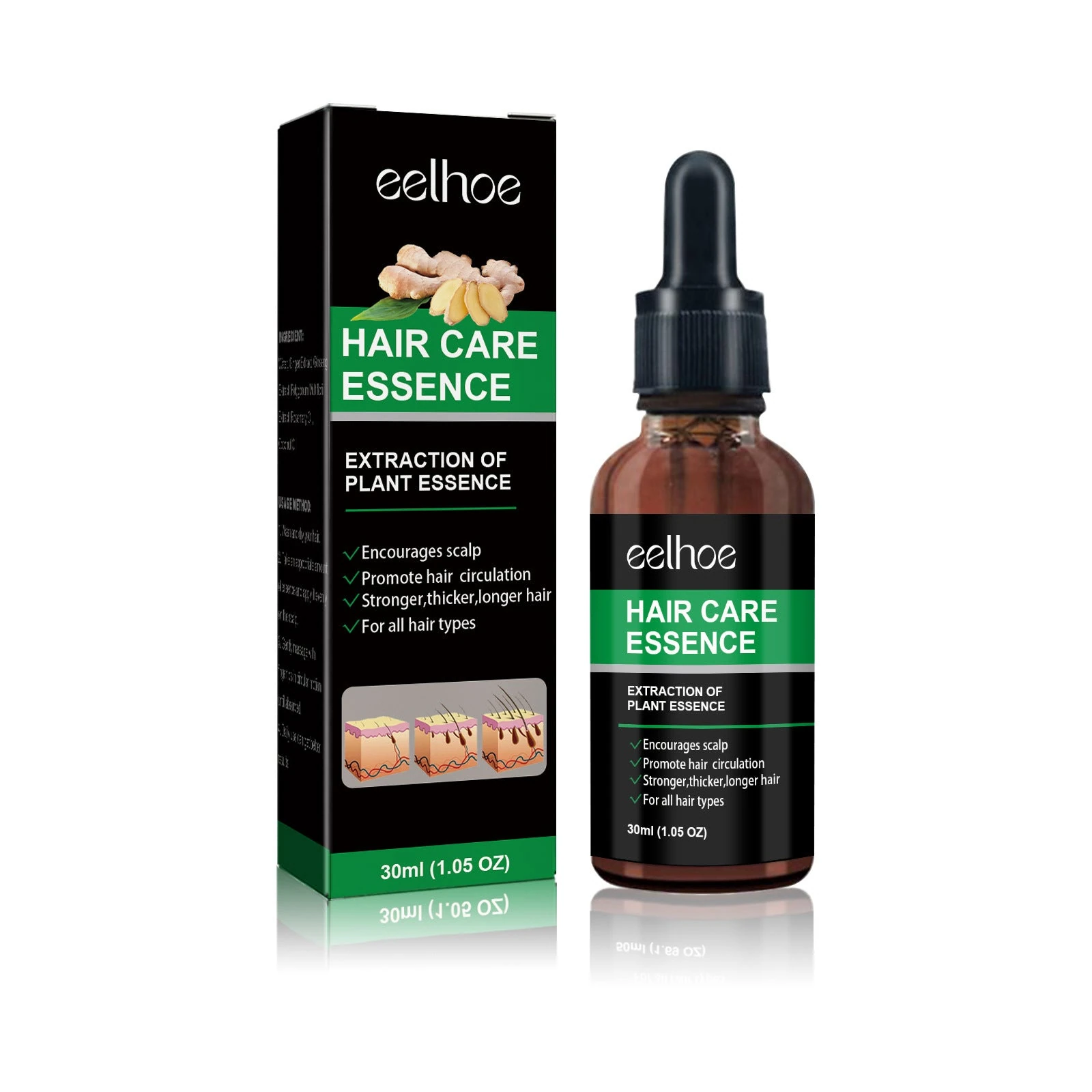
The 30ml essence contains aqua, glycerin, ginger root oil, Polygonum multiflorum extract and hydroxyethylcellulose in its ingredient graphic. Its dropper helps you place a small amount at the scalp instead of coating the hair lengths. Ginger root oil is one component of this water-based formula; the bottle is not pure essential oil.
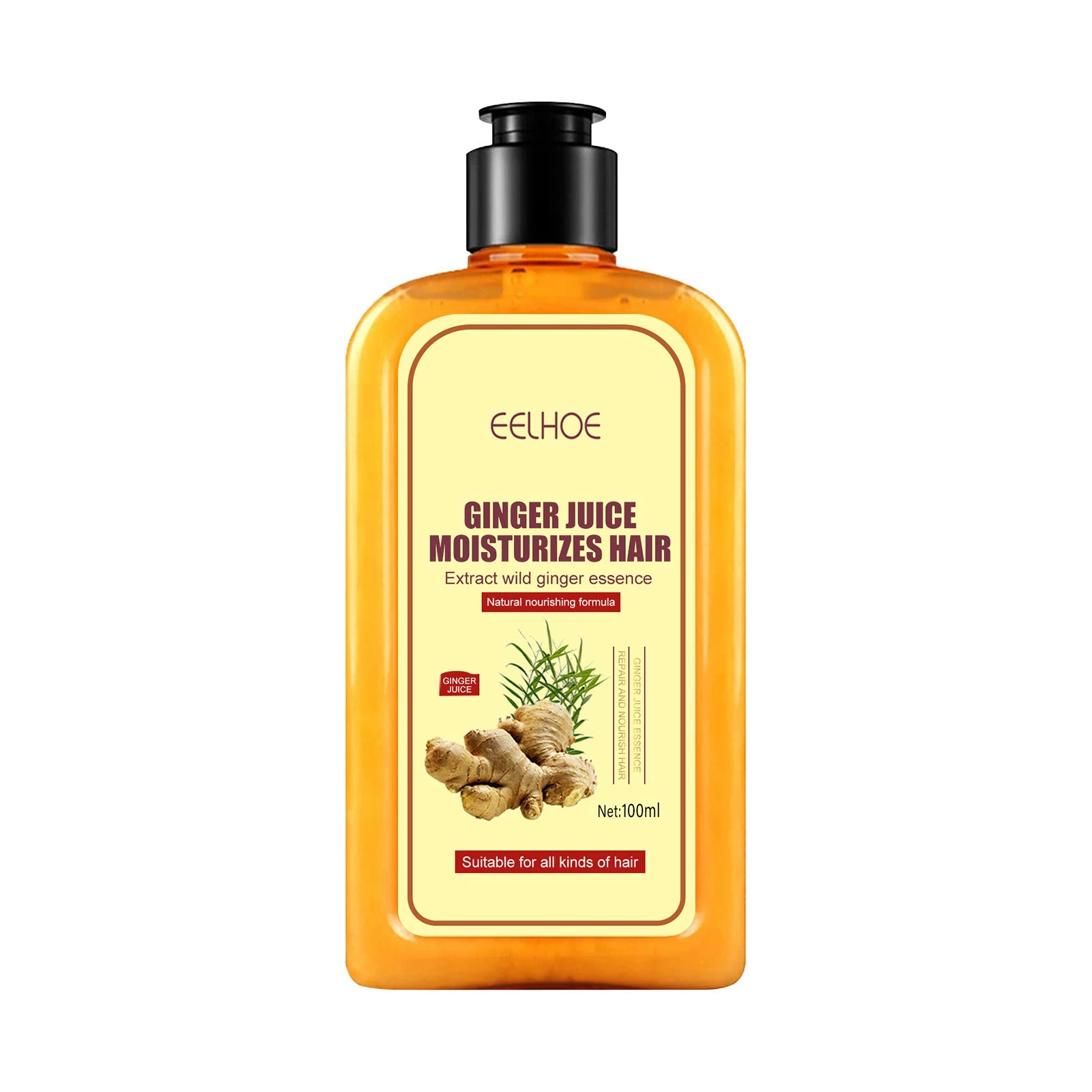
The 100ml shampoo's materials highlight ginger, coconut oil and Polygonum multiflorum. Its purpose is an ordinary wash step with scalp cleansing and softer-feeling hair. The AAD notes that normal shampoo and conditioner can be used after dandruff shampoo if needed for hair care. Keep any specific treatment instructions in place and add an ordinary wash only when you need it.
How to Use an Anti Dandruff Serum Properly
- Match the instructions to the exact product. Confirm whether it is a treatment, moisturizing serum or cleanser and whether it stays on or rinses off.
- Read the scalp-condition instructions. The BARE label allows damp or dry scalp application. Other formulas may have different requirements; freshly washed, towel-dried hair is not a universal rule.
- Part the hair for placement. Use the product's nozzle, pump or dropper to reach the intended scalp area. Avoid scraping with the tip.
- Follow its amount and frequency. Sprays, drops and full droppers are not equivalent measures. Do not transfer a pump instruction to a dropper bottle.
- Observe comfort and the label's stop-use advice. Stronger tingling is not a measure of better results.
The BARE US label directs application to affected areas one to four times daily, with gentle distribution and no rinsing. It also warns that the product is flammable, should not be used near flame or while smoking, and should be kept away from the eyes. This is a product-specific example, not the default schedule for every anti-flake serum.
Common Mistakes to Avoid
Buying the ingredient instead of the formula. An ingredient's reputation does not establish the finished product's treatment effect. Look for the specific purpose and supporting evidence.
Using a generic amount. “Three to five droppers” has no useful meaning without a verified product instruction and dropper volume. More product can add residue without establishing greater benefit.
Mixing products together. Keep medicines and cosmetics in their original containers. Do not combine them in your hand or bottle to invent a new dose.
Scrubbing flakes aggressively. Fingernails or frequent abrasive scrubs can make an uncomfortable scalp harder to manage. Use gentle application and review persistent symptoms.
When to Pair a Serum with Other Treatments
First check whether your current dandruff shampoo is being used as directed, including any required contact time. Adding a leave-on is a separate decision, not an automatic requirement. If you already use a medicine or have a scalp diagnosis, ask a pharmacist or clinician how the additional product fits.
For a practical wash-day and between-wash framework, read the anti-dandruff scalp serum routine guide. For diagnosed or suspected seborrheic dermatitis, the seborrheic dermatitis guide explains the role of optional scalp care alongside treatment.
How Long Until You See Results?
Use the outcome and review instructions for your selected treatment. The labels above support helping prevent recurrent dandruff flakes and itch; they do not provide a shared timetable promising relief in week one and a balanced scalp by week four. Track flaking and comfort under similar conditions instead of relying on a generic countdown.
The AAD advises seeking a dermatologist if dandruff does not improve with appropriate care or is severe. The BARE and Royal Oils labels also advise stopping use and asking a doctor if the condition worsens or does not improve after regular directed use. Do not continue a worsening reaction simply to complete an arbitrary trial period.
Who Should Consider an Anti Dandruff Serum?
A labeled leave-on may be worth discussing when targeted between-wash dandruff care suits your needs. Someone seeking only light moisturizing care can make a different choice. Severe irritation, sores or unexplained hair loss deserve assessment rather than shopping by “serum” alone.
Is a Scalp Serum Better Than Shampoo Alone?
A leave-on remains on the scalp, while shampoo is used and rinsed according to its instructions. Longer contact does not by itself prove better effectiveness, deeper penetration or the need to use both. Compare the evidence and suitability of the actual products. An effective shampoo routine may already meet your dandruff needs.
Should You Use a Serum Every Day?
Follow the exact label. The three US treatment examples have daily directions, whereas an unrelated cosmetic or exfoliating serum may have another schedule. Do not reduce every product to twice weekly or assume that “daily” means applying more whenever flakes appear.
Can You Use an Anti Dandruff Serum with Hair Growth Treatments?
Check compatibility with the prescriber or pharmacist responsible for the treatment. Alternating days does not automatically solve interactions or irritation, and mixing formulas is not a substitute for advice. Treating dandruff-related itch and measuring hair regrowth are separate outcomes; success with one does not prove the other.
Frequently Asked Questions
What is the best serum for dandruff and scalp irritation?
There is no universal winner established by the labels compared here. Start with the appropriate treatment purpose, then compare full ingredients, application and personal tolerance. Persistent irritation may need diagnosis rather than another cosmetic.
Do women need a different dandruff serum from men?
Shop by the exact indication, ingredients and directions rather than the gender in a search phrase. A “dandruff serum for women” label alone does not establish a different active ingredient or a better match.
Can I use a serum on color-treated hair?
Check the exact package and hair-color guidance. Applying something to the scalp does not guarantee it never contacts the lengths. Do not assume all leave-ons share color compatibility.
Can a moisturizing serum replace anti-dandruff treatment?
A moisturizing serum can serve a separate care preference, but its hydration role does not establish treatment equivalence. Choose a labeled dandruff option when that is the job you need, and compare cosmetic care only for an additional purpose.
Choose the Label First, Then the Care Step
Keep the product decision specific: the treatment purpose, the formula you can tolerate and directions you can follow. Add ordinary cleansing or moisturizing care when it solves a separate need in your routine.
Looking for a lightweight moisturizing step? Compare the 30ml water-based essence, its glycerin-containing formula and targeted dropper application.
Sources and Product Information
Sources checked October 1, 2026: AAD's dandruff guidance and the three DailyMed manufacturer labels linked beside the relevant claims. BARE label version 1 was published November 17, 2025; Royal Oils Elixir version 8 and Cream version 7 were published December 22, 2025. Treatment examples concern US labeling. Cosmetic specifications come from the current GinGrowth product pages linked above.