
Moisturizer pilling happens when product on the skin gathers into little rolls or flakes during application. The cause may be the amount used, repeated rubbing, the combination of layers or how the formula behaves on your skin. The product called moisturizer is not always the layer responsible: sunscreen, primer or foundation can start the rolling. Identify when it happens before replacing everything.
A useful first response is to simplify optional layers and reduce unnecessary rubbing while keeping each product's essential directions intact. Do not solve pilling by underapplying sunscreen, scrubbing the face or assuming that all silicones are incompatible. This guide gives you a controlled troubleshooting method and explains a pre-makeup cream option from our store. GinGrowth sells that cream; it has not been independently tested as a pilling-free solution.
First distinguish product rolls from dry skin
Product pilling typically appears as you spread or rub skincare or makeup. You may see small soft rolls gathering beneath your fingers or along an area you keep blending. Dry skin flakes may already be visible before you apply anything and may remain associated with roughness, tightness or discomfort. The distinction is useful, but appearance alone cannot diagnose a skin condition.
Look at the face before the routine, after moisturizer, after sunscreen and after makeup. If the surface is smooth until sunscreen goes on, do not immediately blame moisturizer alone. If flakes are present before any product and your face feels irritated, repeatedly rubbing to remove them can make the problem worse. Start with gentle care and seek advice for persistent symptoms.
This matters because exfoliation is not a universal pilling fix. It adds another variable and may irritate skin that is already uncomfortable. The AAD's exfoliation guidance notes that exfoliation is not suitable for everyone and warns about irritation, especially alongside some treatment products. A roll of product is not proof that your face needs a stronger scrub.
On a small screen, swipe or scroll the table sideways to compare all columns.
| Observation | Useful comparison | Avoid this shortcut |
|---|---|---|
| Flakes already visible before skincare | Review dryness or irritation before product layering | Assuming every flake requires a scrub |
| Rolls while rubbing moisturizer alone | Use the stated amount and gentler spreading | Repeatedly massaging to force absorption |
| Smooth cream, rolls after sunscreen | Compare the same sunscreen with fewer optional base layers | Reducing sunscreen below its directions |
| Rolls only during makeup blending | Check tool cleanliness, friction and optional primer | Covering disturbed skincare with extra foundation |
| One pairing repeatedly rolls | Consider another compatible routine combination | Declaring an entire ingredient category unsuitable |
What research says about rubbing and layering
A 2024 study by Lua and colleagues, published in Skin Research and Technology, examined skincare pilling in 528 female volunteers aged twenty to forty-nine in Guangzhou, China. The researchers assessed skin characteristics and product layering. Circular and linear rubbing produced the most pilling events among the application methods studied, and skin characteristics were also associated with pilling.
An important sampling detail: participants had to have experienced skincare pilling to join the study. Of the 528 participants, 217, or 41%, experienced pilling during its application procedure. That is not the prevalence of pilling among all skincare users. Researchers used ten experimental base formulations with a specified sunscreen and foundation, and participants chose their application techniques. The rubbing result is therefore an association in this protocol, not a randomized demonstration that one gesture causes all pilling.
The study supports treating application technique as a real variable. It does not prove a universal rule for every moisturizer, sunscreen or foundation. Its participants and tested products do not represent every user, and it did not test our turmeric cream. The authors disclose employment with Clarins Groupe and Eurofins, an industry-affiliation limitation to keep in mind. Nor does its finding about sunscreen mean you should reduce protection or avoid sunscreen as a category.
The practical takeaway is to identify the combination and method you are actually using. A fixed ingredient blacklist cannot do that job. Seeing silicone, a gum or a film-forming ingredient on a label is not enough to predict how the finished formulas will behave together. Start with a simple observation plan rather than throwing away a product on the basis of one ingredient name.
How to stop moisturizer from pilling: change one thing
- Inspect clean skin and note whether flakes already exist.
- Observe the surface after each product to identify the first rolling step.
- On a comparable occasion, simplify one optional layer while keeping treatment and sunscreen instructions.
- Use the moisturizer’s stated amount and reduce unnecessary repeated rubbing.
- Compare the result, then change another single variable only if needed.
Treat this as a home troubleshooting exercise, not a clinical test. Record which product was added just before rolling began, where it appeared and whether you were repeatedly rubbing that area. On the next comparable occasion, change one optional variable. If you remove a serum, halve the cream, swap sunscreen and change foundation together, you cannot tell which adjustment mattered.
Use lighter spreading rather than repeatedly massaging a layer that has already settled. When a product label requires massage, complete that application gently; do not keep working it after it is evenly distributed. Later layers should be applied with their own directions in mind. Pressing makeup lightly where appropriate can be a comparison to aggressive buffing, not a rule that every formula must be patted.
There is no universal waiting interval that makes all products compatible. Allow a layer to settle sufficiently for the next one to spread normally, and follow any exact directions. If a product remains unusually heavy, waiting through a longer timer may not solve an excessive portion or an unsuitable combination.
A routine log that makes the next comparison useful
Copy the following fields into a note or use the table as a checklist. Observe your normal routine first; there is no need to provoke pilling by rubbing harder. Pick one optional change for a later comparable routine, and stop the experiment if skin becomes irritated. Keep sunscreen coverage and prescribed treatment directions intact throughout.
On a small screen, swipe or scroll the table sideways to compare all columns.
| Record | What to note | Why it helps |
|---|---|---|
| Before products | Flakes, tightness or comfortable skin | Separates existing skin changes from new product rolls |
| First rolling step | Product name and order; location on the face | Identifies the combination to investigate |
| Application | Label amount; spreading or repeated buffing | Distinguishes quantity from friction |
| One planned change | One optional layer or one application adjustment | Makes the next comparison interpretable |
| Outcome | Same, less or more rolling; any discomfort | Avoids claiming a fix after changing everything |
Example: your cream is smooth, but rolling starts when an optional primer is buffed over sunscreen. On a later comparable day, omit only the primer while keeping sunscreen directions and the other steps stable. If the rolling stops, that makes the primer combination or its application worth investigating; it does not prove that the moisturizer is defective. If rolling already starts with the cream alone, simplify that step first instead of buying a new foundation.
Check quantity without confusing different products
An oversized layer gives you more material to move around, so reviewing the moisturizer portion is reasonable. Start with its own directions and enough for the intended coverage. Our guide to how much moisturizer to use explains how to adjust dry areas without doubling the layer everywhere. That article addresses portioning; this one isolates the cause of rolling across a routine.
Do not transfer a cream's small starting amount to sunscreen. Sunscreen has its own application instructions, and lowering its amount to make makeup look smoother may leave you without the intended protection. If sunscreen is visibly rolling away and you are unsure the layer remains intact, do not assume the labelled protection is preserved. Restore an even application according to the directions before sun exposure.
Likewise, a prescription treatment should not be reduced or reordered casually to make a cosmetic experiment easier. Ask your clinician or pharmacist if the treatment seems involved. Optional cosmetic layers are usually the simplest place to begin simplifying, while keeping necessary treatment and protection instructions separate.
Troubleshoot moisturizer pilling under makeup
If moisturizer looks fine alone but rolls under foundation, compare a simpler preparation routine. Remove an optional primer or serum for the comparison while keeping appropriate sun protection. Notice whether pilling occurs immediately on contact or only after repeated blending. Those are different observations, and they may suggest different changes in application pressure or product pairing.
Check tools as well. Product residue on a brush or sponge can complicate what you see during blending. Use clean tools and keep the application method consistent during your comparison. Do not add more foundation simply to hide rolled skincare; a thicker covering can make it harder to see whether the base has stayed even.
For the order of a vitamin C serum relative to cream, use our vitamin C serum and moisturizer sequence guide. Correct order can keep the routine clear, but it does not guarantee that every formula pair will apply smoothly. If a particular combination repeatedly rolls despite appropriate amounts and technique, choosing a different pairing may be more practical than forcing it.
A pre-makeup cream option, with realistic expectations
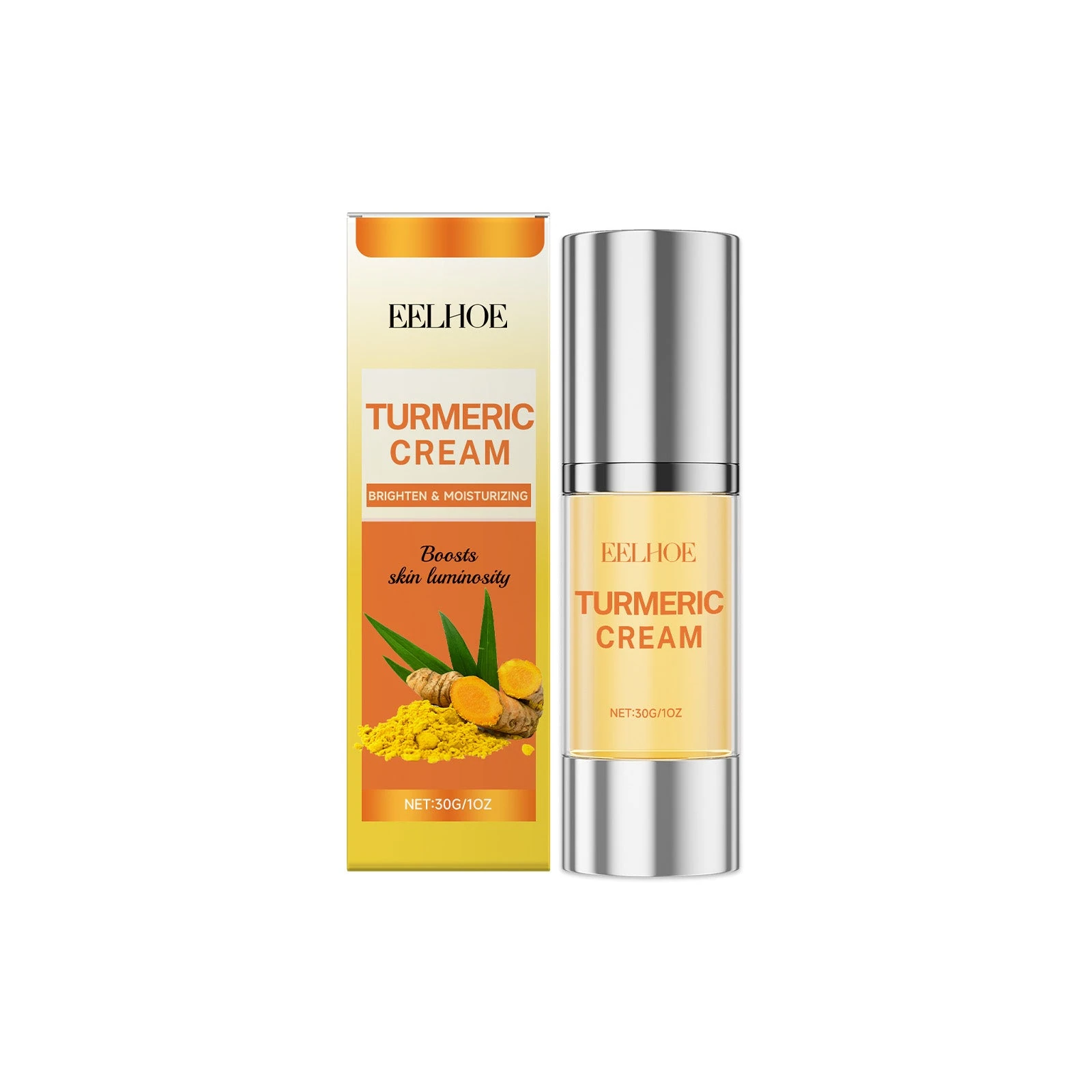
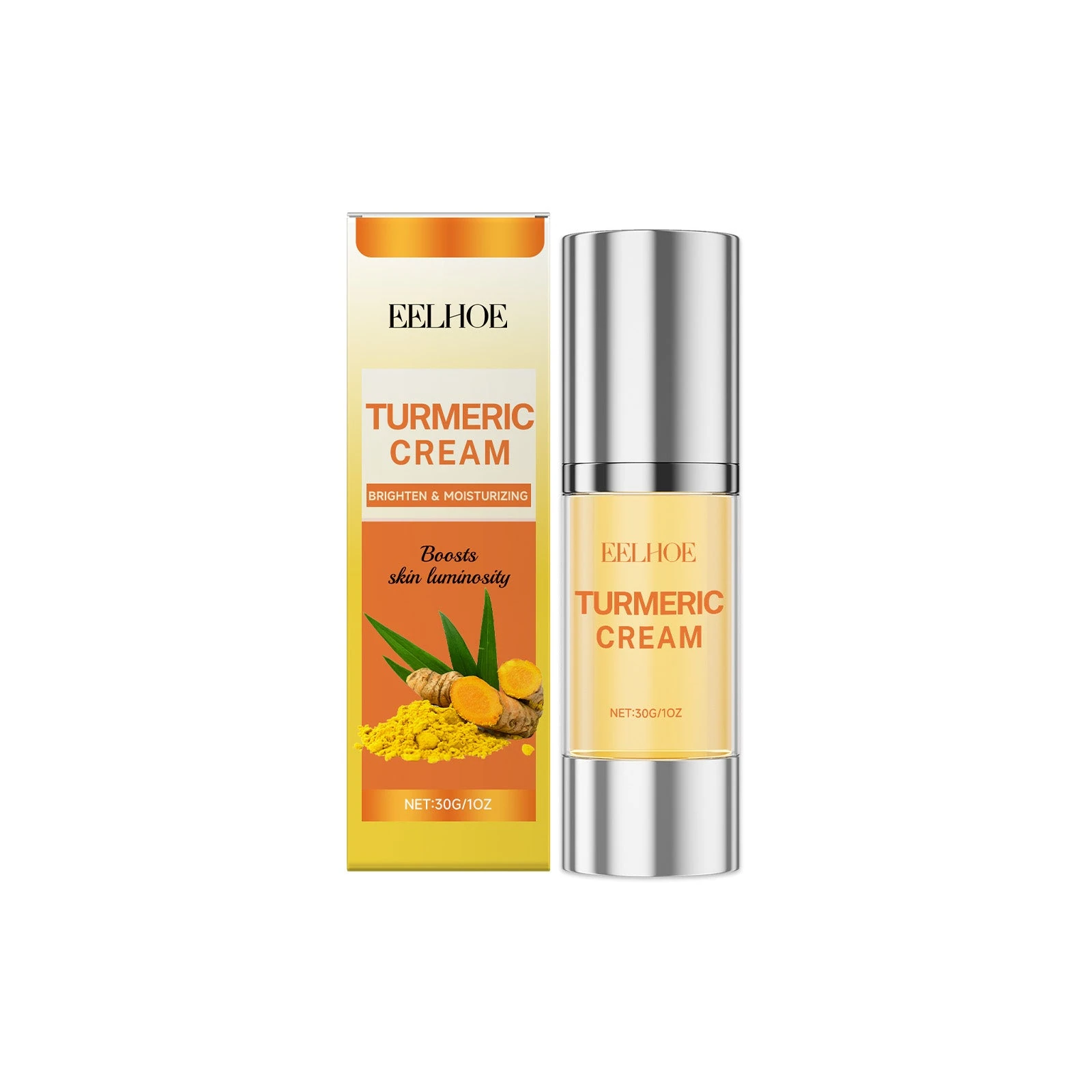
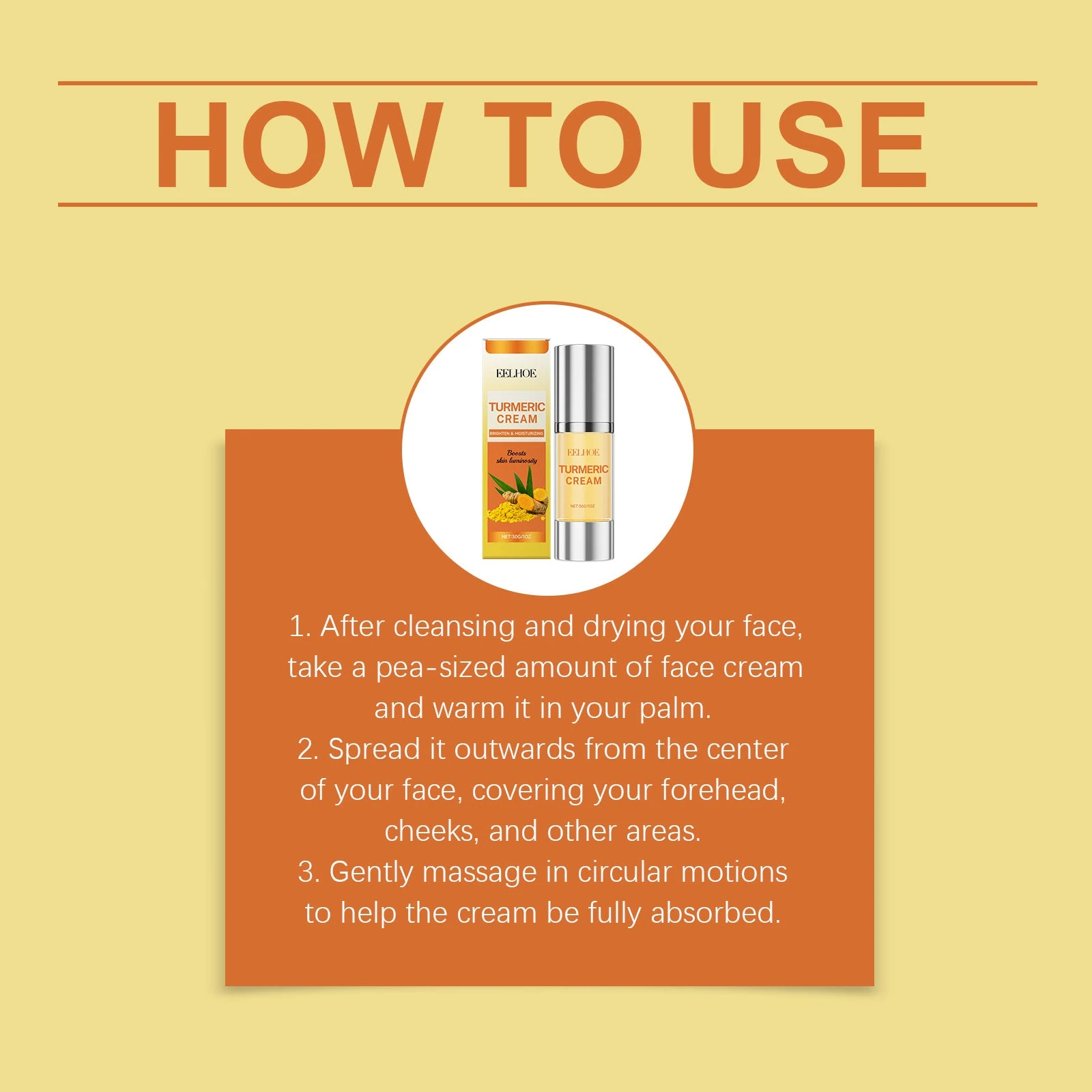
EELHOE turmeric face cream is the 30g silver-capped bottle, distinct from our separate 50g jar moisturizer. Its moisture-care highlights include glycerin, mineral oil and glyceryl stearate, with niacinamide, turmeric extract, tocopherol and tea tree leaf oil also listed. The current directions say to cleanse and dry the face, warm a pea-sized amount in the palm and spread outwards gently until absorbed.
Choose it if you want that bottled cream format and its stated pre-makeup moisture step suits your routine. The pea-sized direction belongs to this specific product; it is not a universal amount for every cream. Let the small, even layer settle before foundation, and keep separately labelled sunscreen in your daytime routine because this cream has no stated SPF rating.
No pilling-free, primer-replacement or all-foundation-compatibility claim is established for the bottle. Buying it is therefore a formula and format choice, not a guaranteed fix. Review the full current ingredient information and any known sensitivities before adding it, especially if you are already trying to identify a problem in a complicated routine.
Questions about why moisturizer pills
Why does moisturizer pill even when I use a small amount?
Quantity is only one variable. Rubbing, the layer beneath or above, and the finished formulas may still contribute. Observe the exact step where rolling starts, then simplify an optional layer or change application pressure while keeping the rest comparable.
Is moisturizer pilling the same as peeling skin?
No. Pilling refers to product gathering into rolls; peeling or flaking can come from the skin itself. They can be difficult to distinguish visually. If flakes are present before skincare or accompanied by soreness, itching or persistent redness, seek guidance rather than treating the issue as makeup technique alone.
Should I exfoliate every time products pill?
No. Pilling does not establish a need for exfoliation. Stronger or more frequent exfoliation can add irritation, especially alongside treatment products. Begin with the amount, layering and rubbing checks instead of automatically adding a scrub or acid.
How long should I wait between moisturizer and sunscreen?
Follow any timing on the products. Otherwise, let the moisturizer settle so the next layer spreads evenly; no single minute count guarantees compatibility. If it remains thick or tacky, reassess the moisturizer portion and optional layers rather than continually extending the wait or reducing sunscreen.