
Body mist is generally positioned as a lighter fragrance option, while perfume often offers a more concentrated scent experience. The exact strength, wear time and permitted application areas depend on the formula. “Body spray” is an especially broad label, so read whether a product is a fragrance, deodorant or another type of spray before comparing it with perfume.
Choose by the scent you enjoy, the amount of presence you want and how you plan to carry and apply it. A bottle’s category does not guarantee a fixed number of hours, and a stronger scent is not automatically a better fit for a shared office, journey or everyday routine.
The difference between body mist and perfume
Fragrance concentration is one common distinction, but category ranges are not a universal rulebook. Brands use different names and positioning. Eau de toilette, eau de parfum, fragrance mist and body-and-hair mist give clues only when the maker explains the product; an unlabeled spray cannot be assigned a concentration by appearance.
For example, Phlur’s comparison of perfume and body mist describes its mists as a lighter, less intense application and discusses longer wear for perfume depending on the blend. That brand explanation helps describe the general choice. Its concentration ranges, hair-use permissions and wear expectations should not be transferred to another brand’s bottle.
Fragrance composition also affects perception. A bright opening can feel different after settling, and a scent you notice close to the skin may not project strongly across a room. Concentration, spray amount, formula and environment interact; the name “perfume” does not settle every one of those variables.
On a small screen, swipe or scroll the table sideways to compare all columns.
| Criterion | Body mist | Perfume |
|---|---|---|
| Common positioning | Lighter fragrance experience | Often a more concentrated experience |
| Wear time | Depends on formula and application | Depends on formula and application |
| Hair or fabric use | Only if directions permit | Only if directions permit |
| Application | Follow its own areas and amount | Start with its directed light application |
| Concentration label | Brand-specific information | EDT or EDP only when actually stated |
Body spray vs perfume: read the actual product role
“Body spray” may refer to a fragranced mist, a deodorant spray or a product with a different stated function. A deodorant addresses body odor according to its label, while antiperspirant claims involve reducing sweat. A personal fragrance is not automatically either one, even if you apply it after showering.
This distinction avoids a common mismatch: buying fragrance when the intended job is odor control. Start with washing and the appropriate body-care product for your needs, then decide whether you want an additional scent. Spraying more perfume over sweat is not the same task as using a suitable deodorant.
Packaging is another separate variable. An aerosol and a capped pump spray may have different warnings and handling instructions. Read those directions rather than assuming every product called a spray can be used on hair, clothes or freshly shaved skin. Keep fragrance away from eyes, face and areas excluded by its label.
Choose by occasion without rigid rules
A body mist can appeal if you enjoy a light application and do not mind refreshing it when appropriate. A perfume can appeal if you prefer a particular fragrance in a more focused application. These are preferences, not rules that reserve mist for daytime and perfume for evening.
Consider the setting and the people sharing it. A subtle personal fragrance may be welcome to you but uncomfortable to someone nearby. Follow fragrance-free policies where they apply, avoid spraying in enclosed shared spaces and do not assume that a product labeled “mist” cannot become overpowering when applied repeatedly.
For a social event, choose a scent you already know and apply it with enough time to settle. For a bag or desk drawer, look at dimensions, closure and storage instructions. Convenience is not the same as performance: a small bottle may be easier to carry without telling you anything about concentration or longevity.
On a small screen, swipe or scroll the table sideways to compare all columns.
| Priority | Look for | Do not assume |
|---|---|---|
| A subtle experience | A scent and application level you enjoy | Mist cannot overwhelm when overapplied |
| Carrying in a small bag | Actual dimensions, closure and storage needs | Small means leakproof or airline-approved |
| Hair application | Explicit hair-use directions | All fragrance sprays are hair mists |
| Odor or sweat control | The appropriate labeled body-care product | Perfume replaces deodorant or antiperspirant |
| Known fragrance sensitivity | Full ingredient information and suitable care | Botanical names establish tolerance |
Where our 10ml rosemary-and-ginger spray fits
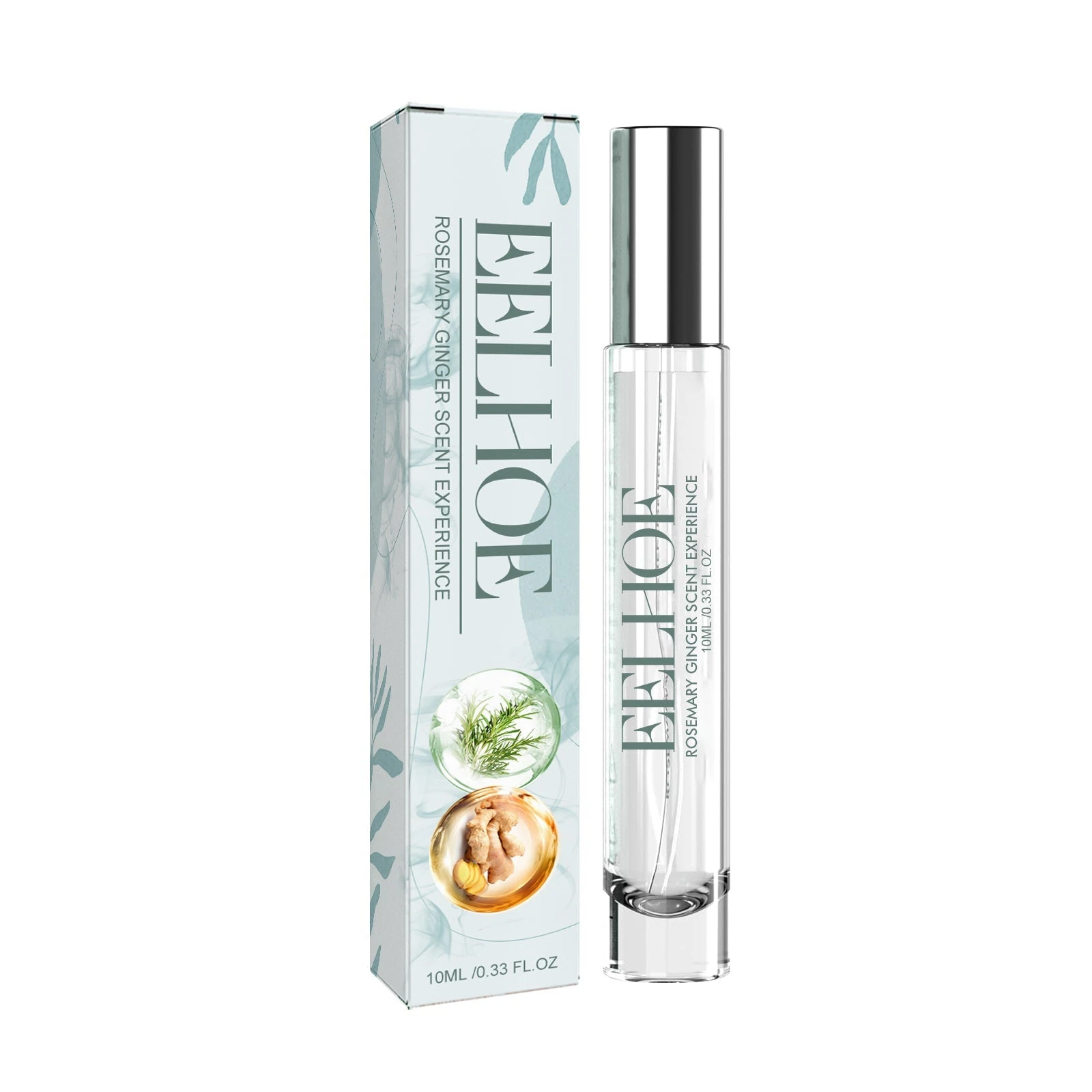
Our EELHOE ginger perfume is a capped 10ml spray with a rosemary-and-ginger fragrance profile. The stated bottle dimensions are approximately 11.9cm tall and 1.7cm wide. Its practical appeal is the slim format for carrying a fragrance you want close at hand.
The current product information does not verify an eau de parfum or eau de toilette classification, an exact fragrance-oil percentage or a tested wear time. Choose it for the described scent pairing and portable spray format rather than an assumed strength tier. A compact bottle should not be promoted as long-lasting solely because it is called perfume.
Compare wear without relying on an hour-count promise
If you are comparing two suitable fragrances, use separate occasions with similar routines and follow each label. Notice the opening, how the scent settles, how comfortable you feel and whether you still enjoy it later. Record the amount and application area so that a large difference in spraying does not masquerade as a product difference.
Do not apply several fragrances at once and then try to identify which lasts longer. Layering changes the overall impression. Likewise, repeatedly smelling the same spot can make judgment difficult. If a fragrance seems to disappear, review your routine before immediately adding more; our perfume longevity guide explores that question separately.
Your own observations can help choose a product, but they are not a controlled test or a universal wear-time claim. Humidity, clothing, application and individual perception can change the experience. A fragrance you enjoy for part of the day may be a better purchase than one you dislike but continue to notice for longer.
- Identify whether each candidate is fragrance, deodorant or another spray.
- Read the scent description, intended areas and any verified concentration.
- Compare suitable products on separate occasions using their own directions.
- Notice comfort, finish of the scent and practical carrying needs.
- Choose the experience you enjoy without converting it into a universal wear-time claim.
Can you use body mist and perfume together?
You can layer compatible products if their directions allow it and you enjoy the combined result, but using both is optional. Start with small amounts and a familiar combination. Adding a mist does not automatically make a perfume stronger in a pleasant way, and adding perfume does not guarantee that a mist will last longer.
Check intended areas individually. A body-and-hair mist that permits hair application does not give the perfume you layer with it the same permission. Similarly, a skin fragrance is not automatically fabric-safe. If clothing application is not supported, do not use a hidden patch as a substitute for manufacturer guidance.
For our spray, the stated method is a light application to the wrist, neck or behind the ears, keeping it away from the eyes and face. Let it settle before deciding whether more is needed. Our where to spray perfume guide provides a fuller placement routine without turning this format comparison into another application article.

Ingredients and comfort matter in either format
The EELHOE product artwork identifies rosemary, ginger, fragrance, linalool and geraniol. Review the full received label if you have known fragrance sensitivities. Botanical ingredients and a small spray size do not establish hypoallergenic or sensitive-skin suitability, and a lighter fragrance description does not guarantee tolerance.
Avoid applying a new fragrance to irritated or broken skin. If a product causes discomfort, stop using it rather than adjusting the number of sprays until the sensation seems acceptable. Someone who prefers fragrance-free care does not need to choose either category simply because a comparison presents two options.
Storage also affects the bottle you are comparing. Keep fragrance according to its label, away from excessive heat and direct light, and replace the cap after use. For a changed or older scent, see whether perfume expires before treating the change as a reason to spray more heavily.
Compare value by use, not bottle size alone
A larger mist may look cheaper per milliliter, but your useful comparison includes how often you apply it, whether you enjoy the scent and whether you can store it appropriately. A compact spray may suit occasional carrying, while a larger bottle may fit an established home routine. Neither size determines quality.
Do not calculate a precise cost per wear from guessed spray output or promised hours. Check current price and size, then consider how the format fits your actual habits. If you are packing for a flight, the perfume travel-rules guide covers container and baggage checks separately; portable does not mean automatically approved for every route.
Questions about body mist and perfume
Can I use body mist like perfume?
You can use a body mist as your personal fragrance when its directions support your intended application. You do not need an additional perfume simply to make the routine complete. Expect the product’s own scent and wear characteristics rather than treating it as a diluted copy of another fragrance.
Is perfume always stronger and longer-lasting than body spray?
No universal guarantee follows from those names. Perfumes are often positioned for a more concentrated experience, but body spray covers several product types and formulas vary. Compare manufacturer information and your experience with the specific products instead of relying on a fixed category-to-hours chart.
Can body mist be sprayed on clothes or hair?
Only when the product’s directions support that area. Some products are expressly designed for body and hair; others are not. Fabric compatibility also varies. Do not transfer another brand’s instructions to your own bottle, and keep sprays away from eyes and any excluded areas.
Is the 10ml ginger perfume an eau de parfum?
That classification is not verified in the current product information. The confirmed details are a capped 10ml spray, rosemary-and-ginger fragrance profile, compact dimensions and light application directions. Review it on those facts rather than assuming a concentration, exact note pyramid or guaranteed wear time.