
To get more consistent wear from perfume, apply it as directed to a suitable area after washing, let it settle, and avoid washing or rubbing that area unnecessarily afterward. Store the bottle according to its instructions and compare wear under similar conditions before increasing the amount. If a light touch-up is needed, add it thoughtfully rather than repeatedly spraying because you can no longer notice the scent.
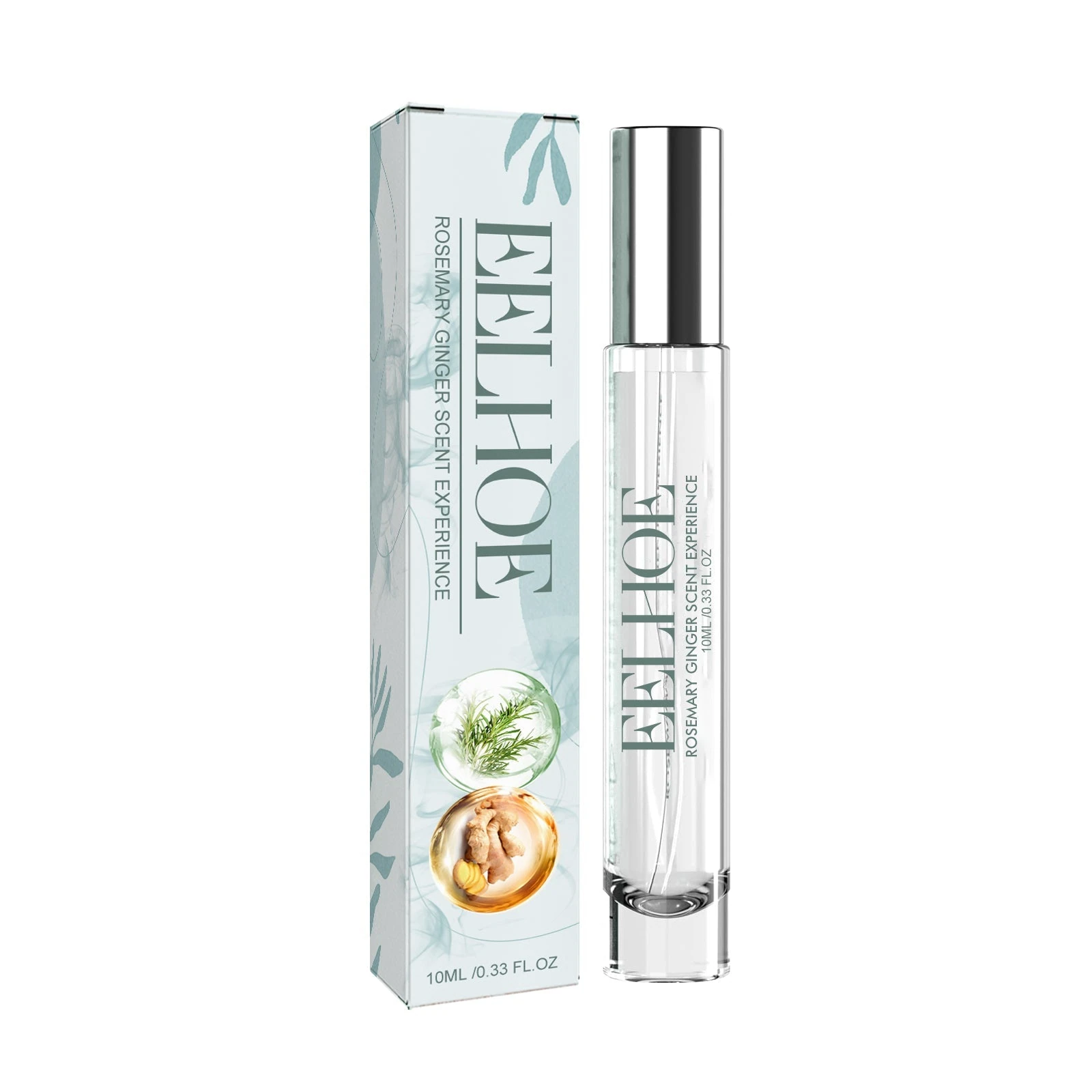
No application trick can guarantee that every fragrance lasts all day. A scent may become less noticeable because it has faded, because the setting changed or because you have adapted to smelling it. This guide helps separate those possibilities. GinGrowth sells the compact rosemary-and-ginger spray featured below; we have not measured its wear duration, concentration or projection.
First decide what you mean by lasting longer
Longevity usually means how long a scent remains detectable. Projection is how far it is noticeable from the wearer. A fragrance can remain close to the skin without filling the room, so quieter projection is not the same as complete disappearance. Before changing your routine, decide whether you want a subtle personal scent or a more noticeable presence around you.
Also separate your own perception from someone else's. Repeated exposure can make a familiar smell seem weaker to the wearer. Healthline's medically reviewed explanation of olfactory adaptation describes this temporary reduction in awareness of familiar scents and distinguishes it from an overall loss of smell. That is general sensory guidance, not a measurement of how long a particular perfume remains on skin.
If you notice a new, persistent reduction in your ability to smell many things, do not diagnose it as ordinary perfume adaptation. Seek appropriate medical advice. For an everyday fragrance comparison, the useful point is simpler: not noticing your own perfume is not enough evidence to keep adding more in a shared space.
On a small screen, swipe or scroll the table sideways to compare all columns.
| What happened | Possible explanation | Useful next check |
|---|---|---|
| You washed the sprayed wrist | The application may have been removed | Compare another intended area less exposed to washing |
| You notice less scent but others still do | Adaptation or different sensitivity may contribute | Pause before reapplying in shared space |
| Scent is subtle close to skin | Projection differs from longevity | Define whether you want close scent or wider presence |
| Wear differs between indoor and outdoor days | The environment changed the experience | Compare under more similar conditions |
| You need a stated all-day duration | Application advice cannot supply missing evidence | Look for performance information for the exact product |
What research can explain about a fading scent
A 1995 study by Vuilleumier, Flament and Sauvegrain measured fragrance ingredients evaporating from skin using a controlled airflow and collection system. It compared individual ingredients, an eleven-odorant model mixture and soap delivery, finding different diffusion rates and effects of the delivery format. That supports separating the formula from the application ritual: changing where you spray does not turn one composition into another. It does not establish a wear time for our perfume or prove a moisturizer “hack.”
Perception has its own evidence. A human olfactory-adaptation study published online in 2021 recruited 35 participants and presented four odorants repeatedly. Perceived intensity declined for some odorants, but the study did not establish a clear reduction in the recorded peripheral electrical response. This was controlled odor delivery, not a finished-perfume wear trial. The useful point is that a wearer’s intensity rating and the amount of fragrance remaining are different measurements.
Use a simple wear check before changing the bottle
Choose a normal day and use the fragrance according to its directions. Record the approximate application amount, location and whether you later washed that area. Notice the initial scent after it settles and compare later under similar conditions. You do not need to sniff continuously; repeated close checking makes it harder to evaluate an ordinary wearing experience.
On another comparable day, change just one variable. For example, use the same light application but choose an intended area less likely to be washed during your routine. Do not increase the amount, change the location, add several scented body products and spend the day in a different environment, then attribute the outcome to one supposed longevity trick.
On a small screen, swipe or scroll the table sideways to compare all columns.
| Keep a note of | First wearing | Next comparable wearing |
|---|---|---|
| Application | Product, amount and intended location | Keep these the same unless one is your chosen variable |
| Skin preparation | Recent washing; usual moisturizer, if used | Record any difference rather than assuming a benefit |
| Removal events | Handwashing, shower or rubbing contact | Identify whether the application was disturbed |
| Perception | Close-to-skin scent versus noticeable surrounding scent | Use the same distinction at the same checkpoints |
| Decision | Comfort; whether a touch-up is appropriate | Keep, adjust one variable or reconsider the fragrance |
Compare notes at the same chosen points in your day, such as after dressing and before leaving work. Those checkpoints are for consistency, not promised hours of performance. If you washed the wrist on one day but not the other, record that difference before crediting a new moisturizer or adding more sprays.
This is a personal observation method, not a laboratory wear test. It can help you decide whether a small touch-up is practical or whether the scent is simply not the style you wanted. It cannot establish a universal number of hours for other people, and it should not be turned into a product review claiming controlled testing that did not happen.
Prepare the area without building an unnecessary ritual
Complete your shower or wash first and dry the intended area before using a skin fragrance as directed. Applying perfume immediately before washing it away defeats the purpose. If you use body moisturizer, let it settle and keep to products that suit your skin. Moisturizer is a separate care step, not a verified promise to multiply the wear time of every perfume.
Avoid mixing perfume into a moisturizer bottle or adding other liquids to the fragrance. That changes the products from how they were supplied and makes it harder to know the composition and application amount. If you want a matching scented body product, evaluate it as its own product rather than making a homemade combination to chase a longer-lasting scent.
Skin comfort takes priority over fragrance. The AAD's dry-skin guidance recommends fragrance-free products for dry, sensitive skin. Applying perfume over sore, irritated or freshly shaved skin is not a useful longevity experiment. If a fragrance causes discomfort, stop using it rather than moving it repeatedly between areas until one seems tolerable.
Follow the application method, then let the scent settle
- Complete washing and dry an intended, comfortable skin area.
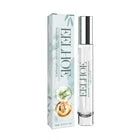
- Apply lightly according to the fragrance directions, away from eyes and face.
- Let it settle without repeated rubbing or continuous close sniffing.
- Evaluate later under comparable conditions and consider washing or environmental changes.
- Use a considered light touch-up only when appropriate, then recap the bottle.
Do not rub the application area repeatedly as a way to make perfume last longer. A light controlled spray and natural settling are easier to repeat than a large mist sprayed into the air. You do not need to cover every suggested pulse point at once. More application sites change the amount and exposure, not just the placement.
For the detailed location decision, read our guide to where to spray perfume. It compares wrists, neck and clothing boundaries. Here, placement is only one variable in diagnosing fading; this article does not repeat the complete location guide or turn a general fabric suggestion into a product-specific instruction.
Clothing is not an automatic solution. Some formulas can mark fabrics, and some garments need special care. Use fragrance on fabric only when the product and material permit it, with an appropriate inconspicuous test. Our featured perfume's current directions support light skin application; they do not establish fabric compatibility or endorse spraying hair.
Why does my perfume fade so fast?
Start with events you can identify. Did you wash your wrists, shower, change clothes that contacted the application area or spend time in a very different setting? Those details matter more than assuming a bottle is weak from one wear. A fragrance that is easy to notice in a small room may seem less obvious outdoors without having vanished entirely.
Then consider perception. Taking a break from deliberate close sniffing can make your comparison more useful. If appropriate, someone nearby may be able to tell whether a scent remains noticeable, but their preference and sensitivity are not a universal measure either. Do not ask others to tolerate a stronger application simply to prove that the perfume is still present.
Finally, check what the product actually claims. Bottle size does not establish concentration, and a title containing perfume does not automatically provide an eau de parfum percentage. If a long, specified wear duration is essential to your purchase, look for relevant evidence for that exact product. A generic trick cannot supply missing performance data.
Protect the bottle and plan touch-ups realistically
For bottle age, date labels and unexpected changes, use our perfume expiry and storage guide. Shelf life is separate from hours of scent after spraying.
Keep the cap secure and follow the storage advice supplied with the fragrance. Avoid leaving the bottle in obvious heat or direct sunlight, such as a parked car or a sunny windowsill. Do not deliberately warm it to intensify the scent. If its appearance or smell changes unexpectedly, ask the maker rather than assuming extra sprays will restore the original experience.
A small bottle can make a later light touch-up convenient. That is a carrying advantage, not proof of long wear. Choose a suitable moment away from other people's faces and respect fragrance-free settings. Before reapplying, consider what is already noticeable and whether the setting calls for less fragrance rather than more.
What our 10ml rosemary-and-ginger spray offers
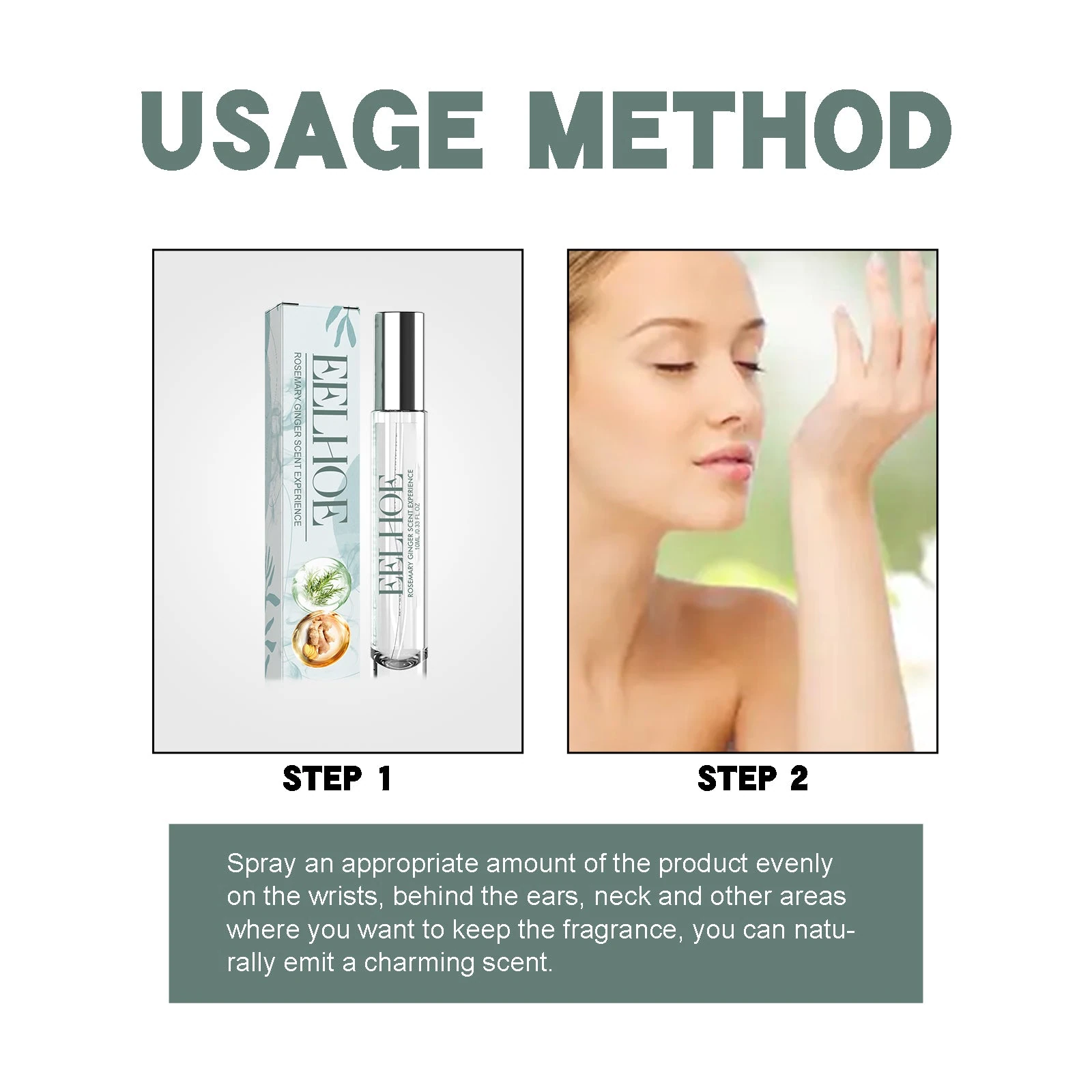
The current EELHOE ginger perfume is a capped 10ml, or 0.33 fl oz, spray. Rosemary and ginger define the stated fragrance pairing; the artwork also lists linalool, geraniol and fragrance. The bottle is approximately 11.9cm tall and 1.7cm wide. Those dimensions explain its compact carrying format without implying a particular concentration or performance tier.
The instructions identify light application to wrists, neck or behind the ears, keeping the spray away from the eyes and face and allowing it to settle before adding more. Choose it if that scent pairing and portable skin-spray format fit your preferences. Replace the cap after use and protect it in your bag; a slim bottle should not be assumed leakproof.
No verified all-day claim, exact hour count or eau de parfum/eau de toilette concentration is provided on the current page. If those are essential buying criteria, ask for evidence before purchasing. If you want a small fragrance you can carry for a considered touch-up, the bottle size and method are concrete details you can evaluate now.
Questions about making fragrance last longer
How can I make perfume last all day?
There is no guaranteed method for every formula. Use the product correctly, avoid unnecessary removal after application and assess wear under comparable conditions. Choose a product with appropriate evidence if a particular duration is essential, rather than relying on an unverified trick.
Does moisturizer always extend perfume wear?
Do not assume a fixed effect for every combination. Moisturize for your skin's needs and let the product settle before fragrance when suitable. We have not tested a moisturizer-and-perfume combination that establishes a longer wear time for our spray.
Why can other people smell perfume when I cannot?
Olfactory adaptation is one possible explanation: familiar smells can become less noticeable to the wearer. Distance and individual sensitivity also matter. Treat it as a reason to pause before adding more, not as proof that every fading impression is only in your perception.
Is a travel-size perfume weaker than a large bottle?
Size alone does not establish concentration or longevity. The featured bottle contains 10ml, but its concentration and wear duration are not specified. Evaluate those as separate facts rather than inferring weakness or strength from packaging size.