
Sugar scrub and salt scrub both use grains for mechanical exfoliation. The better choice depends on the complete formula, the body area, your skin's comfort and the directions you can actually follow. Do not assume that every sugar scrub is gentle enough for the face or that every salt scrub is a stronger treatment. Grain size, the surrounding formula and how you move your hands all matter.
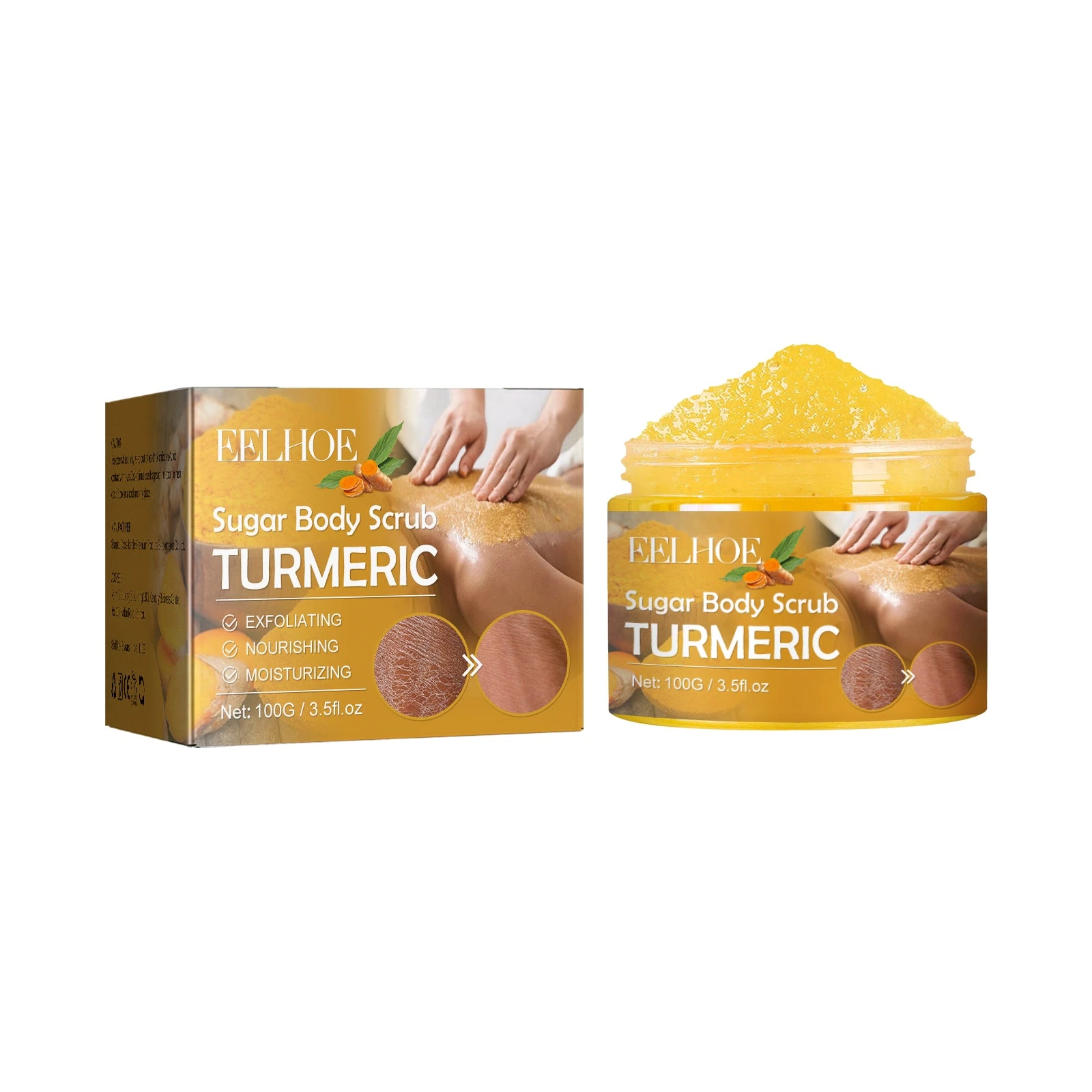
Here we compare two 100g EELHOE body products sold by GinGrowth: a turmeric sugar scrub with sweet almond and jojoba oil highlights, and a sea salt scrub with jojoba, grape seed and sweet almond oils. The comparison explains their real ingredient and routine differences. It is not a laboratory abrasion test or a ranking of all sugar and salt formulas.
Sugar scrub vs salt scrub: compare more than the grain
The grain tells you one useful thing: whether the listed exfoliating material is sugar or sea salt. It does not reveal its exact particle size, concentration or how much friction you will create. Two sugar scrubs can feel different, just as two salt scrubs can. Your pressure and the condition of the skin change the experience too.
A better comparison places the products beside each other on the same questions. What is the intended area? Which oils or other ingredients are disclosed? Does the package explain removal and frequency? Is the formula a product you have tolerated before? Those answers make the next step clearer than a general claim that one ingredient is always superior.
On a small screen, swipe or scroll the table sideways to compare all columns.
| Detail | Turmeric sugar body scrub | Sea salt body scrub |
|---|---|---|
| Size | 100g jar | 100g jar |
| Named grain | Sugar | Sea salt |
| Oil highlights | Sweet almond and jojoba oils | Jojoba, grape seed and sweet almond oils |
| Other highlights | Turmeric and cocoa extract | Turmeric extract and vitamin E |
| Current method information | Light circular body application; follow actual jar removal directions | Wet body skin, gentle massage, thorough rinse and moisturizer |
| Frequency evidence | No fixed weekly schedule verified | Illustrated 1–2 times weekly, adjusted to comfort |
| Comparison limit | No measured grain size or head-to-head gentleness test | No measured grain size or head-to-head gentleness test |
Both jars in this guide contain 100g, but equal package mass still does not prove an equal number of sessions. A small elbow area and both legs need different portions. This guide therefore compares format and information, not an invented cost-per-use figure. Check current prices on the linked product pages.
What the turmeric sugar scrub offers
The turmeric body scrub identifies sugar as its granular ingredient and highlights sweet almond oil, jojoba seed oil, turmeric and cocoa extract. Its cosmetic purpose is a smoother-feeling body surface, with a scoopable texture that you portion for the area you want to care for.
This product may appeal when you specifically want a sugar-based formula and these oil highlights fit your preferences. The current listing focuses on rough-feeling body areas, light circular massage and a separate moisturizer afterward. Sugar and almond oil are useful identifiers of this jar, rather than evidence that it will be suitable for every sensitive skin type.
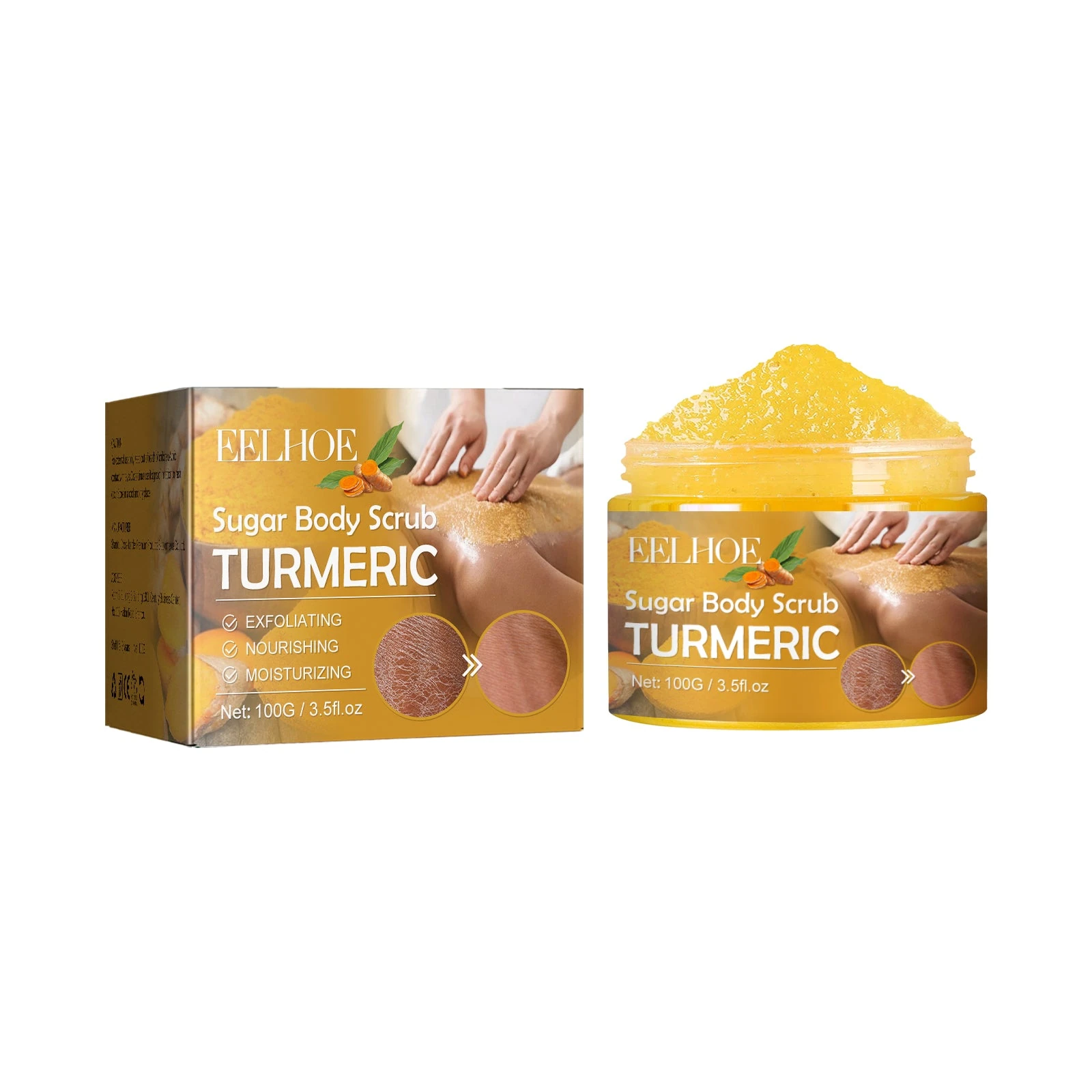
There is an information difference to consider before choosing: the current sugar listing does not establish a fixed contact time or weekly frequency. Follow the directions on the actual jar for finishing the scrub step, and ask for clarification if they are unclear. Do not copy a timer or schedule from the salt product just because the jars have the same size.
What the sea salt body scrub offers
The separate sea salt scrub names sea salt, turmeric extract, jojoba seed oil, grape seed oil, sweet almond oil and vitamin E among its highlights. Its current body routine is explicit: apply a small amount to wet skin, massage lightly, rinse thoroughly and follow with moisturizer.
The illustrated directions suggest starting with 1–2 uses weekly, adjusted to skin comfort. That schedule belongs to this product; it is not a universal target everyone must meet. If your skin is already irritated or another step has increased sensitivity, using the scrub less often or skipping it is more useful than completing a fixed weekly quota.
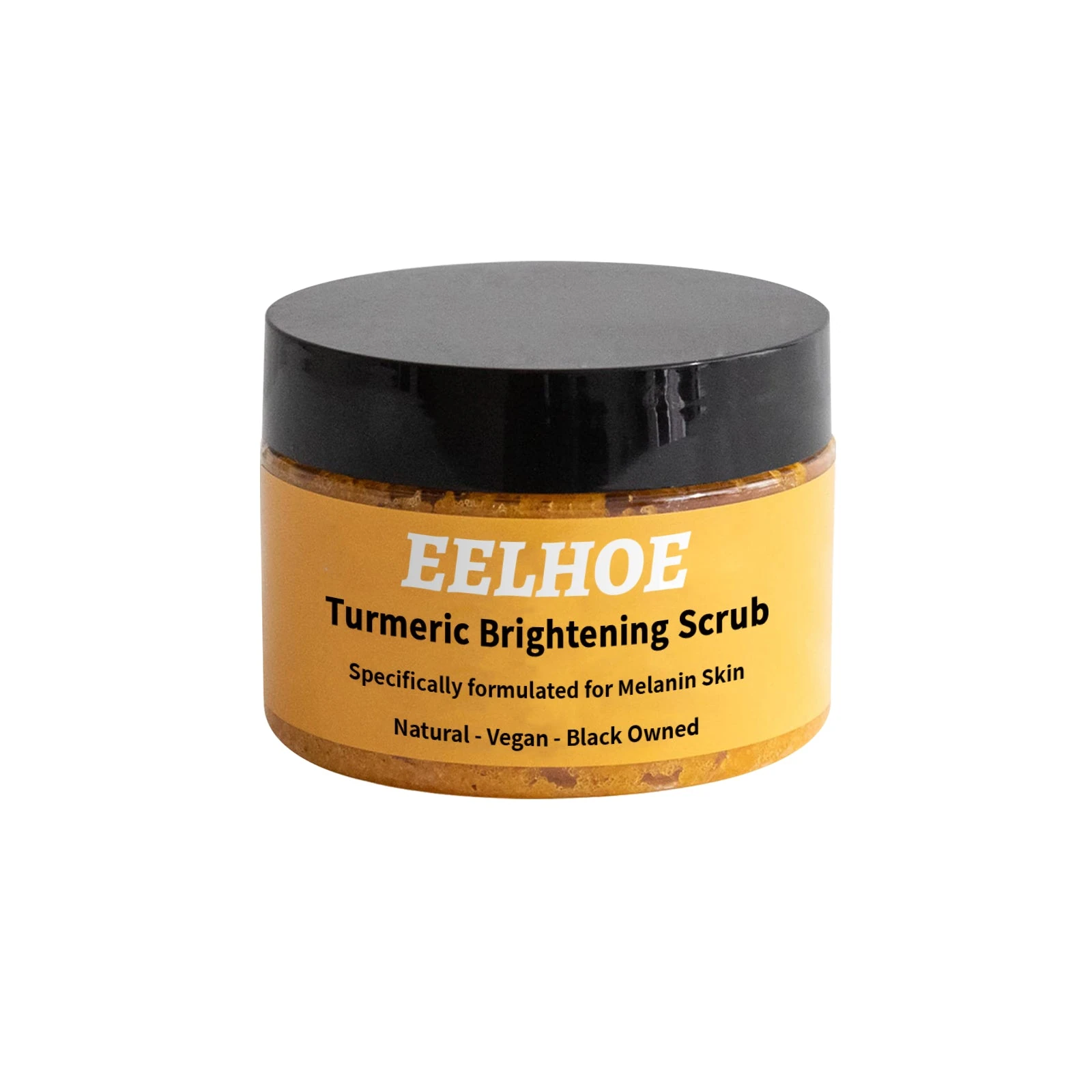
Choose this jar when you want the named sea-salt format and the disclosed wet-skin routine fits your needs. Elbows, knees and legs are the body areas emphasized in the listing. Some original range artwork shows facial care, but the method being compared here is body exfoliation. It should not be used to justify stronger pressure on the face.
Is sugar always gentler than salt?
No universal gentleness ranking is established for these two finished products. The ingredient name alone does not provide particle measurements, the amount of abrasive material or skin-tolerance results. A sugar scrub used with heavy pressure can be uncomfortable; choosing salt does not require an aggressive massage either.
The American Academy of Dermatology's exfoliation guidance explains that mechanical exfoliation uses tools or scrubs to remove cells from the skin's outer surface. It advises choosing a method for your skin type, using gentle movements and avoiding exfoliation on wounded or sunburned skin. Some people may find mechanical methods too irritating.
Use those principles to assess the entire routine. If you already use a retinoid or another product that makes skin sensitive, consider that before adding grains. Do not combine a scrub with a rough brush just to amplify the sensation. A stronger feeling is not proof of a better result, and redness is not a useful target.
Read the oil blend without confusing it with the scrub action
Sugar or salt supplies the named grain texture. The oil highlights describe a different part of the formula. Sweet almond and jojoba oils appear in both examples; the salt version also lists grape seed oil, while the sugar version includes cocoa extract. Shared ingredients cannot be presented as exclusive benefits of one jar.
Read the complete label if an ingredient has caused problems before. The presence of sweet almond oil in both products is relevant to someone checking their own sensitivities, although a short highlighted list is not a substitute for complete manufacturer information. A formula with botanical oils is not automatically fragrance-free, hypoallergenic or suitable for compromised skin.
The products are also different from a leave-on body oil. After completing the exfoliating step according to the package, use your separate moisturizer where needed. For a choice about massage texture rather than grains, see massage cream vs oil. That comparison belongs to another step and should not replace a scrub's directions.
Choose for a body area and a realistic routine
Start with one specific task, such as rough-feeling elbows or legs. If ordinary washing and moisturizing already keep that area comfortable, a scrub may be optional. When you do want exfoliation, choose a body formula with directions you understand, then keep the touch light and watch how the skin feels afterward.
For the sea salt product, the stated wet-skin, rinse-and-moisturize sequence provides a clear starting method. For the sugar product, the current listing confirms gentle body application but leaves some timing details to the actual jar. That difference in information may affect which product you feel ready to choose today.
- Choose a body area with intact, comfortable skin.
- Compare the full formula and the directions for the exact jar.
- Use light pressure; do not add a rough tool to intensify the scrub.
- Complete removal as directed and follow with a suitable body moisturizer.
The full guide to using body scrub covers technique, frequency and common mistakes. This page focuses on selecting sugar or salt, so it does not create a second competing set of universal instructions. Use the general guide alongside the directions for your exact product.
What if skin feels rough again after scrubbing?
Roughness is not always a request for more exfoliation. Dryness, an irritating routine or a skin condition can also change how the surface feels. Repeatedly rubbing the same area may make matters worse. Pause when skin becomes sore or irritated and reassess your cleanser, water temperature and moisturizer.
The AAD recommends moisturizing after exfoliation because the process can be drying. Its dry-skin guidance also emphasizes gentle cleansing and suitable moisture care. If dryness persists despite sensible changes, a dermatologist can help identify the cause instead of asking you to alternate stronger scrubs.
For the wash step, bar soap vs body wash explains the choice between solid and liquid cleansers. A clear separation between washing, occasional exfoliation and leave-on moisture makes it easier to tell which change actually improves comfort.
A practical choice between these two jars
Choose the sugar scrub when the sugar, almond and jojoba combination is what you want, and you can follow the actual jar's finishing instructions. Choose the sea salt scrub when you prefer that named texture and the current wet-skin, rinse-off routine. In either case, inspect the complete formula and the intended body areas before adding it to your routine.
The matching product page is the next place to compare package photographs, current price and available purchase options. It also lets you distinguish these jars from the separate shea-butter scrub, whose highlighted ingredients do not establish that its abrasive base is either sugar or salt.
Frequently asked questions
Can I use a body sugar scrub on my face?
Do not infer facial suitability from sugar alone. This comparison focuses on body care. Use a product labeled for the intended area and follow its own directions; delicate facial skin should not inherit the pressure or timing of a body routine.
Should I use salt scrub every day?
The current sea salt product suggests 1–2 uses weekly as a starting routine, adjusted to comfort. It does not direct daily exfoliation. Skin that is already irritated needs a break, not a more frequent schedule.
Does turmeric make either scrub a dark-spot treatment?
The ingredient name does not establish a tested pigment-removal result for either finished product. Their clearest role here is surface exfoliation and smoother-feeling body skin. Persistent discoloration deserves a separate, evidence-based assessment.
Is the shea-butter scrub another sugar scrub?
Its highlighted panel names shea butter and vitamin E but does not identify sugar or salt as the abrasive base. Do not assign a grain based on a texture photograph. Compare the disclosed formula and directions for that separate product.
Sources and product information
The AAD pages linked above support general exfoliation and dry-skin advice. Current GinGrowth product listings and images were checked October 15, 2026. GinGrowth sells the examples; no independent particle testing, customer results or head-to-head performance measurements are claimed.