
To towel dry hair, rinse your wash products thoroughly, gently squeeze excess water from supported lengths, then press a clean towel against small sections. Move to a dry part of the towel as it becomes wet. Avoid vigorous rubbing and tight twisting; the goal is to remove dripping water without pulling at the roots or repeatedly roughening the lengths.
The motion matters at least as much as the towel label. This guide explains how to dry hair with a towel, when to change the cloth and where conditioning belongs. GinGrowth sells the featured rinse-out conditioner, which is an optional wash-day step rather than a towel, leave-in treatment or heat protectant.
Why change the way you use the towel?
The American Academy of Dermatology’s hair-care guidance lists rubbing hair with a towel among habits that can cause damage. It recommends wrapping hair in a towel to absorb water and allowing hair to air dry. The practical lesson is absorption with gentle handling, rather than trying to polish the hair dry through friction.
A towel also becomes less useful as its working area fills with water. Pressing harder on a saturated patch is not the same as bringing fresh absorbent fabric to the next section. If drying feels slow, first change the section of cloth and support the hair; do not immediately respond with stronger rubbing or a tighter turban.
Your ideal stopping point depends on what follows. Towel drying normally leaves hair damp. You do not need to keep working until every strand feels dry, especially if that leads to repeated friction. Follow the next styling product’s wet- or damp-hair directions and allow enough time for your usual drying method.
On a small screen, swipe or scroll the table sideways to compare all columns.
| Situation | Gentle approach | Avoid |
|---|---|---|
| Long lengths | Support and squeeze small sections | Pulling a heavy towel against the roots |
| Curls or coils | Press or gently scrunch without repeated rubbing | Breaking up the curl pattern with vigorous friction |
| Short hair | Blot the scalp area and lengths | Rapid back-and-forth rubbing |
| Fine or fragile lengths | Light pressure with a smooth cloth | Tight twisting or snagging loops |
| Towel becomes saturated | Switch to a dry section | Pressing harder to compensate |
A gentle towel-drying sequence
Begin after shampoo and any rinse-out conditioner have been fully rinsed away. If conditioner is still coating the lengths, removing more water will not correct the unfinished rinse. Let the water run through the hair, then use your hands to support the lengths as you gently squeeze them rather than wringing them like a wet cloth.
- Rinse shampoo and rinse-out conditioner completely.
- Support the lengths and gently squeeze away excess water.
- Lay a clean, absorbent towel around a small section and press lightly.
- Move to a dry area of the towel as it becomes wet.
- Stop when hair is no longer dripping and continue your usual styling routine gently.
For long hair, work in manageable sections so the towel does not drag on the roots. Keep the cloth close to the section you are pressing, release it and move along. If the ends are delicate or tangle easily, avoid sliding rough towel loops repeatedly down the same strands. Blotting does not require a sawing motion.
For short hair, use light presses over the scalp area and lengths, changing to dry fabric when needed. You can do this without a wrap. A wrap is useful only when it is comfortable and supported; if it pulls at the hairline or makes your neck feel strained, remove it and return to gentle blotting.
Microfiber towel vs cotton towel for hair
Microfiber and cotton are material categories, not guarantees of a good result. Compare the actual cloth: its smoothness, absorbency, weight when wet, loop texture and whether it catches strands. A soft cotton T-shirt may be a practical option for someone whose thick towel snags, while another person may prefer a lightweight hair towel.
You do not need to buy a new towel before improving technique. Start with a clean, soft cloth you already own and use pressing rather than rubbing. If it remains comfortable and removes excess water, the method is doing its job. If it is rough, overly heavy or consistently catches hair, a smoother alternative is worth considering.
Keep the towel clean, rinse laundry products out properly and let it dry between uses. A damp towel left bundled up is not a pleasant starting point for freshly washed hair. Do not share a towel when hygiene or a scalp condition makes that inappropriate. Follow the fabric’s washing instructions rather than assuming every specialized towel needs the same care.
Avoid treating an absorbency claim as a promise of less breakage or faster drying for every person. Hair length, density, curl pattern, towel size and handling all change the experience. Compare how a towel behaves in your routine, not a universal number of minutes that someone else reports online.
Towel drying hair without frizz: preserve the shape you want
Gentle blotting can reduce unnecessary disturbance, but no towel method guarantees completely frizz-free hair. Texture, weather, previous damage and styling choices also affect the finished look. If you want to keep a curl pattern, press or gently scrunch from below without repeatedly separating the curls with a rough cloth.
For curls and coils, do not force the lengths into a tight twist simply to fit them inside a towel. Arrange them comfortably and avoid pulling against the roots. If you use a wrap technique, check that it supports the hair rather than stretching it. Stop if the position feels uncomfortable or creates tangles when you release it.
Detangling also needs a texture-specific approach. The AAD suggests letting straight hair dry a little before gently using a wide-tooth comb, while textured hair or tight curls are generally combed damp with a wide-tooth comb. Neither instruction calls for dragging a brush through a knot or using the towel to pull tangles apart.
What if the lengths still feel rough?
Compare how the hair feels before and after the towel. If it already feels rough after rinsing, drying technique may be only part of the problem. Review the cleansing and conditioning steps, the amount used and whether the rinse was complete. If the towel adds obvious snagging or pulling, address that handling issue as a separate change.
The oily-roots, dry-ends routine explains why scalp cleansing and length conditioning have different jobs. You can clean the roots without repeatedly scrubbing the ends, then use a suitable conditioner where you need softness. A towel removes water; it does not replace conditioning or permanently repair split ends.
On a small screen, swipe or scroll the table sideways to compare all columns.
| Problem | Likely handling question | Next attempt |
|---|---|---|
| Frizz after rubbing | Are you moving the cloth back and forth? | Press, release and change sections |
| Sore roots under a wrap | Is the wrap heavy or tight? | Remove it and support the lengths |
| Towel catches strands | Are loops or rough edges snagging? | Use a smoother cloth |
| Ends still feel rough | Was the conditioning step suitable? | Review rinse-out care before changing towels |
Try one change at a time. For example, keep your usual wash products and replace vigorous rubbing with blotting. On a later wash, consider a different towel if snagging continues. Changing shampoo, conditioner, towel and styling products together makes it hard to know which adjustment helped or caused a new problem.
Where our rinse-out conditioner fits
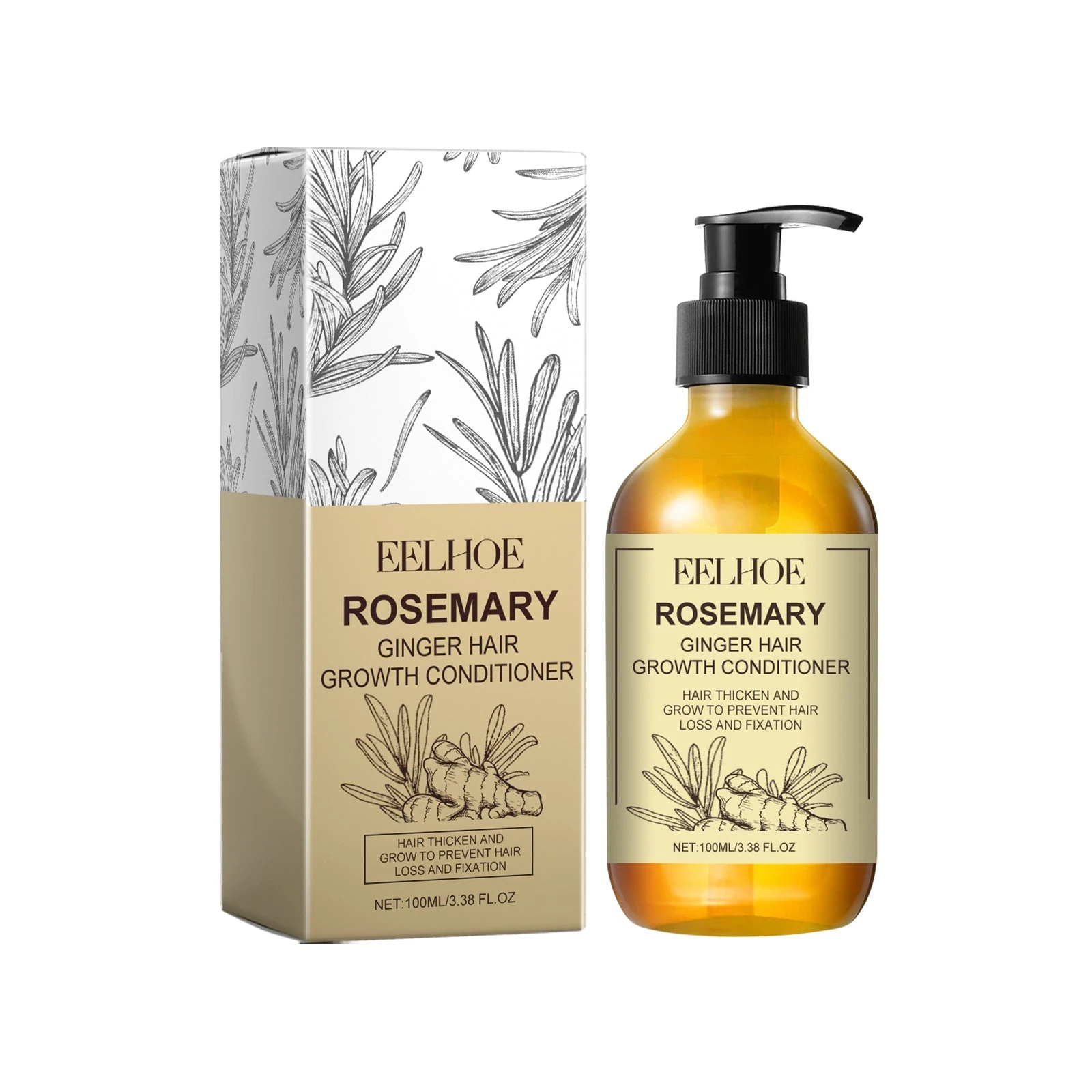
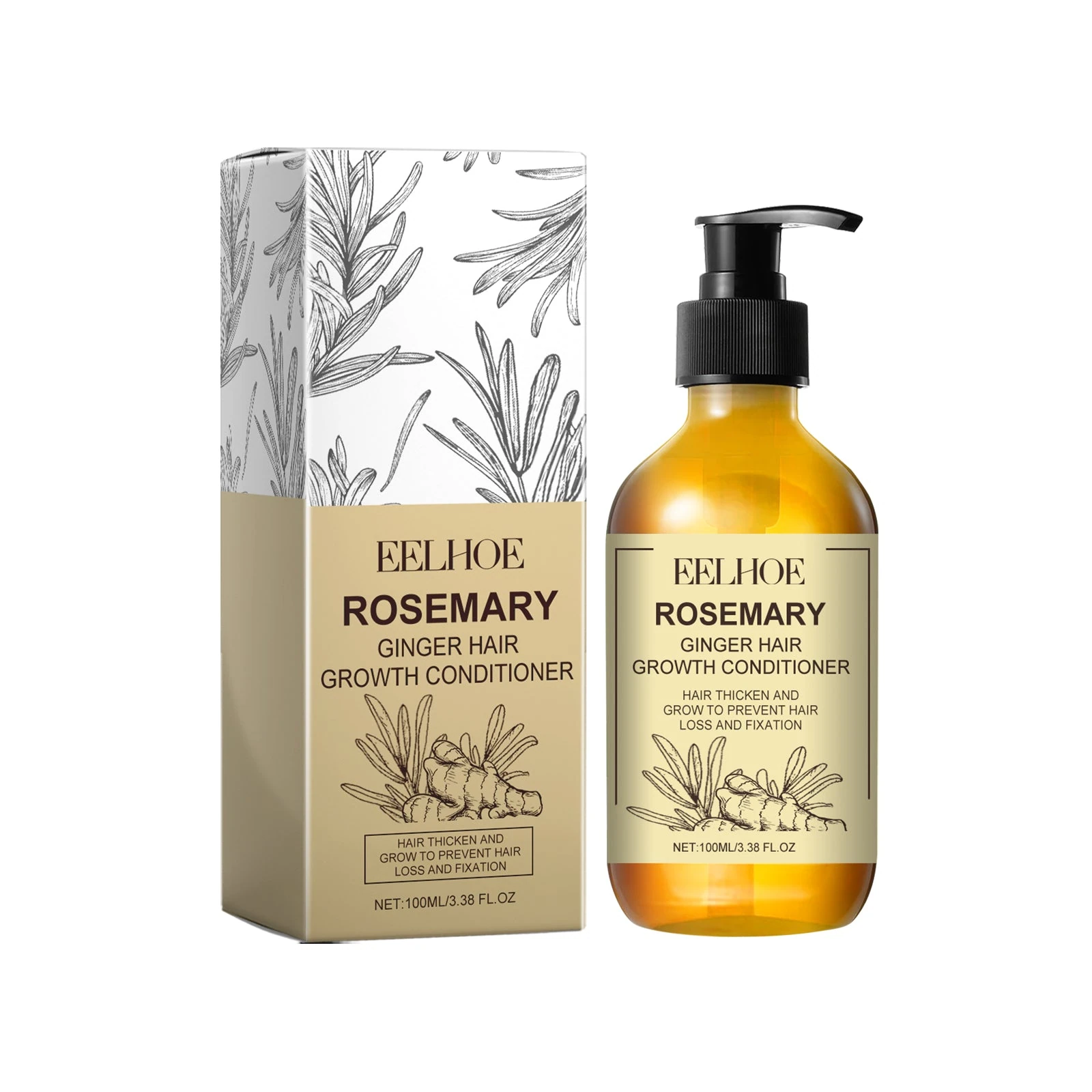
Our EELHOE rosemary conditioner is supplied in a 100ml pump bottle, with rosemary, ginger, keratin and shea oil among its highlights. It is applied after shampooing, through damp hair with attention to the lengths and ends, left for 5–10 minutes and rinsed thoroughly. The towel step comes after that rinse.

Choose it if you want a separate rinse-out conditioning step for rough-feeling lengths and the formula fits your preferences. It is not a product to leave in overnight or use as a towel-drying spray. The presence of keratin on an ingredient panel does not establish heat protection, and the conditioner is not a substitute for a heat protectant when one is needed.
Once the hair is no longer dripping, continue with your usual routine rather than endlessly towel drying. If you use a dryer, the AAD recommends the lowest heat setting and limiting heat exposure. Follow the styling tool and any heat-protection product instructions; do not assume that hair must be rubbed completely dry before a dryer can be used.
Frequently asked questions
How long should you leave hair in a towel?
There is no universal time that suits every hair length and towel. Use a comfortable, loose wrap only while it helps absorb excess water, then remove it when the towel is wet or the hair is no longer dripping. Do not keep tightening it to chase complete dryness.
Should I rub my scalp hard to dry the roots?
No. Blot gently and allow air to reach the roots as you continue drying. Hard rubbing can disturb the lengths and irritate the scalp. Persistent scalp discomfort needs attention to its cause rather than increasingly forceful towel use.
Is a cotton T-shirt always better than a microfiber towel?
No material wins for everyone. A clean, smooth T-shirt can be useful if your current towel snags, but its size and absorbency may not suit your hair. Compare comfort and handling with the actual cloth rather than relying on the material name alone.
Can I use rinse-out conditioner after towel drying?
Use this featured conditioner during washing and rinse it out before the towel step. A leave-in conditioner is a different product with separate directions. If you want to compare those roles, read leave-in versus rinse-out conditioner before changing the sequence.
Hair-handling guidance is based on the AAD source linked above. Product format and directions were checked October 25, 2026. The towel comparison is a practical selection framework, not a measured drying-speed or breakage trial.