
Before self tanning, gently remove loose surface buildup with a method your skin tolerates, rinse thoroughly and follow your tanner's preparation instructions. Plan the timing around the actual tanning product rather than assuming every scrub must be used immediately before it. Avoid applying self tanner over irritated skin or a leftover film that conflicts with its directions.
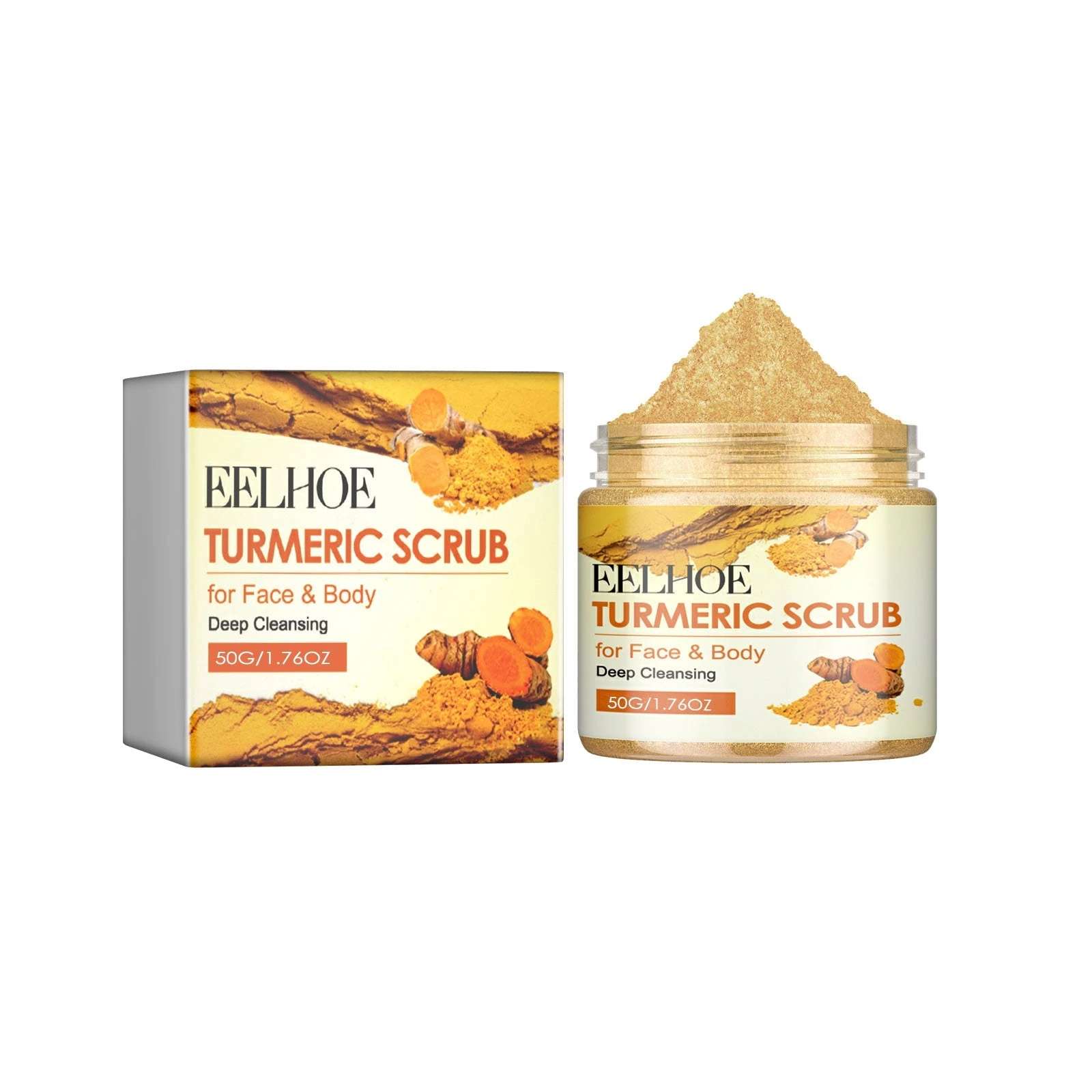
The goal is a comfortable, reasonably even surface, not the strongest possible scrub. This guide focuses on body preparation for self-applied tanning lotions, mousses or similar products. It explains timing, dry patches, shaving and the important question of whether a moisturizing scrub fits the tanner you own. GinGrowth's featured scrub is an exfoliant, not a self-tanning product.
Why exfoliate before self tan?
Loose surface buildup and rough patches can make application less even. The American Academy of Dermatology's self-tanner guidance recommends exfoliating before applying self tanner and paying attention to thicker skin such as elbows, knees and ankles. It also recommends drying the skin before application.
This is not a reason to remove every visible flake aggressively. Exfoliation removes dead cells from the outer skin layer, and AAD's separate exfoliation guidance explains that the method should suit your skin and that overdoing it can cause irritation. Comfortable skin is more important than meeting an arbitrary tanning schedule.
Self tanner is different from sun protection. FDA explains that common sunless-tanning ingredient DHA reacts with amino acids in the skin's surface to create color. That visible color does not establish sunscreen protection. Keep your usual sun-protection routine, and check the FDA's sunless-tanner information for the distinction between cosmetic color and protection.
On a small screen, swipe or scroll the table sideways to compare all columns.
| Check | Why it matters | Decision |
|---|---|---|
| Tanner instructions | Timing and residue requirements vary | Follow the specific formula’s preparation method |
| Skin comfort | Irritation is not a useful preparation result | Delay if skin is sore, sunburned or broken |
| Scrub ingredients | A rich finish may conflict with preparation rules | Do not assume a shea butter scrub is oil-free |
| Rinse and drying | Residue and wet patches affect preparation | Rinse fully and dry as the tanner directs |
| Sun protection | Cosmetic color is not verified SPF | Keep appropriate sun protection separate |
How long before fake tan should you exfoliate?
Read the tanner's instructions first. Some brands specify an interval and particular preparation products; others focus on clean, dry skin and managing dry areas. A universal number of hours would hide those differences. Plan enough time to complete exfoliation, rinse away residue and assess whether the skin is calm before proceeding.
An earlier preparation session can make it easier to moisturize afterward and assess skin comfort separately from applying color. Treat that as a practical scheduling option, not as proof that one fixed interval guarantees an even tan. If the tanning product requires a particular wait after shaving, exfoliating or moisturizing, use that instruction for that product.
Do not assume that more waiting removes a stubborn film by itself. A scrub containing emollients may leave a feel that does not fit a tanner requesting a residue-free surface. The relevant question is what remains on your skin and what your tanner requires, not whether a timer has reached a number borrowed from another brand.
Can you exfoliate right before self tanning?
Only consider it when the tanner allows that preparation method and your skin is calm, thoroughly rinsed and fully dry. If the product asks for an earlier exfoliation step, follow that. If your skin feels hot, stings or looks irritated, delay tanning rather than adding color over a reaction to your preparation routine.
Same-session preparation can become crowded: shaving, vigorous scrubbing, hot water and fragranced products may all be introduced together. This makes discomfort harder to trace. Avoid stacking several strong methods because a special event is approaching. A familiar, gentle routine is more predictable than testing a new scrub, new razor and new tanning mousse on the same evening.
If you have sensitive skin, a history of dark marks after irritation or a condition affecting the area, ask a dermatologist about whether and how to exfoliate. AAD specifically warns that more aggressive exfoliation can increase pigmentation in some people. A cosmetic deadline is not a reason to scrub broken, sunburned or inflamed skin.

A gentle body-preparation sequence
Start by reading both products' directions together. Note whether the scrub is rinse-off, what skin condition it requires, and whether the tanner restricts oils, moisturizer, shaving or other steps. If the instructions conflict, change the preparation product or timing rather than silently ignoring one label.
- Read your tanner’s preparation rules before choosing an exfoliant.
- Use a tolerated method on intact skin; avoid stacking strong exfoliation and irritating shaving.
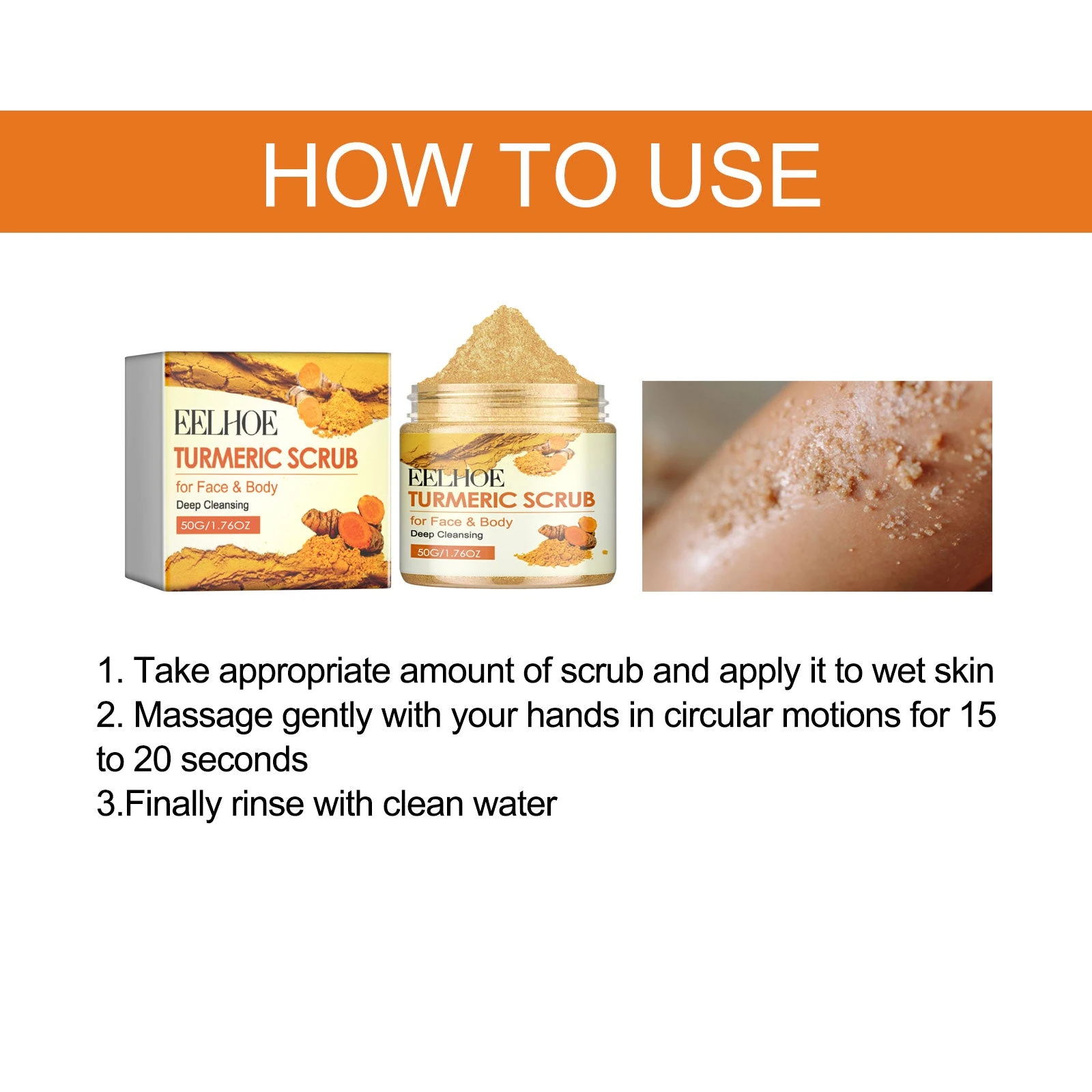
- For this scrub, apply a small amount to wet skin and massage lightly for 15–20 seconds.
- Rinse completely, moisturize for comfort as appropriate and plan timing around the tanner’s instructions.
- Apply self tanner only when skin is calm, dry and prepared as its label requires.
For our 50g EELHOE turmeric shea butter scrub, the published directions are a small amount on wet skin, light circular massage for 15–20 seconds, then a thorough rinse. That short massage is product-specific. It should not be extended to match a longer general tutorial, nor should it be copied onto a different scrub whose instructions differ.
Our body-scrub application guide covers the everyday massage-and-rinse routine. Here the extra decision is compatibility with your self tanner. A scrub that feels pleasant during ordinary body care is not automatically the best preparation for every tanning formula.
Moisturizing scrub or residue-free preparation?
The featured scrub highlights shea butter, vitamin E and turmeric root powder. Choose it for those features in a rinse-off exfoliation step, but do not assume it is oil-free or tested with a particular self tanner. We do not have a verified compatibility test between this jar and every lotion, mousse or tanning drop on the market.
If your tanner specifies an oil-free preparation product, select one that meets that instruction instead. If the tanner allows your usual exfoliant, rinse this scrub completely and check how the surface feels. Persistent slickness or visible residue is a reason to pause and revisit preparation, not to scrub the same area more forcefully.
AAD recommends moisturizing after exfoliation to support skin comfort. Tanning instructions may place limits on moisturizer immediately before application or direct a small amount only to dry areas. You can respect both by planning the steps separately and following the tanner's actual preparation requirements. Do not intentionally leave irritated skin untreated simply to keep a same-evening tanning appointment.
On a small screen, swipe or scroll the table sideways to compare all columns.
| Situation | Do not assume | Practical choice |
|---|---|---|
| Tanner says oil-free preparation | Every rinse-off scrub is oil-free | Use an explicitly suitable preparation product |
| Skin needs moisturizer after exfoliation | You must tan immediately | Separate the sessions as the tanner permits |
| Fresh shaving irritation | Exfoliation will smooth it away | Wait for skin to recover |
| A slick film remains | Extra pressure will fix compatibility | Rinse as directed and reassess product choice |
| Sensitive or inflamed skin | A tanning event requires exfoliation | Prioritize skin comfort and professional advice |
Give elbows, knees and ankles careful attention
Thicker or drier areas can need different handling from the rest of the body. Use a light touch during exfoliation and follow your tanner's instructions for these areas during color application. AAD notes that elbows, knees and ankles can absorb more self tanner and describes diluting the application on those joints. Use the guidance alongside the instructions for your chosen formula.
Do not chase perfectly smooth heels, old scars or persistent rough patches in one preparation session. Some texture will remain, and repeatedly scrubbing a single spot can make it uncomfortable. Focus on an even, gentle process and recognize when a skin concern needs its own care plan.
Frequently asked questions
Should I shave before or after exfoliating for self tan?
Use the tanner's preparation instructions and your usual tolerated shaving routine. Avoid a universal sequence that stacks irritation for everyone. If shaving leaves cuts or sensitivity, let the skin recover before adding exfoliation or tanner. Do not scrub freshly irritated areas to remove shaving residue.
Can I use a body scrub on my face before tanning drops?
Facial use requires both an exfoliant and a tanning product intended for that area. Even if a scrub is labelled for face and body, your facial skin may not tolerate mechanical exfoliation. Keep products away from eyes and follow the facial tanner's directions instead of automatically copying body preparation.
Should I exfoliate again if the tan looks patchy?
First follow the tanner's development and troubleshooting instructions. Do not aggressively scrub a developing tan or skin that is already irritated. Once the product's process is complete, use its recommended correction method rather than layering another strong exfoliant immediately.
Will self tan protect me from the sun?
Cosmetic tanning color does not establish sun protection. Use appropriate sun protection, and only rely on SPF information when it is explicitly provided for that product. FDA notes that sunless tanners and bronzers generally do not protect against UV exposure unless they contain sunscreen and carry the relevant label.
Choose preparation that fits the actual tanner
Review the scrub's ingredients, brief massage directions and rinse-off role before deciding whether it belongs in your preparation routine. If your tanner requires a different formulation, use that instead. The useful outcome is comfortable skin and a compatible sequence, not adding a scrub regardless of the instructions.
Product information reviewed October 24, 2026. The linked AAD and FDA guidance supports general preparation, exfoliation boundaries and sun-protection distinctions. GinGrowth sells the featured scrub and does not claim an independent self-tanner compatibility trial.