
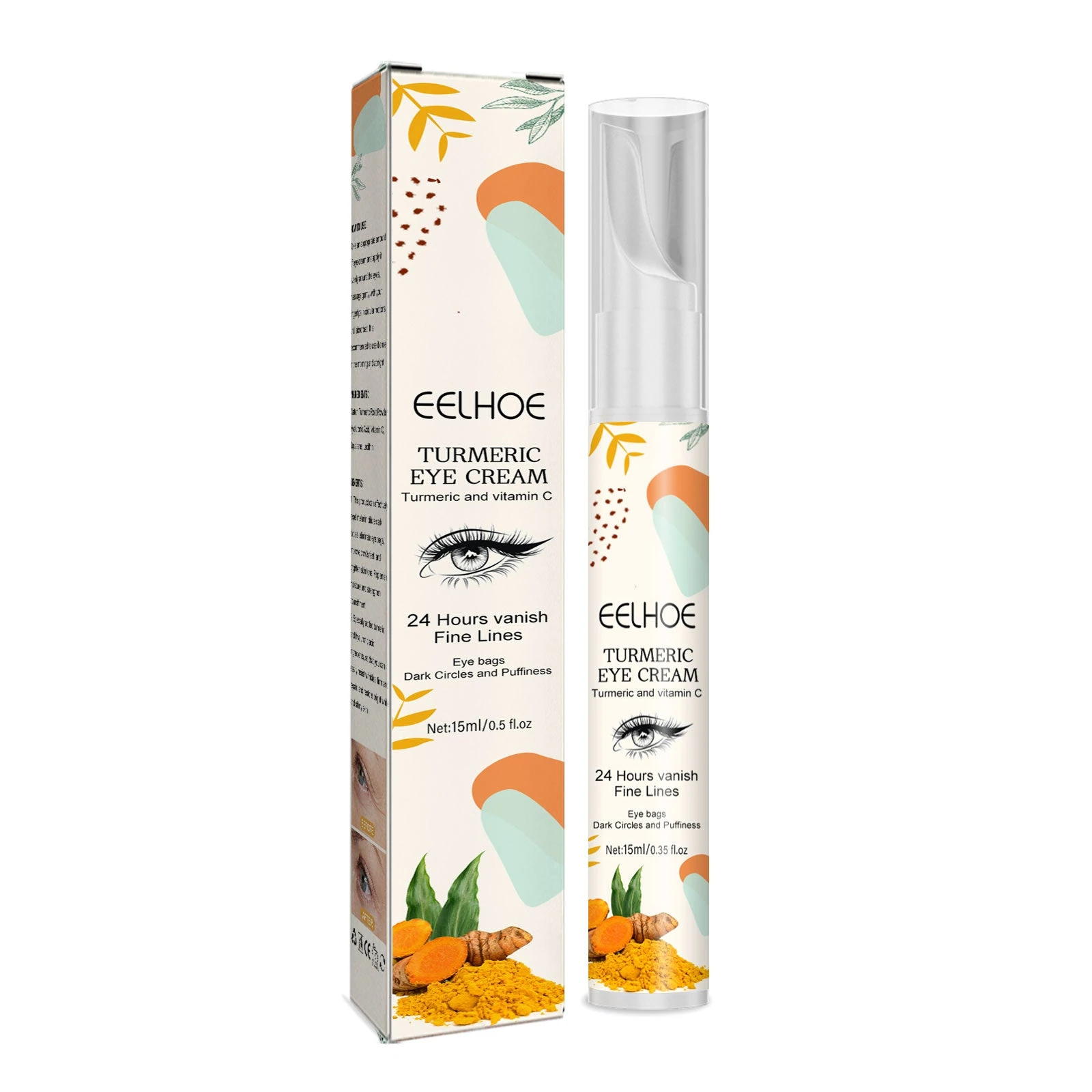
Vitamin C eye cream may help some aspects of a dark or tired-looking under-eye area, but it is not a guaranteed solution for every dark circle. Evidence for topical vitamin C is relevant to skin appearance; the result from a particular eye cream still depends on its finished formula and what is causing the darkness. Moisturizing dry under-eyes can improve how the surface feels and looks without proving that the product removes every underlying cause.
This guide separates general ingredient evidence from two current EELHOE products sold by GinGrowth: a 15g vitamin C eye-cream jar and a 15ml turmeric eye-cream pump. Both provide a targeted moisture step. If dry-feeling under-eyes and fine lines are your immediate concern, their format and ingredient differences offer a practical starting point for choosing what to investigate next.
What does the vitamin C evidence actually say?
Cleveland Clinic's explanation of topical vitamin C describes antioxidant effects, support for collagen and research into uneven pigmentation. It also discusses a small 14-person study in which vitamin C helped dark under-eye circles associated with visible pooled blood. That is a reason to take the ingredient seriously, while keeping the scale and scope of the evidence in view.
The Clinic article is general medical guidance about topical vitamin C. It is not a trial of the two EELHOE creams compared here. We have not established that either product uses the studied concentration, delivery system or treatment schedule. The listings do not supply a head-to-head clinical comparison between the jar and pump.
That distinction helps you ask a better buying question. Instead of asking whether any cream with vitamin C must erase dark circles, ask what the specific product discloses, what part of your concern it is intended to address and whether its use is comfortable. Ingredient research informs the discussion; it does not replace finished-product evidence.
Separate dryness, fine lines and darkness when you assess results
Several concerns can make the same area look tired. Dry-feeling skin and noticeable surface lines are not identical to darkness, and the appearance of puffiness is another separate concern. Describe what you want to change before choosing a product. This makes it easier to recognize a useful improvement in comfort without turning it into a claim about everything you see under the eye.
For example, if the skin feels dry when you apply makeup, moisture care may be a meaningful goal. A softer, smoother-looking surface is a different outcome from a measured change in pigmentation. If the area remains dark after dryness improves, that does not automatically mean you need to apply more cream or rub it in harder.
Lighting also changes how you judge appearance. Compare the area in similar light rather than using a shadowed evening mirror against a bright morning photo. This is a practical way to reduce misleading comparisons, not a clinical test. Persistent, new or concerning changes are better assessed by a qualified clinician than diagnosed from product photographs.
Compare the two current eye creams
The 15g jar highlights vitamin C, turmeric and niacinamide, along with water and ginger extract. The 15ml pump lists turmeric root powder, ascorbic acid, glycerin and hyaluronic acid among its ingredients. Ascorbic acid is the ingredient name for vitamin C. Both current methods use a small amount after cleansing and finish with gentle application over the external eye area.
On a small screen, swipe or scroll the table sideways to compare all columns.
| Detail | 15ml turmeric eye-cream pump | 15g vitamin C eye-cream jar |
|---|---|---|
| Format | Pump bottle | Jar |
| Ingredient highlights | Turmeric root powder, ascorbic acid, glycerin and hyaluronic acid | Vitamin C, water, turmeric, niacinamide and ginger extract |
| Current role | Moisture care for dry under-eyes and dryness-related fine lines | Moisture care for a softer, smoother, refreshed-looking eye area |
| Method | Small amount after cleansing; gentle external application; morning and night | Small amount with clean fingertips after cleansing; massage gently until absorbed |
| Reason to choose | You prefer dispensing without dipping into a jar | You prefer taking a small fingertip portion |
| Evidence not supplied | Finished-product dark-circle trial or vitamin C concentration | Finished-product dark-circle trial or vitamin C concentration |
Neither product should be treated as an eye drop or placed inside the eye. A facial serum with vitamin C is also not automatically an interchangeable eye product. Choose a formula identified for the intended area and follow its directions rather than extending a general ingredient recommendation to every product that contains it.
Choose the pump for controlled dispensing and moisture care
The EELHOE turmeric eye cream is a 15ml pump format. Glycerin and hyaluronic acid are useful details for someone comparing products for dry-feeling under-eyes. Its current cosmetic role is a softer, smoother and more refreshed-looking surface, including the appearance of fine lines associated with dryness.
The pump dispenses without dipping fingers into a jar. That may fit a simple morning-and-night routine when you prefer a small portion in the palm or on a clean fingertip. The listing says to use a small amount; it does not establish that a full pump is a universal dose for every face.

Review the product page if you want controlled dispensing and moisture care for dry-feeling under-eyes. Compare its glycerin and hyaluronic-acid highlights with the jar below, then check the current package, full directions and price to choose the format that fits your routine.
Choose the jar when you prefer fingertip portioning
The separate vitamin C eye cream comes in a 15g jar with turmeric and niacinamide highlights. It suits someone who prefers taking a small amount with clean fingertips and spreading a thin layer. The current focus is moisture care for dry, tired-looking eye-area skin and a smoother, more refreshed appearance.
The jar and pump are different formulas and packages, not two strengths of one product. We have no concentration comparison proving that the jar contains more vitamin C or that the pump is more effective. Choose the ingredient profile and handling method you prefer, then read the full label before ordering.
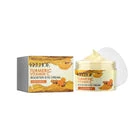
The 15g and 15ml labels also use different units. They do not establish an equal number of applications. The amount you use and the dispenser affect how long each lasts, so this guide does not invent a cost per day or claim that one package is automatically better value.
How to apply vitamin C eye cream gently
For placement and portion control, follow our guide to applying eye cream with a gentle touch, including eyelid boundaries and layering checks.
Cleanse first and use clean fingertips. Take a small amount, place it around the external eye area and spread gently without pulling the skin. Keep it out of the eyes and away from the lash line. A thin, even layer is the aim; repeated rubbing or a heavy coating does not establish a stronger result.
- Cleanse and use clean fingertips.
- Take a small amount of the eye cream; do not assume a full pump is required.
- Spread a thin layer over the external eye area without pulling; avoid eyes and lash line.
- Let it absorb and follow the directions for your other facial products.
The pump listing specifies morning and night use. The jar instructions describe application after cleansing without a separate universal frequency in the information reviewed. Follow the directions for the product you choose rather than transferring a schedule from a different bottle or an online serum routine.
Cleveland Clinic notes that some people can experience dryness, itching or redness with topical vitamin C. Stop a new product if it irritates the area. Its general discussion of facial-serum concentrations should not be used as an instruction to apply a strong serum close to the eyes. The intended application area remains important.
Fit eye care into the rest of your routine
Keep the eye cream focused on the external eye area and use your other facial products as directed. If you are uncertain about toner and serum, our toner vs serum guide explains their different roles and order. Adding an eye cream does not require buying every other skincare category.
For moisture on the larger facial area, the face balm vs face cream comparison offers a separate decision. Neither facial product should be moved close to the eyes merely because its texture seems similar. The eye-area instructions for your chosen cream are the relevant ones here.
Vitamin C is not a substitute for sunscreen. Cleveland Clinic discusses it as complementary to sun protection, not a replacement. Neither eye cream in this comparison has a stated SPF rating in the current information. Keep suitable daytime sun protection as a separate part of your routine, following the label and keeping products out of the eyes.
Set a useful expectation before buying
A reasonable first goal is an application that feels comfortable and leaves dry-feeling skin softer and smoother-looking. For darkness, recognize that a general ingredient benefit is not a guaranteed result from every finished formula. If you need a more specific answer about your own under-eye appearance, professional assessment can be more useful than repeatedly changing products.
Do not judge progress by supplier comparison photographs alone. We are not presenting those images as controlled before-and-after evidence. Nor is there a verified deadline here for either eye cream to change your dark circles. A product can still have a useful moisture role without an invented promise of a dramatic change in a fixed number of days.
If the pump's glycerin and hyaluronic-acid highlights fit your needs, explore that product's details. If the jar's vitamin C, turmeric and niacinamide profile appeals, compare its current label and purchase options. Those are concrete choices that the information supports.
Frequently asked questions
Can I use ordinary vitamin C face serum instead?
Do not assume a facial serum is intended for the external eye area. Check its directions. The products compared here are identified as eye creams; the general benefits of vitamin C do not make all formulas suitable for the same application area.
Which eye cream is stronger?
The current information does not supply a concentration comparison or a direct clinical test. Jar versus pump is a packaging difference, not a strength scale. Compare the ingredient lists, method and format instead.
Will using more cream make dark circles fade faster?
There is no evidence here for that. Follow the small-amount instruction and apply gently. A heavy layer or extra rubbing can make the routine less comfortable without establishing an additional benefit.
Does improved hydration mean the dark circles are treated?
No. Softer skin and less noticeable dryness-related lines are useful appearance outcomes, but they do not identify or resolve every cause of darkness. Keep those observations separate when judging whether the product meets your goal.
Sources and product information
The Cleveland Clinic topical vitamin C article supplies the general research discussion, including its summary of a small under-eye study. The original study was not independently reviewed for this guide. Product details and current photographs were checked on October 15, 2026. GinGrowth sells these examples; neither the Clinic nor the cited research is presented as endorsing them.