
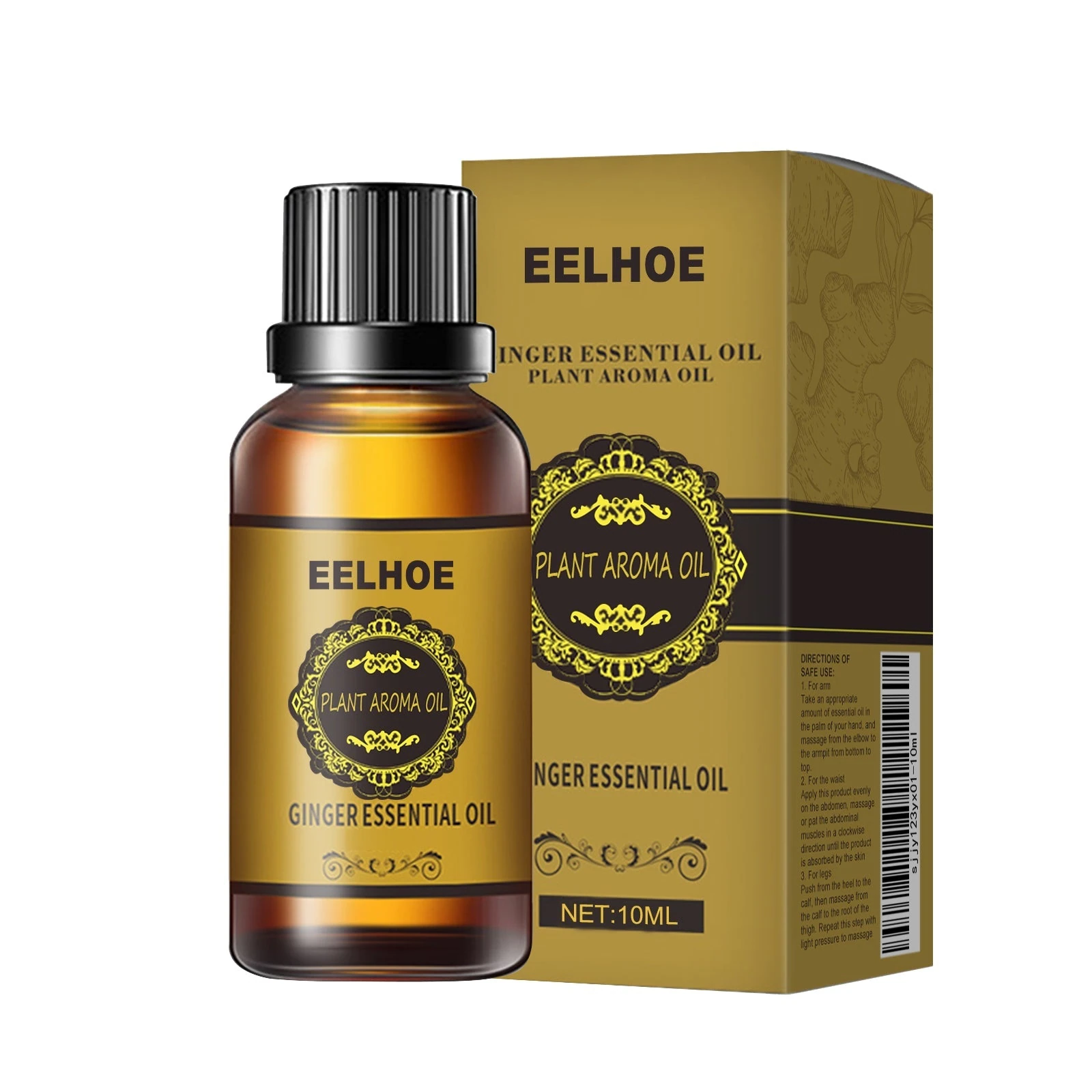
The practical benefits of a ginger massage oil blend are a lubricating layer for comfortable hand movement and a skin-conditioning step during body care. Whether ginger itself adds a particular therapeutic effect is a separate evidence question. The 10ml and 70ml products discussed here are prepared oil blends for external body use, not bottles of pure ginger essential oil.
This guide separates what you can choose from the label, what you can observe during ordinary use and what would need clinical evidence. It also compares the two real formulas so you can choose a compact bottle or a pump format without assuming they contain the same oil in different sizes.
Start with the blend, not just the ginger name
A massage oil is the complete formula that touches your skin. Carrier ingredients influence spreading and the residual layer; botanical highlights identify only part of that mixture. Reading “ginger” on the front does not tell you the ginger concentration, the preparation method or the feel of the finished product. Those details cannot be inferred from bottle color either.
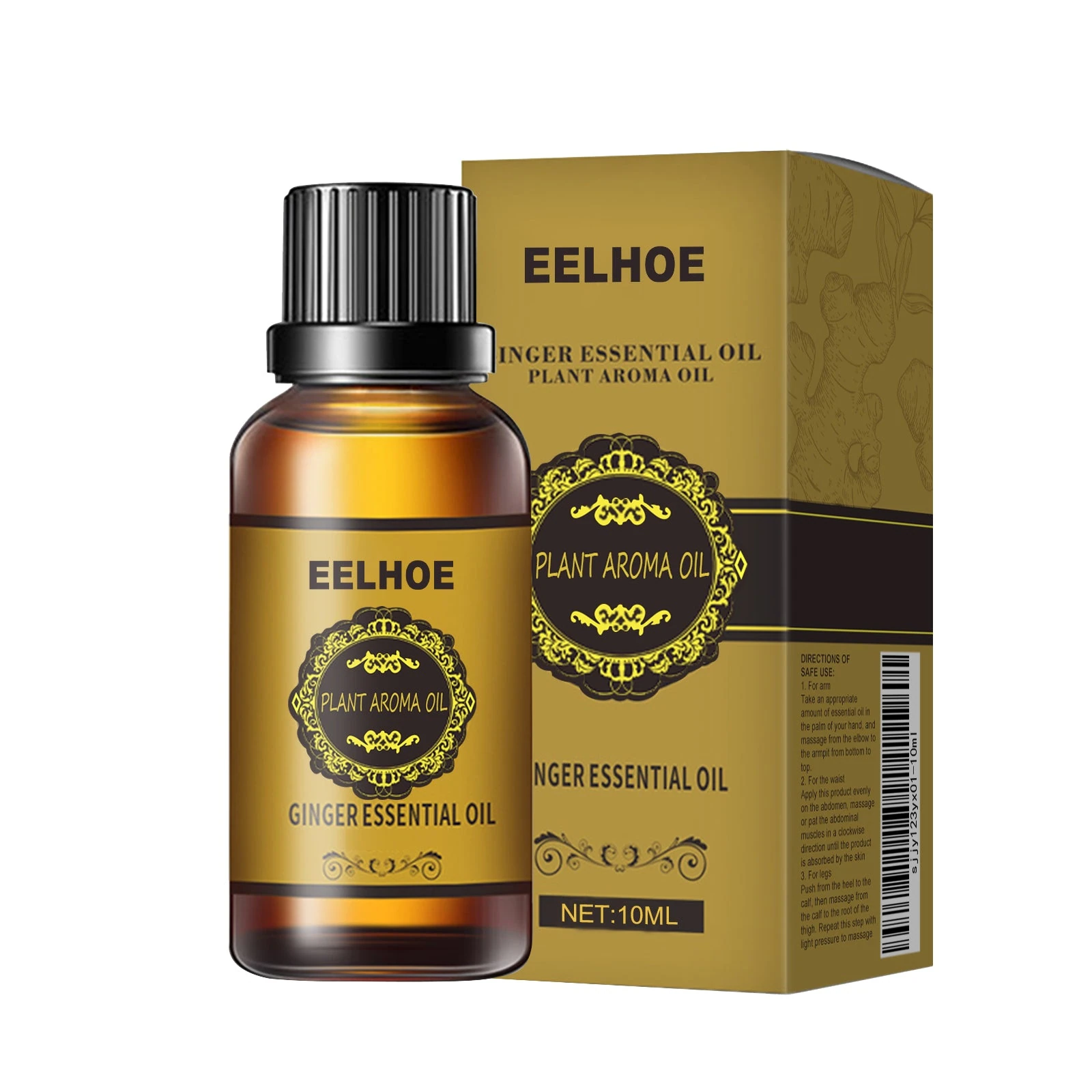
The 10ml blend highlights mineral oil and hydrogenated castor oil, with ginger, rosemary, ginseng and vitamin E. The 70ml pump highlights mineral oil, castor oil, ginger, olive, peppermint and tocopherol. These are different ingredient lists. The larger bottle is therefore an alternative to compare, not a verified refill of the compact formula.
On a small screen, swipe or scroll the table sideways to compare all columns.
| Detail | 10ml compact blend | 70ml pump blend |
|---|---|---|
| Base highlights | Mineral oil and hydrogenated castor oil | Mineral oil and castor oil |
| Botanical highlights | Ginger, rosemary and ginseng | Ginger, olive and peppermint |
| Additional highlight | Vitamin E | Tocopherol |
| Intended use | Small amount on clean, dry external body skin | Small amount on clean, dry arms, legs or abdomen |
| Finish | Allow to settle; wipe excess before dressing | Allow to settle; wipe excess before dressing |
| Best reason to compare | Compact portioning for a focused area | Pump dispensing and a larger bottle |
| Not demonstrated | Clinical pain relief or measured circulation changes | Clinical pain relief or measured circulation changes |
Neither product should be treated as a diffuser refill, food supplement or neat essential oil. Use the body-care method provided for the product you choose. Do not add extra essential oil to make it “stronger”: that changes the formulation and may make an otherwise manageable application uncomfortable.
Benefit one: a layer that helps hands move
For an ordinary body-care massage, oil can reduce the feeling of hands dragging across dry skin. The useful aim is comfortable movement with light, controlled pressure. Start with a small amount over one appropriate area, then assess whether your hands move easily. A larger puddle is not evidence of a more effective massage.
There is no verified head-to-head glide-duration test for these products. We cannot say the pump blend stays slippery for a certain number of minutes or the compact blend absorbs twice as fast. What you can assess is whether your chosen portion allows comfortable movement without leaving more residue than you want afterward.
If an area hurts, adding oil is not a reason to press harder. Pain, swelling or an unexplained change in the skin deserves a different response from ordinary dryness or surface friction. Stop the massage when it is uncomfortable, and seek appropriate professional advice rather than trying to work through the problem.
Benefit two: a body skin-conditioning step
These blends provide an oil-based layer as part of external body care. That can suit someone who prefers an oil finish after gentle massage. Ingredient information helps explain the product's role, but it does not establish a measured hydration duration or prove superiority to every lotion or cream.
The American Academy of Dermatology includes mineral oil among ingredients to look for in suitable products in its dry-skin care guidance. That does not mean every mineral-oil-containing blend is appropriate for every person. The other ingredients, your known sensitivities and the condition of your skin still matter.
If your main concern is persistently dry or irritated skin, consider the whole routine, including washing and a suitable moisturizer. A fragrant botanical massage blend is not automatically the best choice for a reactive area. If you prefer a cream format, our massage cream versus oil comparison explains the handling differences without assuming one format wins for everyone.
Does ginger oil relieve pain or improve circulation?
Do not transfer research about eating ginger or taking ginger supplements directly to a topical body blend. The route, dose and preparation are different. The National Center for Complementary and Integrative Health's ginger overview notes that much of the research concerns supplements and reports that topical ginger has not been shown helpful for knee osteoarthritis.
Research on massage itself also does not establish the effect of these particular oils. NCCIH's massage therapy overview discusses evidence across different conditions and types of treatment, with varying limitations. A professional treatment protocol involving trained therapists is not equivalent to applying a cosmetic blend at home.
For that reason, this guide does not promise lymphatic drainage, treatment of swelling, improved blood circulation or lasting pain relief from either bottle. A sensation of warmth, coolness or tingling would not demonstrate those outcomes. Choose the products for their listed body-care role; do not use them to postpone assessment of a medical concern.
Choose a bottle around the way you will use it
The 10ml bottle may appeal when you prefer a compact format for a focused area. It contains a smaller total quantity, but no supplied application count establishes exactly how many uses you will get. Area size and how much you dispense will change that number. Consider the full ingredient information as well as the physical package.
The 70ml pump may appeal when you want to portion a body blend from a larger bottle. Its current directions include clean, dry arms, legs or abdomen. A pump is a dispensing convenience, not a verified dose measurement here; do not assume one full press is required for every body area or that repeated presses improve the result.
A simple method for comfortable body massage
Use these oils on appropriate clean, dry external body skin, as their current directions specify. Do not automatically import a damp-skin method from a different moisturizer. Keep the bottle nearby, take a small amount and work on one area at a time so you can judge how much slip you need.
- Choose an appropriate area of clean, dry, intact body skin.
- Take a small amount and spread gently to reduce dragging.
- Keep pressure comfortable and work one area at a time.
- Stop if the skin stings or the area hurts.
- Let the oil settle and wipe excess away before dressing.
Keep movements gentle and pressure comfortable. Avoid the eyes, mucous membranes and broken or irritated skin. Afterward, allow the layer to settle and wipe away excess before dressing. This is practical residue management, not a claim that either formula is stain-proof. Follow your clothing and linen care instructions if oil reaches fabric.
For the first use, avoid changing several body-care products at once. If you have a history of reactions to a listed ingredient, choose accordingly rather than relying on a reassuring botanical name. Stop if you develop irritation. People with medical conditions that affect whether massage is appropriate should get advice about the massage itself, not just about the oil.
Troubleshoot slip, residue and comfort separately
If your hands drag, check that you are using gentle pressure and covering a reasonable area with a small, even layer. You may need to adjust the portion, but pouring on oil cannot correct painful pressure. If too much remains afterward, remove the excess and use less next time instead of rubbing indefinitely to force absorption.
If the formula feels uncomfortable, stop and rinse or wash it away appropriately. Do not try to cancel the sensation by layering another active body product over it. If the discomfort persists, seek professional advice. Recording the exact product and any other products used can help you identify what changed.
A useful personal comparison considers dispensing control, ease of spreading, comfort and cleanup. It does not require a claim about deep tissue, detoxification or body measurements. Those ordinary observations are enough to decide whether a bottle belongs in your routine without presenting your experience as evidence of a medical effect.
Frequently asked questions
What is ginger massage oil good for?
These two prepared blends are intended for external body massage and skin conditioning. They provide an oil layer for the listed body-care method. Benefits beyond that role, including treatment of pain or swelling, require evidence that is not supplied for these finished products.
Is ginger massage oil pure ginger essential oil?
Not the products compared here. Both list a broader oil base and other ingredients. Do not use them as pure essential oil, ingest them or assume they can be used in a diffuser. Read the actual package before application.
Should ginger oil be diluted before body massage?
These examples are prepared body blends with their own use directions, not bottles identified as neat essential oil. Follow those directions rather than inventing a dilution recipe. A different product genuinely sold as concentrated essential oil would require its own instructions and suitability assessment.
Can I massage more firmly to get more benefit?
More pressure is not automatically better. NCCIH notes that serious adverse effects, although rare, have been reported with massage, including vigorous techniques or vulnerable individuals. Keep ordinary self-care comfortable and get professional advice for pain or medical concerns.
Which size should I choose first?
Compare the ingredients first, then compact 10ml handling versus 70ml pump dispensing. The formulas differ, so do not choose as if the only distinction were volume. Check current product details and purchase options to make the final decision.
Sources and product information
Product facts were reviewed October 16, 2026. The AAD and NCCIH sources support general skincare and research distinctions; they do not endorse the products. No original wear test, comparative glide measurement, medical treatment result or guaranteed application count is claimed.