
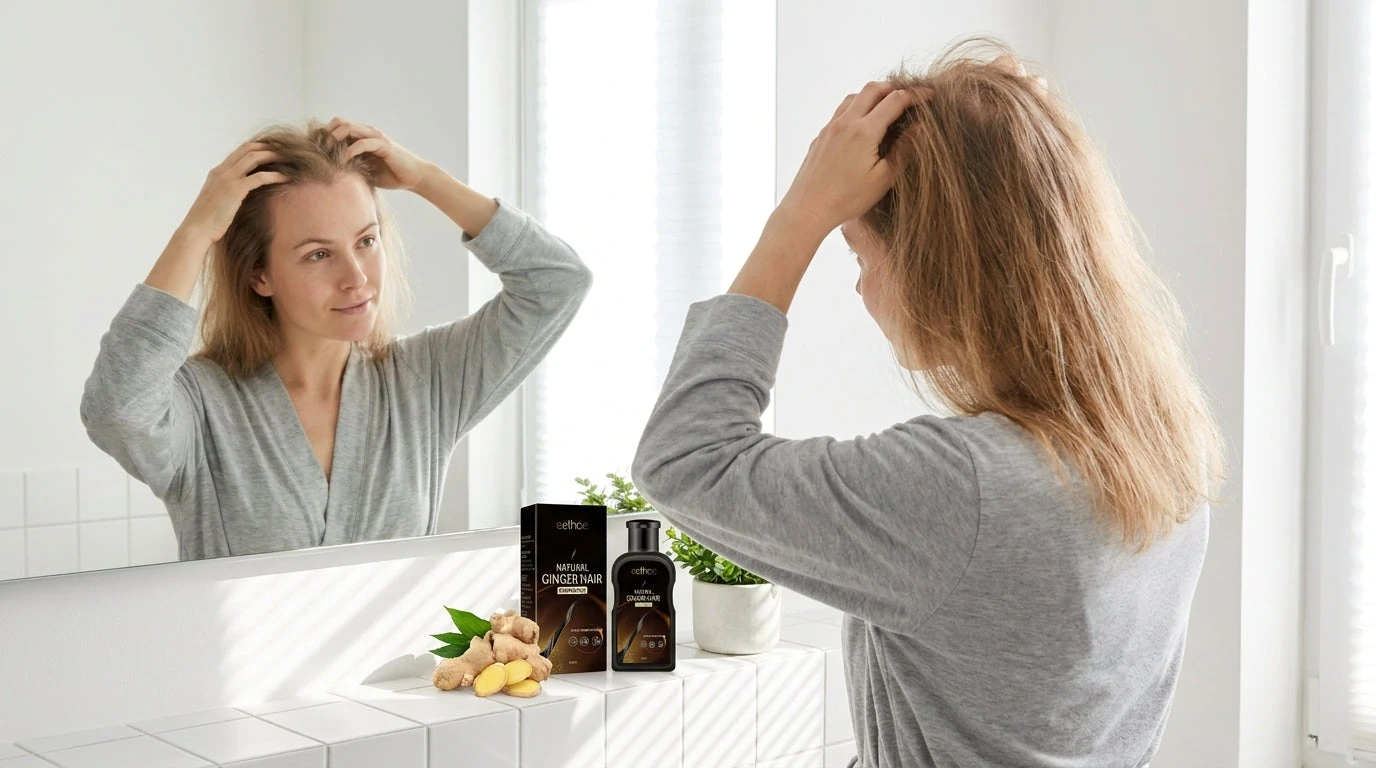
Scalp care for thinning hair means keeping washing, comfort and product application manageable while the cause of loss is assessed and treated when needed. It does not mean every thinning area is caused by clogged follicles or that a reset routine regrows hair. Choose each step for a specific job and distinguish a cleaner root appearance from increased density.
Define Scalp Care in a Thinning-Hair Routine
Scalp care includes suitable cleansing, attention to irritation and correct placement of any directed treatment. Length care addresses tangling and rough strands. These tasks can support a practical routine without being a complete treatment for the cause of thinning.
A clear definition prevents the phrase root support from promising effects that the product information does not establish.
For a workable care sequence, organizing a thinning-hair routine keeps cleansing, length conditioning, prescribed treatment and optional scalp moisture separate.
When Scalp Symptoms Need Attention
Pain, persistent itch, sores, redness or recurrent scale can justify assessment alongside the hair-loss concern. A gentle-looking product name does not identify the cause of these symptoms.
The AAD describes multiple causes of scalp itch, including dandruff and product reactions. Adding oil or exfoliation indiscriminately can miss the actual problem.
Swipe the table sideways to compare all columns.
| Decision | Verified detail or question | What it means |
|---|---|---|
| Wash | Remove routine oil and residue | Cleaner appearance is not a density measurement |
| Treatment placement | Part hair and follow exact directions | Do not improvise extra applications |
| Optional moisture | Comfort and finish | Add only for a defined need |
Build a Four-Part Care Framework
Separate washing, length conditioning, any indicated treatment and optional scalp moisture. Write down the purpose of each bottle. This makes it easier to see duplication and to describe the routine at a medical appointment.
The sequence is not a universal schedule: preparation and timing must follow the exact products, particularly medicines.
Why Cleansing Can Improve the Experience
Removing routine oil and residue may make roots feel less coated and make application easier. That visible change can be valuable. It is not proof that a cleanser has reversed follicle miniaturization or produced new hairs.
Choose washing frequency by the product instructions and your scalp and hair needs, rather than applying a single rule to all thinning hair.
For the ordinary wash step, review the 100ml Ginger Shampoo for Thinning Hair.
Build a Defined Wash and Optional Moisture Routine
The shampoo and essence provide separate ordinary-care steps rather than a clinical scalp-reset regimen. GinGrowth sells the two products below.
Swipe the table sideways to compare all columns.
| Detail | 100ml Ginger Shampoo for Thinning Hair | 30ml Lightweight Scalp Serum with Ginger |
|---|---|---|
| Format | Rinse-off liquid cleanser | Water-based dropper essence |
| Ingredient highlights | Ginger, coconut oil and Polygonum multiflorum highlighted in the product materials. | Aqua, glycerin, ginger root oil, Polygonum multiflorum extract and hydroxyethylcellulose in the ingredient graphic. |
| Application | Wet hair and scalp, lather, massage gently with fingertips and rinse thoroughly. | After washing and drying, apply a small amount to the scalp, massage gently and leave in. The product guide describes daily use. |
| Reason to compare | Choose for ordinary cleansing of oil and everyday buildup, with a softer-hair focus. | Choose for a light moisturizing step and precise placement along a part. |
View 100ml Ginger Shampoo for Thinning Hair or compare 30ml Lightweight Scalp Serum with Ginger. Review the current product page for price and package details.
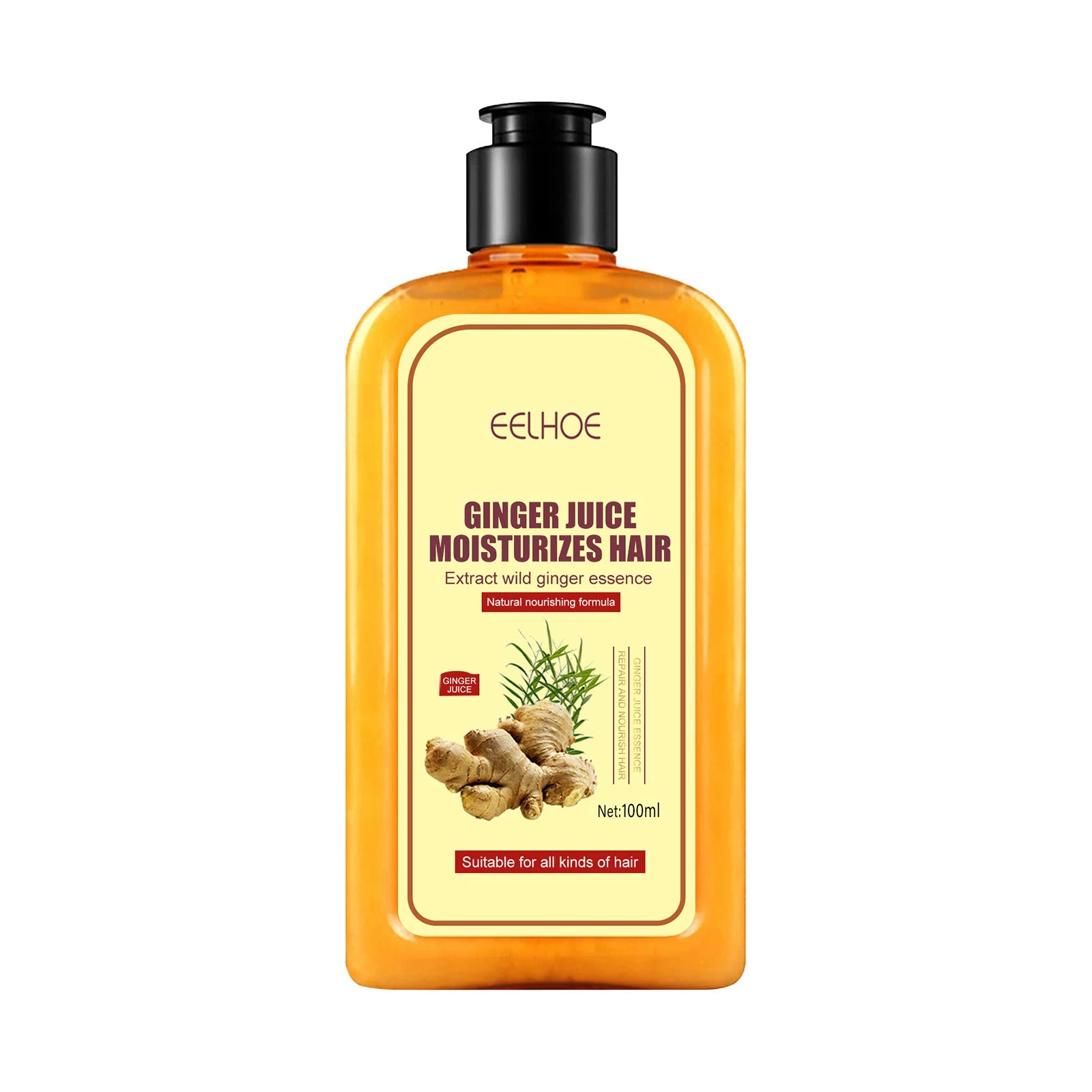
This shampoo belongs in the wash step. Its purpose is scalp cleansing and softer-feeling hair, rather than a leave-on scalp layer. The highlighted ingredients are not a complete concentration statement. If you use a medicated shampoo or a specific pre-shampoo treatment, keep its directions in place and decide whether an additional cleanser is necessary before adding another bottle.
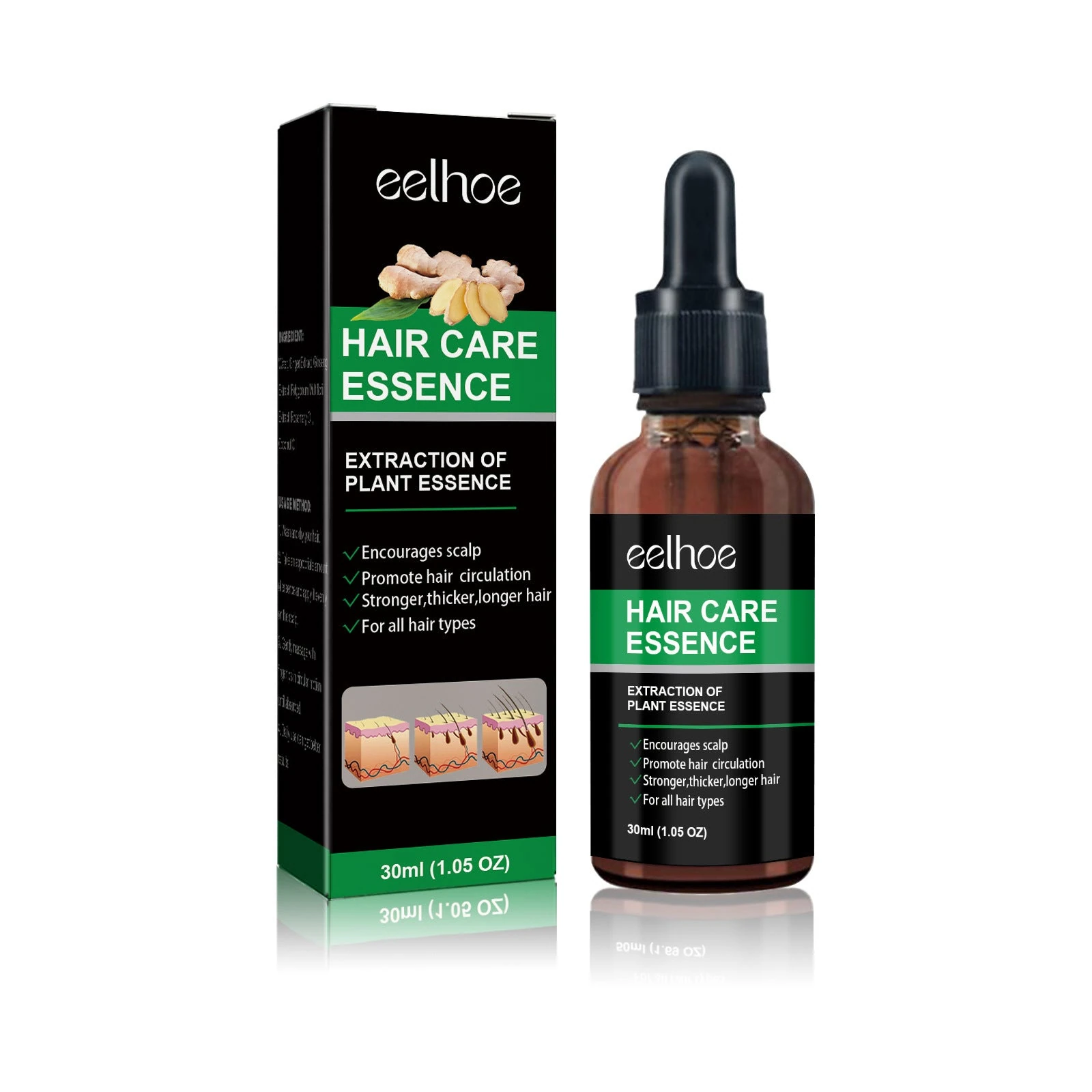
The essence contains ginger root oil within a water-based formula. That is different from buying a bottle of pure essential oil. Glycerin provides a concrete moisturizing ingredient to compare, while the dropper helps direct a small amount to the scalp. Use the finish on your own hair as the practical test: controlled placement matters more than saturating the roots or spreading scalp care through the lengths.
Compare Appearance before and after Washing Fairly
Freshly washed roots can look different because of oil, styling and volume. A before-and-after photograph taken under different conditions can exaggerate a density impression.
If you document changes, keep part placement, light, camera distance and styling consistent. Use the clinician’s review plan for treatment outcomes rather than comparing daily variations.
Place Treatment Where the Label Requires
Parting the hair helps a scalp applicator reach the skin. Avoid scraping or vigorous rubbing. Do not apply most of the product to surrounding strands and then increase the dose to compensate.
Correct placement improves adherence to instructions; it does not prove a circulation or regrowth effect for every formula.
Reduce Unnecessary Layers without Stopping Treatment
If several optional products leave coating, identify which care role each contributes. A serum, oil and root styling spray may all feel different together than individually.
Do not stop a prescribed treatment as part of a cosmetic reset. Discuss treatment problems with the managing professional while reviewing optional products separately.
Distinguish Dryness from Recurrent Dandruff
A dry feeling may prompt a moisturizer comparison, while recurrent itchy flakes may require a labeled dandruff product. Neither can be reliably diagnosed from an online description alone.
The AAD advises following the specific dandruff product’s instructions. Contact times and wash needs differ, so an ordinary shampoo should not inherit another formula’s active-treatment claim.
For recurring flakes, choosing a scalp serum for dandruff compares labeled treatment roles with separate dry-scalp moisturizing care.
What to Notice Early
Observe comfort, residue, ease of placement and whether the care schedule is manageable. These are immediate practical questions. Do not convert them into a guaranteed regrowth timeline.
If a new product causes burning or worsening symptoms, stop the suspect product. A stronger sensation is not a required sign of progress.
Why More Product Can Look like Less Hair
Coated roots may clump or flatten, changing the visible part and apparent volume. That styling effect is not the same as biological hair loss, but it can make a routine less acceptable.
Use the label-directed amount and target the intended area. More liquid is not automatically better coverage or greater effectiveness.
Compare Routine Complexity by Purpose
A multi-step routine is useful only if each step adds a relevant function. A simpler routine may be easier to follow, while some treatment plans legitimately require several components.
Judge complexity by need and evidence, not a rule that everyone should use either one product or a complete range.
Choose Current Product Facts
The store’s shampoo belongs in the rinse-off wash step. Its essence is a separate water-based moisturizing format, applied after washing and drying according to its guide. GinGrowth sells both, and they are not presented as a clinical thinning-hair regimen.
The ingredient highlights and instructions below let you compare actual care features instead of assuming ginger supplies a universal growth effect.
Write a Simple Routine Card
Record the product, purpose, preparation, amount and rinse instruction for each step. Leave unknown directions unresolved until the label or supplier clarifies them. Keep medicines distinct from optional cosmetics.
That record can make follow-up more productive, particularly when scalp symptoms or changes in appearance have several possible explanations.
Frequently Asked Questions
Should scalp care always come before hair-loss treatment?
There is no universal waiting sequence. Address scalp symptoms and diagnosis as appropriate; do not delay indicated treatment to complete an arbitrary reset.
Does cleaner-looking hair mean more density?
No. Oil, styling and root lift affect appearance without establishing new growth.
Can I use a serum daily?
Only when the exact label supports it and it remains suitable. Serum is not a standardized frequency.
What if thinning continues despite a comfortable scalp?
Seek cause-specific assessment. Comfort is a useful care outcome but does not show that the underlying loss has been treated.
Keep Care and Treatment Outcomes Distinct
Use ordinary products to solve ordinary care needs, and evaluate medical treatment against its own plan. The AAD treatment guide explains why finding the cause remains central. A manageable scalp routine can support that process without claiming to replace it.
Choose the care task that is missing and track its own outcome.
Sources and Product Information
- AAD: Hair loss diagnosis and treatment — Official product or guidance page checked October 1, 2026; findings retain their product and population scope.
- AAD: Causes of scalp itch — Official product or guidance page checked October 1, 2026; findings retain their product and population scope.
- AAD: Dandruff care — Official product or guidance page checked October 1, 2026; findings retain their product and population scope.
GinGrowth product details were checked October 1, 2026. This guide compares published information and current product specifications; it does not report a GinGrowth clinical trial or personal use test.